

Monthly digital rent payments work when the tenant and landlord agree on the schedule and record it in the tenancy arrangement. In the UAE, transitioning tenants from cheques to digital payments can involve a one-time digital mandate authorising the landlord’s bank to collect the agreed amount on a specified date. Keeping enough funds in the account 48 hours before payment is due can help avoid a failed collection.
Cheques are familiar, but they can mean more administration and larger payments at set intervals. A digital schedule can align rent payments with monthly income, provided both parties agree to the change and record it clearly.
This guide explains how to arrange monthly payments, set up a digital collection method, and maintain a funding buffer. It also covers what to put in the tenancy contract and how to make the transition clear for both landlord and tenant, so the new routine is practical and predictable.
Key Takeaways
- Choose a digital collection method that suits the landlord’s process and the tenant’s payment habits.
- Reduce cheque handling by clarifying how rent due dates, records, and payment follow-up will work.
- Plan account funding around the agreed collection date to help prevent missed or failed payments.
- Put the monthly schedule and any change to the existing arrangement in writing in the tenancy contract.
Digital rent collection for landlords and property managers
In the UAE, landlords and tenants can agree to collect rent through digital methods rather than relying only on paper cheques. Make sure the payment schedule and collection process are clear to both parties.
Replacing Post-Dated Cheques
Transitioning tenants from cheques to digital payments means replacing future-dated paper payments with an agreed electronic rent schedule. The change can reduce cheque handling, but it needs a clear start date and payment record. In the UAE, landlords and tenants can agree on monthly or quarterly payments, cheques, or bank transfers. Record the new arrangement so everyone knows which payment applies to each rent period.
Rent Collection and Payment Tracking
Digital rent collection gives landlords and property managers an electronic record to reconcile against each tenancy. Track the tenant, rent period, due date, amount, and payment status in one consistent ledger. If a payment appears late or unclear, match its transaction reference to the correct tenancy before updating the record. Limit access to tenant payment details and use a trusted channel to confirm changes to account information.
Available Digital Rent Payment Methods
UAE digital rent payments may use debit or credit cards, bank transfers, or wallet systems. A Direct Debit arrangement can use a one-time digital mandate authorising collection of the agreed monthly amount on a specified date. Payment procedures may vary across emirates, so landlords should document the agreed method and schedule rather than assume the same administrative process applies everywhere.
Payment frequency also affects cash flow. Rent may be requested upfront for 3, 6, or 12 months, while monthly collection spreads payments across the tenancy. Security deposits are commonly 5-10% of annual rent in the UAE, separate from rent and agent costs. Transitioning tenants from cheques to digital payments works best when the contract clearly separates these amounts and states when each is due.
Administrative burden of handling post-dated cheques
Post-dated cheques create work before and after each rental due date. A landlord must receive and record each cheque, store it securely, track its date, and present it for payment. With multiple tenants, separate cheque records can make it harder to see which rent payments are due and which have cleared. A consistent process matters, even when there are few cheques.
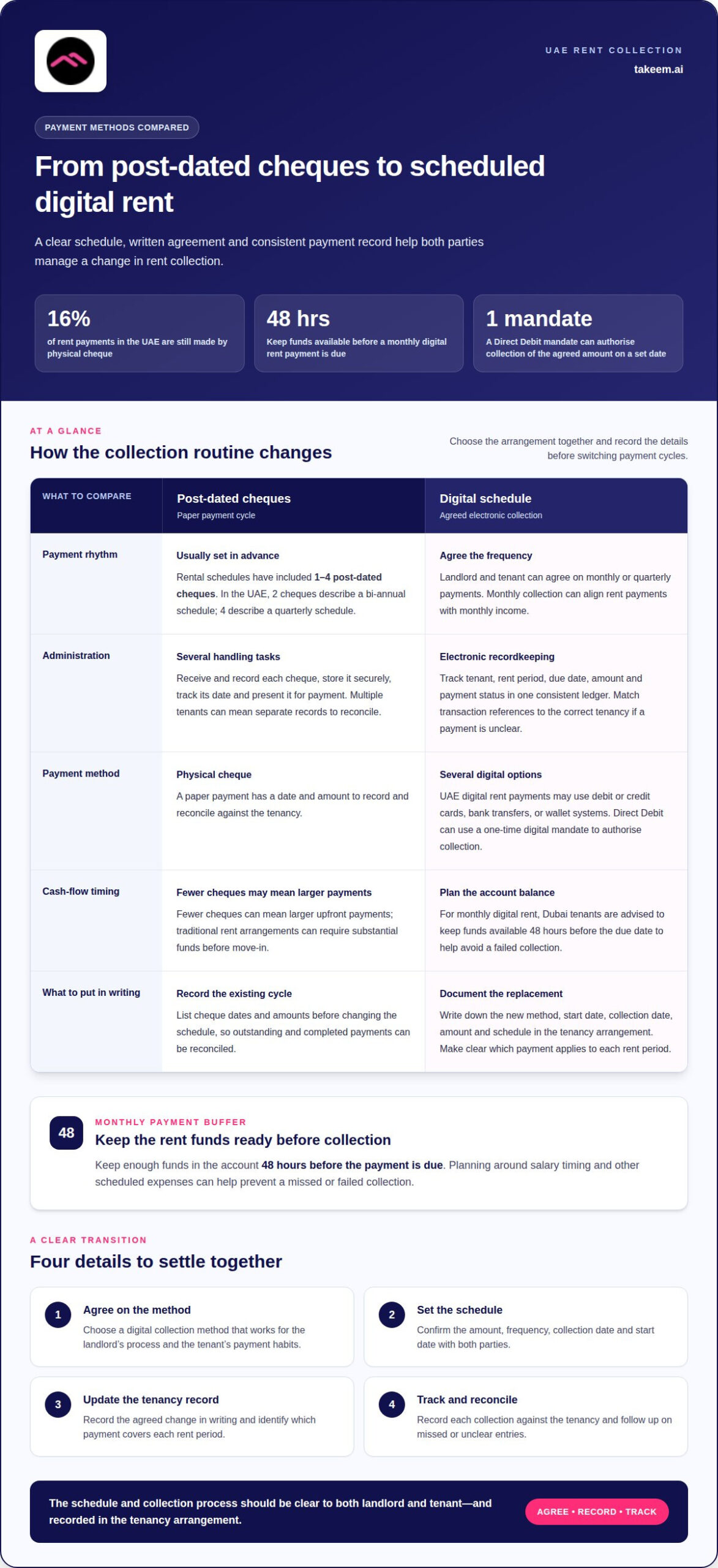
Rental schedules in the UAE have included one to four post-dated cheques. Fewer cheques can mean larger upfront payments, while more frequent payments require closer tracking across the rental year. The cash-flow impact matters for tenants too: traditional rent arrangements can require substantial funds before move-in. The administrative process and payment schedule are connected, so changing one calls for clear agreement on the other.
Physical cheques still account for 16% of rent payments in the UAE. For landlords, each paper payment creates a recordkeeping task and a point where handling or timing can go wrong. A useful transition process is to list every property, resident, rent amount, cheque date, and payment status, then reconcile that schedule against the new collection records. This gives property management teams a clear record of outstanding and completed payments.
- Record the existing cheque dates and amounts before changing the schedule.
- Agree on the replacement payment date and method with the resident.
- Keep a dated record of payments received and follow up on missed entries.
Digital platforms can centralise payment records, but landlords still need a clear process for reviewing them and resolving discrepancies. That visibility supports cash-flow planning without relying on cheque storage and manual date checks. For landlords considering a more streamlined rent collection process, digital rent collection support can be a practical next step.
Dubai tenants historically paid rent in cycles of 1-4 post-dated cheques, while traditionally providing four large-sum post-dated rent cheques. In the UAE, 2 post-dated cheques describe a bi-annual rent payment schedule, and 4 describe a quarterly rent payment schedule.
Digital payment setup and account-funding buffers
Set up digital rent collection around the amount, due date, and agreed payment method. In the UAE, options include debit or credit cards, bank transfers, and wallet systems. For a monthly arrangement, record when collection happens and which account the tenant will use. Clear details help distinguish rent due now from payments scheduled for later.
Funding matters as much as setup. Dubai tenants are advised to keep funds available 48 hours before a monthly digital rent payment is due. A resident can plan that buffer against salary timing and other scheduled expenses. Landlords benefit from a predictable collection date, while tenants can avoid treating the rent balance as available spending money.
Choose a schedule that matches the tenancy agreement rather than assuming every rental uses monthly payments. A landlord and tenant may agree on monthly or quarterly payments, or another arrangement. Dividing annual rent into monthly payments changes when funds leave the tenant’s account, so make the due dates and amounts clear. The Dubai Land Department has worked with financial institutions on digital solutions intended to improve the rental experience.
- Agree on the payment method and collection date.
- Record the amount and schedule in the tenancy contract.
- Keep the required balance available before the due date.
- Track each collection against the rent record.
For example, a tenant paying quarterly can discuss a monthly schedule before the next payment is due. The landlord can then align collection records with the revised dates rather than treating the old quarterly cycle as unchanged. A consistent account reference also helps identify rent among other transfers. Review the first collection against the agreed schedule, then use that record to guide later payments. This makes the process easier for both parties to follow.
Negotiating monthly digital payments in tenancy contracts
A monthly digital schedule works best when both parties agree on the change before the next rent date. In Dubai, payment arrangements can include monthly payments when agreed with the landlord. Treat the change as a contract discussion, not an automatic switch from dated cheques.
For Dubai, document an agreed payment change in writing and keep the record with the tenancy contract. A signed addendum can state the payment method, amount, collection date, start date, and how the tenant authorises collection. Keep Ejari records aligned through the applicable process; don’t assume they update automatically when the contract changes.
A tenant can raise concerns and negotiate before accepting a new payment arrangement. In Dubai, the payment schedule depends on agreement with the landlord, so a proposed digital method shouldn’t be treated as an automatic change to existing terms. Confirm the final arrangement in writing to avoid confusion over whether a cheque or digital payment remains due.
Give the tenant clear written notice explaining what will change and when. Invite a response, record consent, and share the agreed details before setting up the first collection. For example, if quarterly payments are changing to monthly payments, state the first monthly due date and how the remaining rent period will be handled.
Before signing, clarify these points in the contract or addendum:
- Payment method and monthly amount
- Due date and first collection date
- How the tenant authorises payment collection
- What happens if a payment is delayed or a cheque is still outstanding
This written process supports a modern rental arrangement while giving both parties a record if a bounced cheque or disputed collection creates uncertainty. The evolution from paper to digital payments works best when the contract reflects the agreed schedule, rather than leaving the change to informal messages. To arrange a digital collection setup, start planning monthly rent payments.
Takeem: Direct Debit setup for Landlords to digitally accept monthly payments from tenants
Takeem sets up Direct Debit for landlords to accept monthly tenant payments digitally. It’s a practical next step when you and your tenants have agreed on a monthly schedule and want to move away from cheque-based collection.
Direct Debit supports the agreed payment arrangement, while the tenancy contract should still record the amount, due date, and consent. For landlords seeking broader rental protection, Takeem also offers a Landlord Rental Guarantee, including an option for property investors with large portfolios.
Ready to put an agreed monthly collection method in place? Contact Takeem to discuss Direct Debit setup for your rental payments.
Make the next rent cycle a clear starting point
The next step is to turn an agreed digital arrangement into a routine both parties can follow. For landlords, transitioning tenants from cheques to digital payments is an opportunity to build a consistent collection process, not simply replace one payment instrument with another. Keep communication clear as the new arrangement begins, so tenants know what to expect and landlords can manage the change with confidence.
Takeem sets up Direct Debit for landlords accepting monthly tenant payments. It also offers a Landlord Rental Guarantee that agents can sell for commissions. Choose the support that fits your role and rental needs, then make the transition at a pace that works for the tenancy.
Explore digital rent support with Takeem and take a confident step toward a more manageable rental routine.
Frequently Asked Questions
What are the steps to transition tenants from rent cheques to digital payments in the UAE?
Use a documented changeover: agree on the digital method and start date with the tenant, then record the new schedule in writing. Identify any outstanding cheques and agree how to handle them, so the same rental period isn’t collected twice. Set up the tenant’s payment authorisation, explain how receipts or references will be recorded, and reconcile the first digital payment against the rent ledger.
How can landlords set up recurring rent payments and handle failed or late transactions?
Recurring collection starts with agreement on the frequency, due date, and authorised method. Direct Debit uses a tenant-approved mandate. If a collection fails or arrives late, record its status and notify the tenant of the rent period and amount. Agree how to settle the payment, retain the receipt or transfer reference, and reconcile it before marking rent as paid.
How do digital payments compare with post-dated cheques for landlords and tenants in the UAE?
Digital payments create an electronic transaction trail, while post-dated cheques require physical handling and presentation on their dated schedule. Digital records can help landlords match incoming payments to tenant accounts; for tenants, an agreed digital schedule can make individual payments easier to identify in account activity. The method doesn’t replace the need to follow the agreed rent amount and due dates.
What security, fraud, and privacy risks apply to digital rent payments in the UAE?
Limit access to tenant payment details and use a trusted channel to confirm any changes to account information. The material does not provide specific security or fraud risks.