

The mandate matters as much as the payment method. Direct debit allows a landlord to collect rent from a tenant’s bank account on agreed dates after the tenant authorizes the payments. The landlord and tenant agree on the payment frequency and record it in the rental agreement. To explain direct debit to tenants clearly, show how the mandate puts those agreed terms into scheduled bank payments.
Tenants reasonably want to know when money will leave their account and how the arrangement fits their rental agreement. Explain the amount, payment dates and authorization in plain language so both sides understand how payments will work.
This guide explains how rent direct debit works, what a mandate means for a tenancy, and what tenants need to arrange. It also covers the practical benefits for tenants and landlords, so you can discuss the option with confidence and set clear expectations before payments begin.
Key Takeaways
- Agree on the rent amount, payment frequency and dates with the landlord, then make sure the terms are reflected in the rental agreement and mandate.
- Explain that a signed mandate authorizes scheduled rent collections, so tenants understand what will be deducted and when.
- Prepare for setup with a UAE bank account that supports direct debit and the rental and banking details the arrangement requires.
- Encourage tenants to monitor account activity and act promptly if a rent deduction is incorrect or a payment is returned.
Benefits for tenants and landlords
Explain how scheduled rent collection works for both parties. Focus on practical differences for tenants managing payments and landlords receiving rent.
-
Explain the benefits of direct debit
Describe the benefit for each party, then make it concrete. A tenant can plan around an agreed collection date rather than arrange a post-dated cheque. Scheduled payments can make rent easier to organize. For landlords, direct debit provides a consistent collection method and makes expected income easier to anticipate.
-
Clarify possible payment fees
Explain any payment charges before the tenant authorizes collection. Fees depend on the payment arrangement, so distinguish landlord processing costs from any charges the tenant may be responsible for. If the landlord’s setup involves a processing charge, clarify who pays it. Don’t suggest the tenant’s bank will charge a fee unless that applies under the agreed arrangement.
- Describe the payment date in practical terms. If rent is collected monthly, tell the tenant the agreed date and how the transaction will appear in their account. This gives them a reference when reviewing a bank statement or setting a transaction alert. Encourage tenants to monitor deductions and promptly contact the landlord if a payment differs from the agreed amount.
- Set clear expectations about payment reliability. Direct debit does not remove the need to keep sufficient funds in the tenant’s account. If funds are insufficient, the bank may reject the scheduled payment. Explain how the tenant should follow up after a failed collection and how the landlord records rent received. That way, both parties can resolve a missed payment rather than assume it went through.
Direct debit mandates and rental agreements
Keep the mandate consistent with the rent terms both parties have agreed to. Explain that it authorizes collections, while the rental agreement records the tenancy’s payment arrangement.
-
Gather the information needed for setup
Prepare the tenancy and banking details before completing the mandate. Setup may require the rental agreement, Emirates ID, signed landlord mandate and proof of account ownership or an IBAN. The tenant also needs a UAE-based bank account that supports direct debit. Use accurate, consistent details so the account and authorization match the correct tenancy.
-
Explain the mandate and rental agreement
Review the mandate alongside the rental agreement before the tenant signs. The mandate authorizes collection, while the agreement sets out the rent terms accepted by both parties. Ensure the amount, payment frequency, date and landlord banking details are consistent across the documents. If both parties agree to a different schedule, update the relevant documents and mandate rather than relying on a verbal change.
- Explain the arrangement in the context of the specific tenancy. The landlord and tenant should agree on a payment method and schedule that work for both, then record the rent terms in their agreement. Tenants can raise direct debit during contract discussions or renewal. The arrangement uses a UAE-based bank account that supports direct debit, and the signed mandate should clearly identify the agreed collection terms.
- Clarify how tenants can respond to changes or errors. If rent terms change, the tenant and landlord should agree on the new arrangement, then submit an updated mandate to the bank. To end a direct debit, tenants should notify the landlord in writing and ask their bank to cancel the mandate. If the wrong amount is deducted, contact the landlord and bank immediately. Landlords arranging digital rent collection can use direct debit setup for landlords to accept monthly tenant payments.
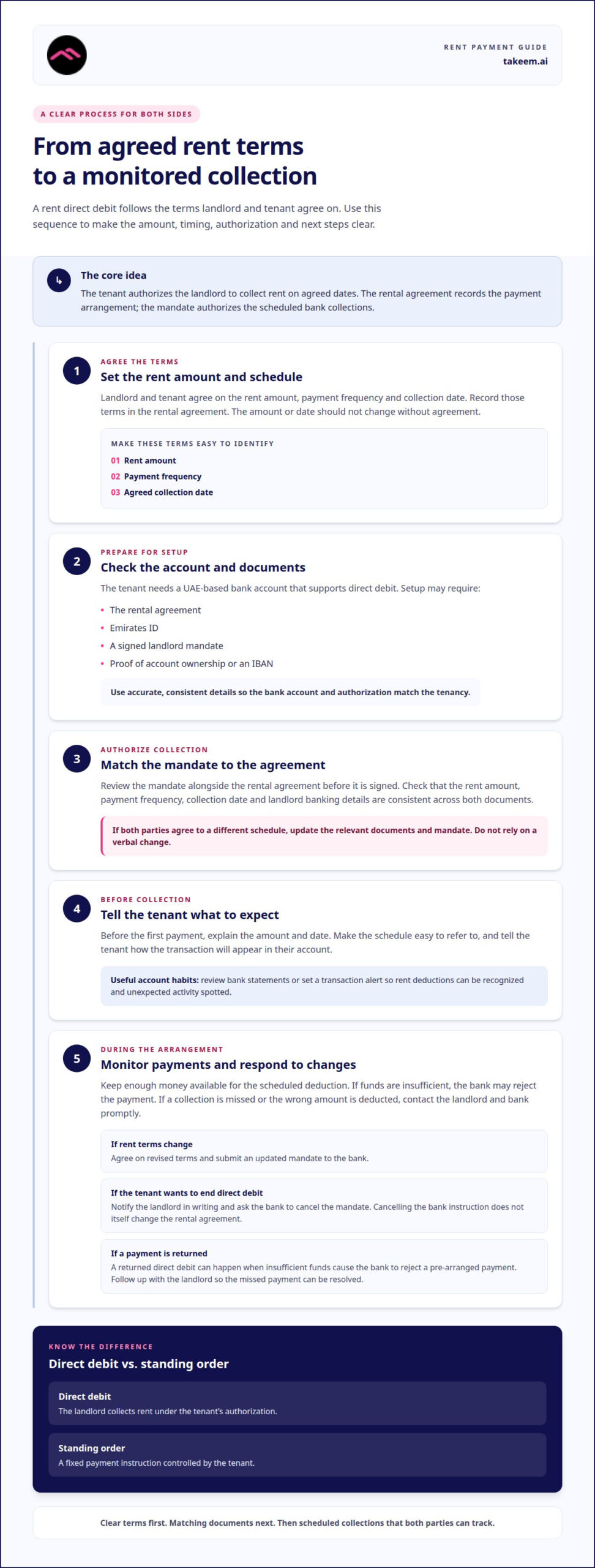
How recurring bank collections work
Explain the agreed collection schedule, then describe how a payment moves from authorization to collection. A straightforward example helps tenants know what to expect.
-
Explain the rent amount and collection schedule
State the rent amount, payment date and frequency agreed by the landlord and tenant. A useful explanation of direct debit starts with those terms, then describes scheduled collection in plain language. The authorization allows rent to be collected without the tenant approving every payment separately. Don’t imply that the amount or date can change without agreement.
-
Give notice before collection
Tell tenants the amount and collection date before the first payment, and make the schedule easy to refer to. Any notice should match the agreed arrangement and help the tenant recognize the collection. Encourage tenants to review bank statements or set transaction alerts. These habits can help them identify rent deductions and spot unexpected activity.
- Explain how tenants can change or cancel the arrangement. A tenant can cancel a direct debit through their bank at any time, but should also notify the landlord in writing. If the rent or collection frequency changes, both parties should agree on revised terms and submit an updated mandate to the bank. Cancelling the bank instruction does not itself change the rental agreement.
- Describe what happens if collection fails. A returned direct debit occurs when insufficient funds cause the bank to reject a pre-arranged payment, according to the European Union. Explain that tenants should keep enough money available for the scheduled deduction. If the amount collected is incorrect, tenants should contact the landlord and their bank promptly to address the error and clarify the next payment.
- Distinguish direct debit from a standing order. Direct debit lets a landlord collect rent under the tenant’s authorization, while a standing order is a fixed instruction controlled by the tenant. For landlords explaining direct debit to tenants, this contrast makes clear who initiates the recurring payment. If rent terms change, review the mandate and payment instructions to keep them consistent with the agreed arrangement.
Tenant Info Needed for Rent Direct Debit Setup
- Start with a UAE-based bank account that supports direct debit. This is the essential account requirement for using rent direct debit in the UAE. Have the account holder’s name and bank details ready, since they connect the tenant’s account to the authorization. An account that does not support direct debit cannot be used for this payment method.
- Prepare the rental agreement and Emirates ID for setup. The agreement identifies the tenancy and records the agreed rent terms, while the Emirates ID identifies the tenant. Keep the details consistent across both documents. For example, use the tenant’s legal name as it appears on the ID, rather than a shortened version that could make it harder to match records.
- Include proof of bank account ownership or the account’s IBAN. These details identify the account from which rent will be collected. Before submitting the mandate, compare the account holder’s name and IBAN with the information entered on it. A mistyped digit or mismatched name can delay setup or create uncertainty about which account was authorized.
- Complete the landlord’s signed mandate and review its payment details before authorization. The mandate records permission to collect rent and should match the amount and schedule in the rental agreement. For example, if the agreement sets quarterly payments, the mandate should not show monthly collection. Resolve any discrepancies before signing rather than relying on verbal explanations later.
- Organize the documents as one setup pack: rental agreement, Emirates ID, signed landlord mandate, and account ownership proof or IBAN. Keep a copy of the completed mandate and the agreed payment terms for reference. If you’re a landlord arranging digital rent collection, use digital direct debit setup to accept monthly tenant payments.
Takeem: Direct Debit setup for Landlords to digitally accept monthly payments from tenants
Takeem helps landlords set up Direct Debit to accept monthly rent payments digitally. This is a practical option when both parties have agreed on the payment schedule and the landlord wants to collect rent digitally.
A clear setup makes the conversation straightforward: explain the agreed amount and date, outline what the mandate authorizes, and ensure the tenant knows which bank account will be used. The arrangement should reflect the rental agreement so the payment process and tenancy terms stay aligned. For landlords seeking broader rental protection, Takeem also offers a Landlord Rental Guarantee.
To discuss setting up Direct Debit for your rental payments, contact Takeem.
Make clear rent payments part of a stronger tenancy
Clear communication about payments can support an organized tenancy. Treat the mandate as part of an ongoing conversation, not just a form to complete at setup. If the tenancy changes, revisit the payment arrangement with the tenant and keep it aligned with the agreed terms. This helps both sides know what to expect and where to raise questions.
The clearest way to explain direct debit to tenants is to connect the authorization with the practical experience of paying rent. Use straightforward language, welcome questions and focus on the agreed arrangement. For landlords and property professionals seeking broader rental support, Takeem also offers Rental Guarantee for Property Investors with Large property Portfolios and Landlord Rental Guarantee that Agents can sell for healthy commissions.
When you’re ready to explore digital rent payments for your property, contact Takeem to discuss your rent payment setup. A clear conversation is a confident next step toward a smoother process for everyone involved.
Frequently Asked Questions
Why Direct Debit for Rent Payments?
Direct Debit can make recurring rent collection more structured for tenants and landlords. Tenants can plan around a scheduled withdrawal, while landlords can reduce the need to handle post-dated cheques. For example, a tenant paying monthly can plan around the agreed collection date. The arrangement works best when both parties understand it and agree to use this payment method.
What is the difference between a direct debit and a standing order?
A direct debit authorizes the landlord to collect rent under agreed terms; a standing order instructs the bank to send a fixed payment. With a standing order, the tenant controls the instruction and arranges changes through their bank. For example, if the rent terms change, the tenant may need to update the standing order. Direct debit instead relies on the collection mandate and agreed terms.
What is direct debit and how does it work for rent payments?
Direct Debit allows a landlord to collect rent from a tenant’s bank account on agreed dates after the tenant authorizes the payments. Collection follows the agreed schedule. Before agreeing, both parties should ensure the rental payment arrangement and collection details match. Discuss whether the property accepts this payment method as part of agreeing on the tenancy.
How does direct debit compare with standing orders and bank transfers for paying rent?
With Direct Debit, the landlord collects rent under the tenant’s authorization; a standing order is a recurring payment instruction managed by the tenant. A bank transfer is generally initiated by the tenant for an individual payment, rather than collected under an ongoing mandate. For example, someone paying manually must initiate each transfer. The suitable option depends on the agreed tenancy terms and how both parties prefer to manage rent.
What should tenants do if a rent direct debit is incorrect?
The UK Direct Debit Guarantee requires payments taken in error to be refunded. In Dubai, tenants should contact their landlord and bank immediately if the wrong amount is deducted.