
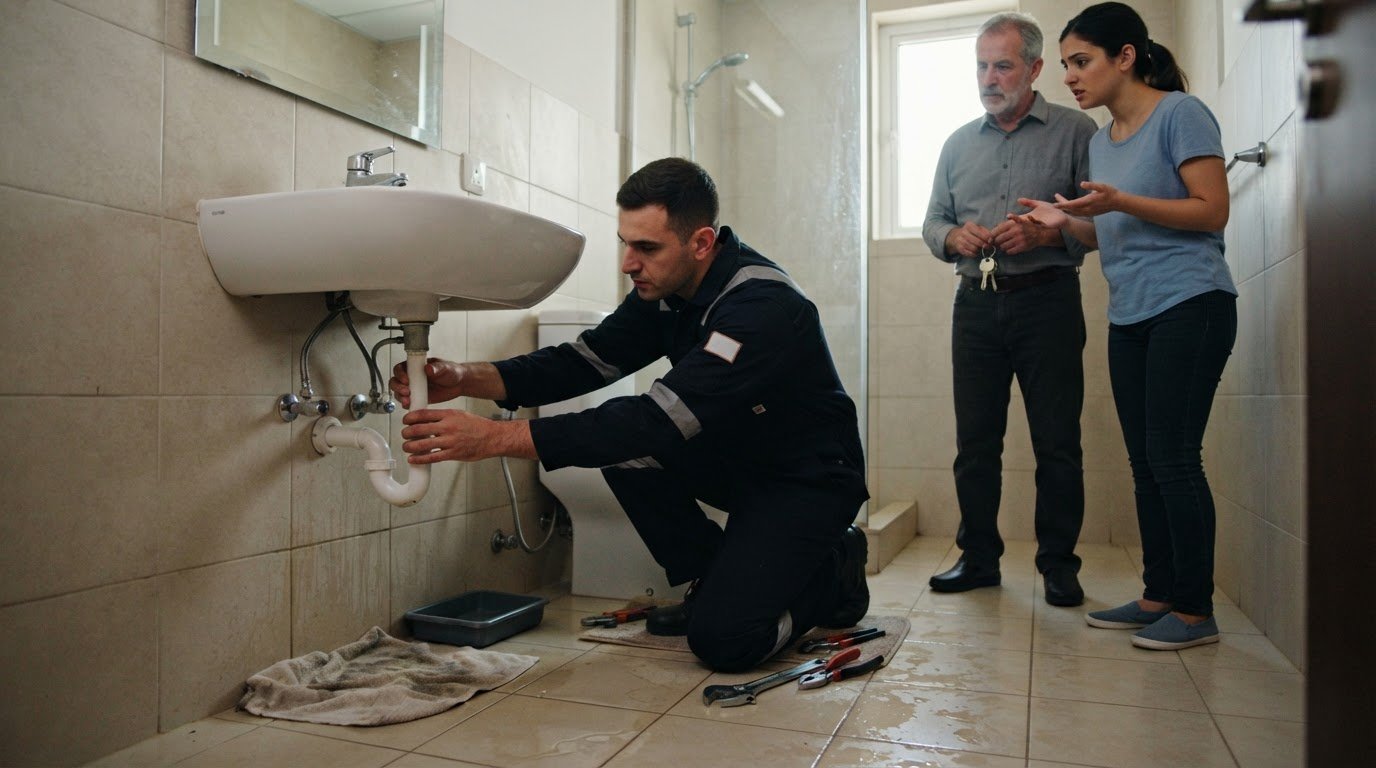
A 24-hour helpline doesn’t mean unlimited repairs. 24/7 emergency assistance for landlords can connect a landlord or tenant with help for urgent property problems, while the policy sets which emergencies qualify and how much it pays towards callout, labour and parts. The cover limit matters as much as the helpline hours.
It’s reasonable to expect emergency cover to help restore essential services and make a rental home safe. But supported trades, claim steps and exclusions shape what happens when something goes wrong. This guide explains how emergency assistance works in the UAE, what to look for in the cover limits, which trades may be included and how tenants can access the helpline. You’ll also see where emergency maintenance can fit into a broader landlord rental guarantee, so you can assess the practical support alongside the policy terms.
Key Takeaways
- Understand how emergency definitions, exclusions and claim steps affect whether a repair qualifies for support.
- Read the cover limit as a combined cap for callout, labour and parts, not simply a repair allowance.
- Compare which plumbing, electrical and drainage emergencies are covered, and how tenants can reach the helpline.
- Takeem’s Landlord Rental Guarantee includes emergency property maintenance, linking urgent repair support with a broader rental solution.
Emergency callout and claim limits
Emergency cover depends on the event, policy wording and maximum payable per claim. A 24-hour helpline does not automatically mean unlimited repairs, a waived excess or every tradesperson’s bill is covered.
Repair and Claim Limits
Separate the number of claims allowed from the amount payable for each emergency. A policy may cap callout charges, labour, parts or the total claim, leaving you to pay the difference if a repair exceeds the limit. “No excess” means no excess is deducted from an eligible claim; “included claim fees” should specify which charges are covered. Read these terms together: they do not promise unlimited repairs or cover for every fault.
In the UAE, responsibility for emergency repairs depends on the tenancy agreement and the repair involved. Landlords and tenants should follow the maintenance duties set out in their agreement.
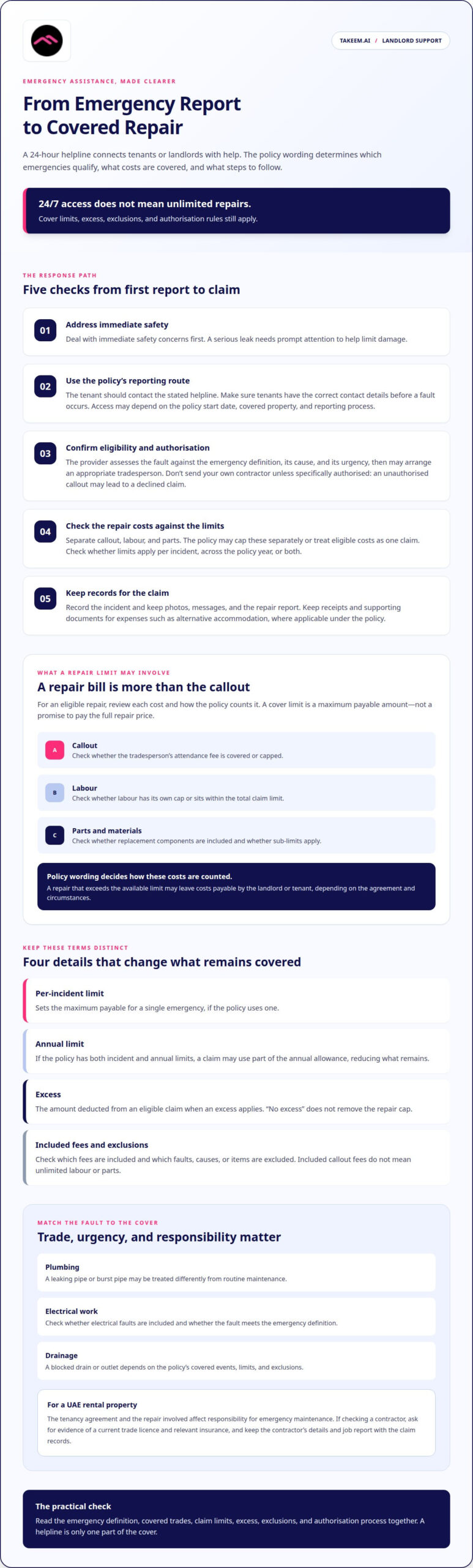
If a tenant reports an emergency, address immediate safety first, then record the problem and contact the assistance helpline. Don’t send your own tradesperson unless specifically authorised, as an unauthorised callout may lead to a declined claim.
Emergency Maintenance Response Times
For UAE properties, response times depend on the assistance terms and the urgency and nature of the fault. A serious leak needs prompt attention to limit damage, while a non-urgent repair may follow a different process. Read how the policy defines emergencies and what happens after the tenant calls.
Stay Benefits may apply when the property is unsafe to occupy. Alternative accommodation for tenants can be authorised and reimbursed when supporting documentation is provided. Keep receipts and records of the incident, and follow the claims process so the expense can be assessed under the policy.
Emergency callout, labour and parts limit
An emergency cover limit sets the maximum payable for an eligible repair, not the price of every repair. For a leaking pipe, the policy may count the tradesperson’s callout, labour and replacement parts together. Check whether the stated cap applies per incident, across the policy year, or both. Those details determine what remains payable if a repair exceeds the available limit.
Separate each cost when comparing home emergency cover. One policy might include the immediate callout but cap labour or materials; another may treat all eligible costs as a single claim. For example, a failed water heater could require diagnosis, labour and a replacement component. The eligible amount depends on the wording, any sub-limits and whether the fault meets the policy’s emergency definition.
Review exclusions alongside limits. An optional extension may add a type of emergency, while exclusions may remove cover for a particular cause or item. Check whether electrical faults are included, how repeated incidents are treated and whether existing damage affects eligibility. A clear comparison lists covered trades, per-incident caps, annual limits and exclusions together.
Per-incident and annual limits work differently. If a policy has both, a single claim can use part of the incident allowance and reduce what remains under the annual maximum. The excess is separate: it is the amount deducted from an eligible claim when the policy applies one. “No excess” does not remove a repair cap, and included callout fees do not mean unlimited labour or parts.
Before choosing, use a sample repair to test the wording. Write down the callout, labour, parts, excess and remaining annual allowance, then see which costs fall outside cover. For landlords seeking maintenance support as part of a broader rental arrangement, emergency property maintenance support may be relevant.
Plans covering plumbing, electrics and drains
Emergency home cover can arrange help for specific property faults, but the covered trades and events depend on the policy. A blocked drain, burst pipe or sudden electrical failure may be treated differently from routine maintenance. Check the eligible emergency definitions, repair limits, exclusions and callout process before relying on cover for a rental home.
In the UAE, a service agreement sets out what round-the-clock landlord support covers. Look for an emergency contact route, the faults it handles and whether tenants can report problems directly. A hotline alone does not explain which repairs are included or how the provider coordinates a tradesperson.
To find a qualified contractor across the UAE, ask for evidence of a current trade licence and relevant insurance. Match the contractor’s stated work to the fault: plumbing for a leaking pipe, electrical expertise for a power fault, and drainage work for a blocked outlet. Keep the contractor’s details and job report with the claim records.
Eligibility often depends on the cause and urgency of the fault. A sudden boiler breakdown that stops heating, for example, may fit an emergency definition, while planned servicing is routine upkeep. Landlord insurance and home emergency cover are not interchangeable: check whether the policy addresses the building, boiler, heating components and tenant safety.
Check how assistance works from the first report to the repair. The tenant reports the fault through the stated channel; the provider assesses eligibility and arranges an appropriate tradesperson. Avoid arranging work independently if the claims process requires prior authorisation. Keep photos, messages and the repair record to document what happened.
Home emergency cover price depends on the covered trades, property details, limits, excess and optional boiler or heating protection. The price depends on the case and is given after a quote request. Compare the scope against likely property needs, rather than choosing by price alone; a cheaper option may exclude the fault most likely to interrupt a tenant’s essential services.
24-Hour emergency helpline
A policy advertising 24/7 emergency assistance for landlords should explain how tenants reach its helpline and what happens next. Access may depend on the policy start date, covered property and reporting process. Give tenants the correct contact details before a fault occurs. A clear route helps them report a burst pipe or failed electricity supply without confusion.
Use the helpline for urgent incidents covered by the policy, not routine maintenance. The caller should describe the rental property, the fault and any immediate safety concern. The assistance team can record the incident and explain the next step under the policy. A call alone does not mean every repair or cost is covered.
Before the policy starts, landlords can prepare a simple reporting note for tenants. Include the helpline number shown in the policy, the information to provide and instructions for keeping the claim reference. For example, a tenant reporting a leak can state which room is affected, whether water is still flowing and whether anyone faces an immediate risk.
- Confirm access: Find out whether tenants or landlords can call, and whether the line operates outside business hours.
- Record the report: Note the time, fault description and claim reference for later updates.
- Follow instructions: Use the stated process before arranging a tradesperson independently.
- Keep evidence: Save relevant messages, photographs and receipts linked to the incident.
If an emergency makes a rental property unsafe to occupy, alternative accommodation may be authorised and reimbursed when documentation is provided. Keep receipts and the helpline’s instructions together. This part of the claims process is separate from arranging a repair, so record both actions.
Set up tenant access before an emergency happens. Review the policy wording with the reporting instructions, then share the relevant details with each tenant. Explore emergency maintenance support as part of a broader rental arrangement.
Takeem: Landlord Rental Guarantee
Takeem’s Landlord Rental Guarantee includes an emergency property maintenance service. It may suit landlords looking to combine rental guarantee support with maintenance, rather than treating urgent repairs as a standalone policy. Takeem also offers a Rental Guarantee for property investors with large portfolios.
Emergency maintenance is not the same as unlimited insurance cover. Review the applicable service terms alongside the repair process and the responsibilities set out in your tenancy arrangement. Agents can also sell Takeem’s Landlord Rental Guarantee for healthy commissions.
If you’re assessing how a rental guarantee could fit your property or portfolio, contact Takeem to discuss its offering. You can also visit takeem.ai.
Put a clear response plan in place
Use your next policy review to turn emergency cover into a practical plan for the rental property. Give tenants a clear reporting route, keep property access details organised, and decide who records incidents and repair documents. These steps can reduce confusion when a fault interrupts essential services.
For 24/7 emergency assistance for landlords, the policy wording and the tenant’s first actions need to work together. Set aside time to compare the cover with the property’s maintenance needs, then make the reporting instructions easy to find. A prepared process helps you respond with greater clarity when an urgent issue arises.
Takeem may be a useful next step if you’re considering landlord cover alongside rental support. Contact Takeem about landlord cover to explore whether its offering fits your needs. A considered plan today can help you manage future property issues with confidence.
Frequently Asked Questions
What is Landlord Emergency Assistance Insurance?
Landlord emergency assistance insurance is cover designed to help address sudden property problems that need urgent attention. Depending on the policy, it may arrange a repair and contribute towards eligible costs. It is distinct from a rental guarantee, which addresses rental arrangements rather than defining insurance protection. For example, a sudden leak may be treated differently from a planned bathroom upgrade.
What’s covered?
Cover varies by policy wording, but may include specified urgent faults involving plumbing, electricity, drainage or heating. The policy defines which property items and causes qualify, and whether the service arranges repairs or contributes to their cost. A dripping tap that can wait may be treated differently from a pipe leak affecting another room. Review covered events and exclusions against the property’s actual systems.
What can I use the 24/7 emergency line for?
Use the emergency line to report a sudden property fault that may qualify for assistance, such as a serious water leak or loss of power. Share the property address, the affected area, what happened and any immediate safety concern. The handler can record the issue and explain the next action under the policy. Keep the reference details for follow-up.
What is considered an emergency?
An emergency is generally a sudden fault requiring urgent action to protect occupants or prevent further property damage. A pipe actively flooding a room is a clearer example than a slow leak contained in a sink cabinet. The policy wording determines eligibility, so describe the impact accurately, including whether essential services have stopped or the home cannot be used safely.
What 24/7 emergency assistance services are available for landlords in the UAE?
Available support varies by policy and service arrangement. Some assistance plans focus on arranging urgent trades, while others contribute towards eligible repair costs. Takeem offers emergency property maintenance as part of its Landlord Rental Guarantee. This is a maintenance service within a rental guarantee, not a statement that Takeem operates a 24-hour helpline or provides a standalone emergency insurance policy.
Which landlord emergencies are covered, such as burst pipes, power outages, and lockouts?
Burst pipes, power outages and lockouts may appear in emergency cover, but their inclusion is not automatic. A policy can distinguish a sudden fault from a pre-existing problem or routine repair. For a power outage, note whether it affects only the property; for a lockout, check whether lock-related incidents fall within the stated assistance terms.