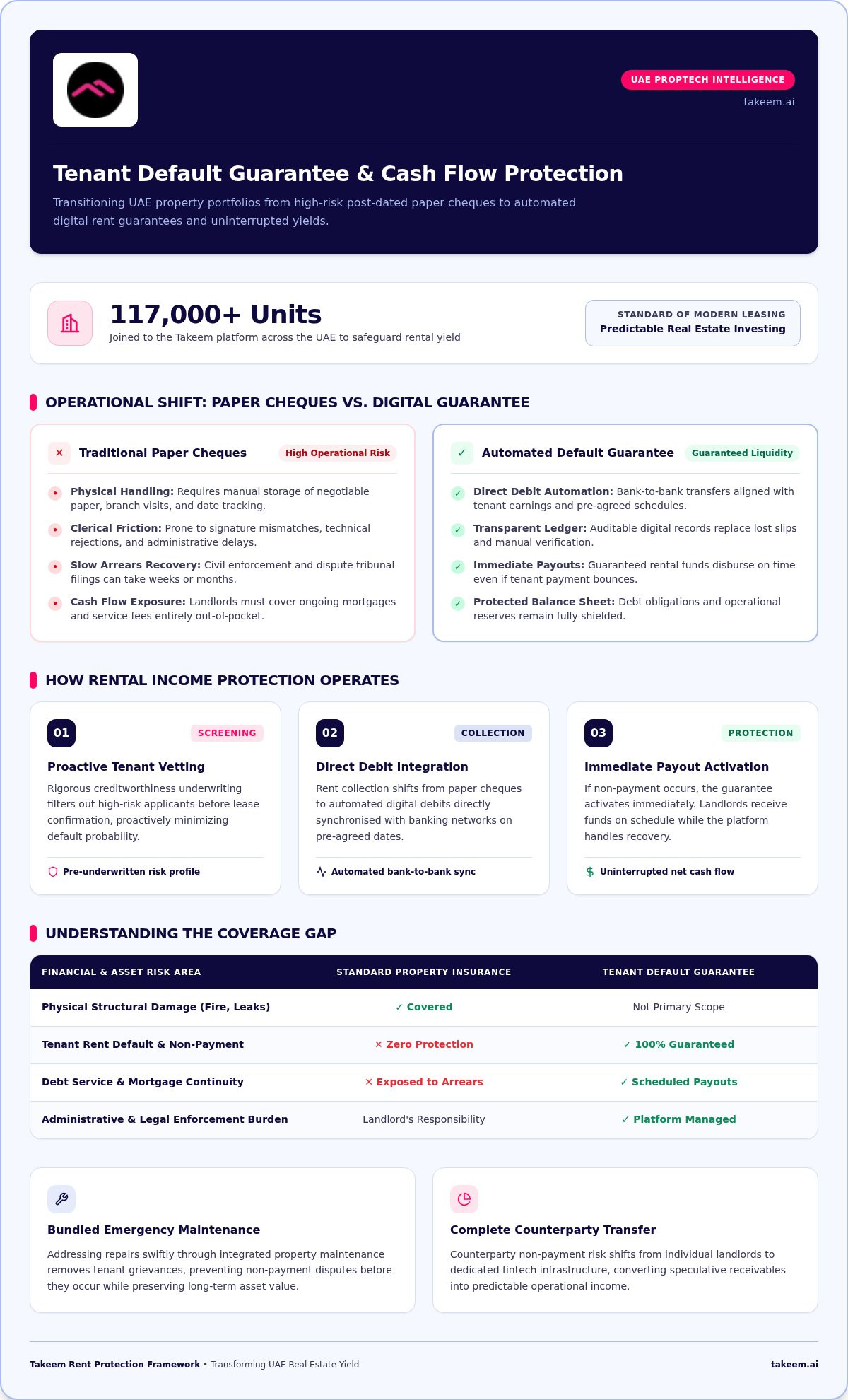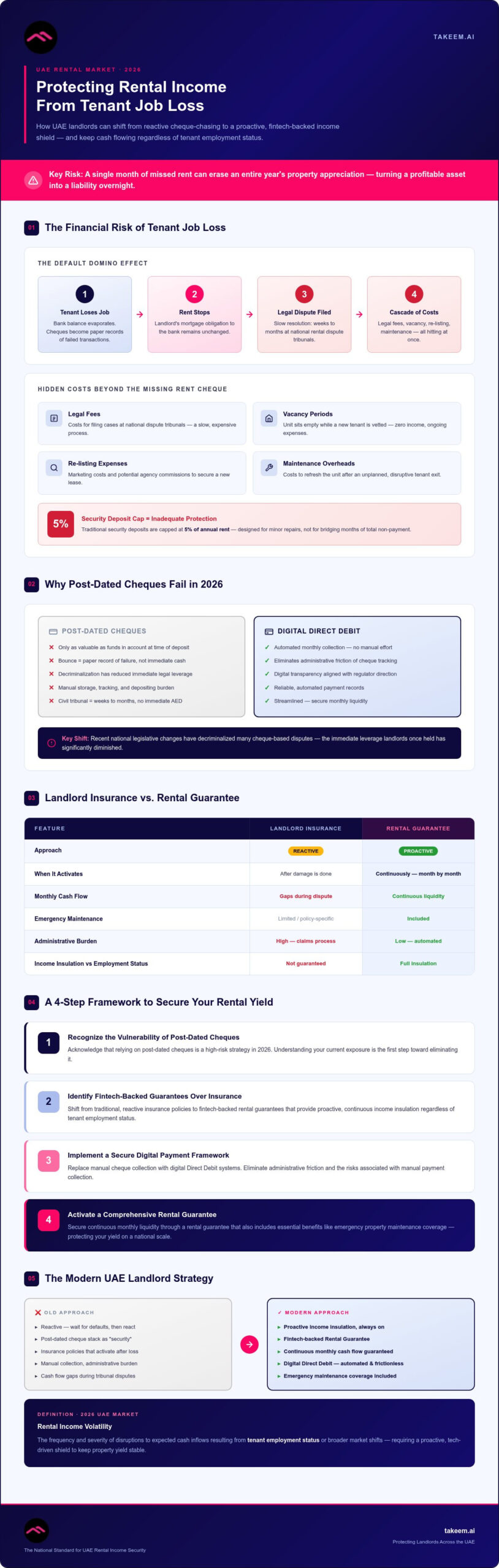

A rent protection scheme can help reduce the impact of missed rental income, but it does not replace the tenancy contract or legal eviction process. A landlord rent protection scheme in the UAE is a contractual arrangement, and its protection depends on its terms. Eviction procedures depend on the rules that apply to the property.
It is understandable to want clarity about rent collection, contract terms and a tenant’s default. Different parties may handle these responsibilities, so it is important to know what a scheme covers and what remains governed by the tenancy contract and applicable rules. This guide explains how rental income schemes work, how contracts and payments are managed, and how eviction before a lease ends may be handled. It also explains how a rental guarantee can support landlords without confusing income protection with property management or the legal right to evict.
Key Takeaways
- Understand how tenancy contracts, rent collection and payment arrangements fit together, and which responsibilities stay with the landlord.
- Compare the kinds of rental income protection available and identify what each arrangement is designed to cover.
- Learn which policy terms and exclusions can affect protection when a tenant defaults.
- See how Takeem’s Landlord Rental Guarantee can support landlords seeking rental income protection, with emergency property maintenance included as part of the guarantee.
Contract and payment management responsibilities
A tenancy agreement records the rent and each party’s duties. A protection arrangement sets separate terms for missed payments. Make sure each document clearly states its role and the property it covers.
Available Rent Protection Options
Rent protection options include rental guarantees and insurance policies, while payment arrangements determine how rent is collected. Their value depends on the landlord’s needs: protection against a covered income loss is different from a way to receive regular payments. Residential and commercial properties may be covered, depending on the scheme’s terms. Check which property types and events are included before deciding whether an arrangement suits a tenancy.
Differences Across Emirates
Tenancy procedures and contract requirements are local, so they can differ across the UAE’s emirates. This matters when a landlord owns properties in more than one emirate: a notice or renewal process for one tenancy may not apply to another. Match each property’s tenancy agreement to the local requirements, then review the protection arrangement separately. Its contractual terms do not replace local tenancy rules.
Protection Against Tenant Default
Legal remedies and private rent protection are separate parts of a landlord’s response to default. A payment guarantee does not end a tenancy or authorize eviction. If rent is overdue, record the missed payment, keep relevant communications and follow the applicable legal process. The protection agreement governs whether the default meets its conditions for a claim.
Required Documents and Claims Process
A claim file links the tenancy, missed payment and landlord’s actions. The protection agreement sets out the required evidence and submission process, so use it as your checklist. Relevant records may include the signed tenancy and protection agreements, rent schedule, payment history and dated tenant communications. Organize these by rental period to show the amount unpaid and when the default occurred.
What rent protection schemes are available to landlords in the UAE?
Distinguish protection against lost rent from services that collect payments. A rental guarantee or insurance policy sets out whether a defined tenant default triggers a payment. A payment arrangement manages how rent reaches the landlord. The agreement determines the coverage, exclusions and claim conditions for every landlord rent protection scheme UAE property owners might consider.
- Rental guarantee: A contractual arrangement may provide income protection under stated terms. The agreement defines covered defaults and the process for making a claim.
- Insurance policy: A landlord policy may address rental loss if its wording includes that risk. Review the covered events and exclusions, not just the policy name.
- Digital payment arrangement: Automated transfers can support regular rent collection. They do not, by themselves, protect against unpaid rent or replace a guarantee.
These options address different needs. A landlord seeking protection when rent is missed should understand the guarantee or policy terms. One seeking a more consistent collection process may focus on payment arrangements. Combining them helps only when each has a clear role.
Security deposits are another part of the rental framework, but they aren’t the same as ongoing income protection. In the UAE, the typical deposit is 5% of annual rent for an unfurnished property and 10% for a furnished property. The deposit provides security under the tenancy, while a protection arrangement’s scope comes from its own agreement.
Dubai tenancy law does not explicitly require landlords or tenants to carry insurance. It is therefore important to distinguish legal requirements from voluntary contractual arrangements. Before relying on a scheme, identify the risk it protects against, how to make a claim and which tenancy or payment records support it. The terms show whether the arrangement suits the property and rental needs.
What are the eligibility requirements and exclusions for UAE rent protection policies?
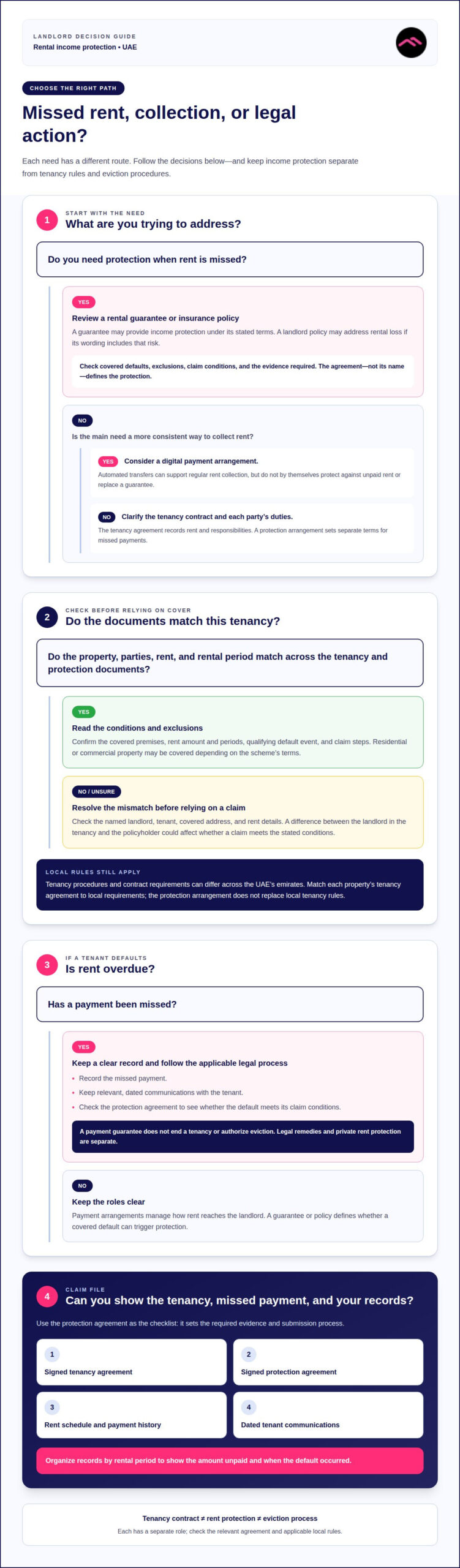
Eligibility depends on the protection agreement, property and tenancy covered. Landlords should distinguish policy conditions from tenancy-law requirements: a clause in one agreement does not automatically apply to another. Before relying on a policy for a specific tenancy, read its definitions of landlord, tenant, premises and rent.
Start with the property and rental details in the tenancy agreement. Check that the covered address, named landlord, tenant and rent period match the documents supporting the protection arrangement. For example, a difference between the landlord named in the tenancy and the policyholder could affect whether a claim meets the stated conditions.
- Covered property: Confirm whether the agreement applies to the specific residential or commercial premises.
- Covered rent: Identify which rent amount and rental periods the arrangement uses.
- Default event: Check what tenant action or missed payment qualifies under the wording.
- Claim conditions: Note the evidence and notice steps the agreement requires.
Exclusions remove particular events or circumstances from cover. Wording varies by agreement, so do not assume every policy treats arrears, contract disputes or property damage alike. For example, an agreement may cover unpaid rent but exclude another type of loss. These are separate issues and should not be treated as interchangeable.
Use a practical review: match the tenancy agreement to the protection document, then find the clauses on eligibility, exclusions and claims. Check how the agreement treats tenancy amendments, changes of tenant or rent, and missed payments that began before cover started. These details can affect whether a later claim meets the agreed conditions.
Keep the signed tenancy agreement, payment records and written communications together. If a tenant falls behind, the date and period of each unpaid amount can help establish the sequence of events. The protection agreement is the key reference for eligibility and exclusions. A security deposit or payment collection method does not change its terms.
Does UAE law protect landlords against tenant non-payment or default?
UAE tenancy law and rent protection agreements address different risks. The law sets out the landlord’s available legal remedies, while a private agreement may address rental income under its own terms. Neither replaces the other.
In Dubai, a landlord may seek eviction for non-payment if the tenant has failed to pay even after thirty (30) days’ notice, according to the Dubai Land Department. The notice period is a legal step, not an automatic eviction. If the tenant still occupies the property, the landlord must pursue the relevant process rather than treating the lease as ended.
Keep the rent claim separate from possession of the property. An unpaid instalment creates an arrears issue, while eviction concerns the tenant’s right to remain. For example, a landlord may need to document the missed payment and notice, then use the appropriate dispute process if the matter remains unresolved. A rent guarantee or policy operates under its contract and does not itself grant possession.
In Dubai, the Rental Dispute Centre’s Arbitration Department aims to resolve rental disputes within 15 days. That stated aim concerns dispute resolution, not a promise that every non-payment case will conclude within that period. Keep the tenancy agreement, rent schedule, payment record and notice together, so the timeline is clear if the dispute reaches the Centre.
For a landlord, the practical distinction is straightforward: follow the legal route for eviction, and use a separate contractual arrangement for any covered rental loss. The arrangement’s wording determines the covered event and claim requirements. To explore a landlord rental guarantee as an income-protection option, review how its terms address missed rent alongside the tenancy process.
Dubai tenancy law sets no specific rental deposit amount but requires its return at tenancy end. The landlord holds it during the tenancy rather than placing it with a third-party deposit holder. For annual rent of AED 100,000, a typical deposit is AED 5,000 for an unfurnished property and AED 10,000 for a furnished property.
Takeem: Landlord Rental Guarantee
Takeem offers a Landlord Rental Guarantee for landlords seeking rental income protection alongside their tenancy arrangements. It may suit landlords concerned about missed rent, while the tenancy contract and legal process continue to govern the landlord-tenant relationship.
Property investors with large portfolios can use Takeem’s Rental Guarantee for Property Investors with Large property Portfolios, which includes emergency property maintenance. Takeem also sets up Direct Debit for landlords to accept monthly tenant payments digitally. This supports payment administration, while the guarantee addresses rental protection under its terms.
Agents can also sell Takeem’s Landlord Rental Guarantee for healthy commissions. The right option depends on whether you are a landlord, portfolio investor or agent looking for a relevant rental guarantee. Contact Takeem to discuss the Landlord Rental Guarantee.
Make your next rental decision with confidence
Decide what you want to make more predictable: rental income, payment administration or both. This priority can guide your review of a landlord rent protection scheme in the UAE and help you focus on terms that suit your properties.
For a single property, start with the outcome you need. For a portfolio, consider how a consistent approach could work across different tenancies. Agents can explore whether a rental guarantee suits the landlords they support. A clear view of your needs makes it easier to assess a landlord rent protection scheme in the UAE.
Contact Takeem to discuss your rental needs and consider a practical next step for your properties. A focused decision can help you approach future rental arrangements with confidence.
Frequently Asked Questions
What are Rental Income Schemes?
Rental income schemes are designed to support landlords’ rental income or rent collection. A landlord may use a rental guarantee for protection under agreed terms, while digital payment collection can help receive monthly rent without traditional cheques. These arrangements serve different purposes. Decide whether your priority is income protection, payment administration or both before choosing.
How does rent guarantee insurance work for UAE landlords?
A rent guarantee sets out the conditions under which a landlord may receive support after a tenant defaults. The agreement defines its scope and claim requirements, so the label alone does not establish what is covered. Keep the rent schedule and payment history aligned with the tenancy records. Digital collection can simplify payment administration, but it is separate from the guarantee’s terms.
Which UAE insurers offer rental income protection, and what do policies cover?
An insurer’s name alone does not show whether a policy protects rental income. Coverage depends on the policy wording, including covered events, exclusions, evidence requirements and the claim process. When comparing insurance with a rental guarantee, distinguish the product types and read the terms for the specific property and tenancy. Do not assume a general property policy covers missed rent.