

More services don’t automatically mean more value; the right support is the kind that addresses a landlord’s day-to-day priorities. In the UAE, useful value-add services for landlord clients may combine emergency maintenance support, simpler rent collection and practical help tailored to a landlord’s needs. The aim is a more manageable rental experience, not simply a longer list of extras.
Managing a property takes time and attention. Maintenance issues, payment administration and tenant needs can all demand a landlord’s focus, so support with these tasks can leave more time for wider plans. The right mix depends on whether you own one property or manage a larger portfolio.
This article explains how emergency maintenance support and digital rent collection can help landlords manage common tasks, and how to assess which services fit their goals. It also covers tenant screening and practical ways to evaluate time and costs, so you can choose support that suits your approach to property in the UAE.
Key Takeaways
- Set a clear process for reporting maintenance issues so urgent repairs are easier to coordinate.
- Assess time and cost savings by looking at which recurring tasks take the most effort and how support could simplify them.
- Match services to your priorities, whether you value hands-on support or help with a specific part of renting.
- Consider how tenant screening and streamlined rent collection can support a more manageable rental experience.
1. Maintenance, emergency repairs and contractor networks
Landlords may arrange building or contents insurance for risks such as fire, flood, theft and malicious damage. Inspections and maintenance support can help identify issues, while emergency-response services coordinate repairs when urgent problems arise. For example, a leaking pipe needs prompt reporting, assessment and repair coordination to limit disruption.
Set a clear route for tenants to report problems, such as a dedicated contact channel and a written process for describing faults. Ask tenants to note the affected area, visible damage and whether the issue is getting worse. This gives the person coordinating repairs useful information before contacting a contractor. Clear expectations in the rental agreement also help tenants distinguish routine concerns from urgent problems.
Preventive maintenance can address wear before it becomes an emergency. A practical schedule might include checking air-conditioning performance before periods of heavy use, looking for visible plumbing leaks and inspecting doors or windows that no longer close properly. Record each inspection and repair to build a useful property history. Across a portfolio, those records can reveal recurring faults and help landlords plan maintenance around actual needs.
A reliable contractor network can make repairs easier to coordinate, particularly across several properties or a commercial unit. A clear process helps: document the issue, assess its urgency, assign the appropriate trade and record the completed work. Defined scopes and regular updates keep tenants informed and make it easier to compare the completed repair with the expected outcome. Ongoing relationships with tradespeople can also support continuity across repeat jobs.
Value-add services for landlord clients are most useful when they address a specific pressure point. A landlord who handles routine upkeep may still want help coordinating emergency repairs; another may prefer regular inspections and a documented maintenance plan. In either case, prompt communication and a defined repair process reduce confusion when a property issue disrupts a tenant’s routine.
2. Demonstrating time and money savings
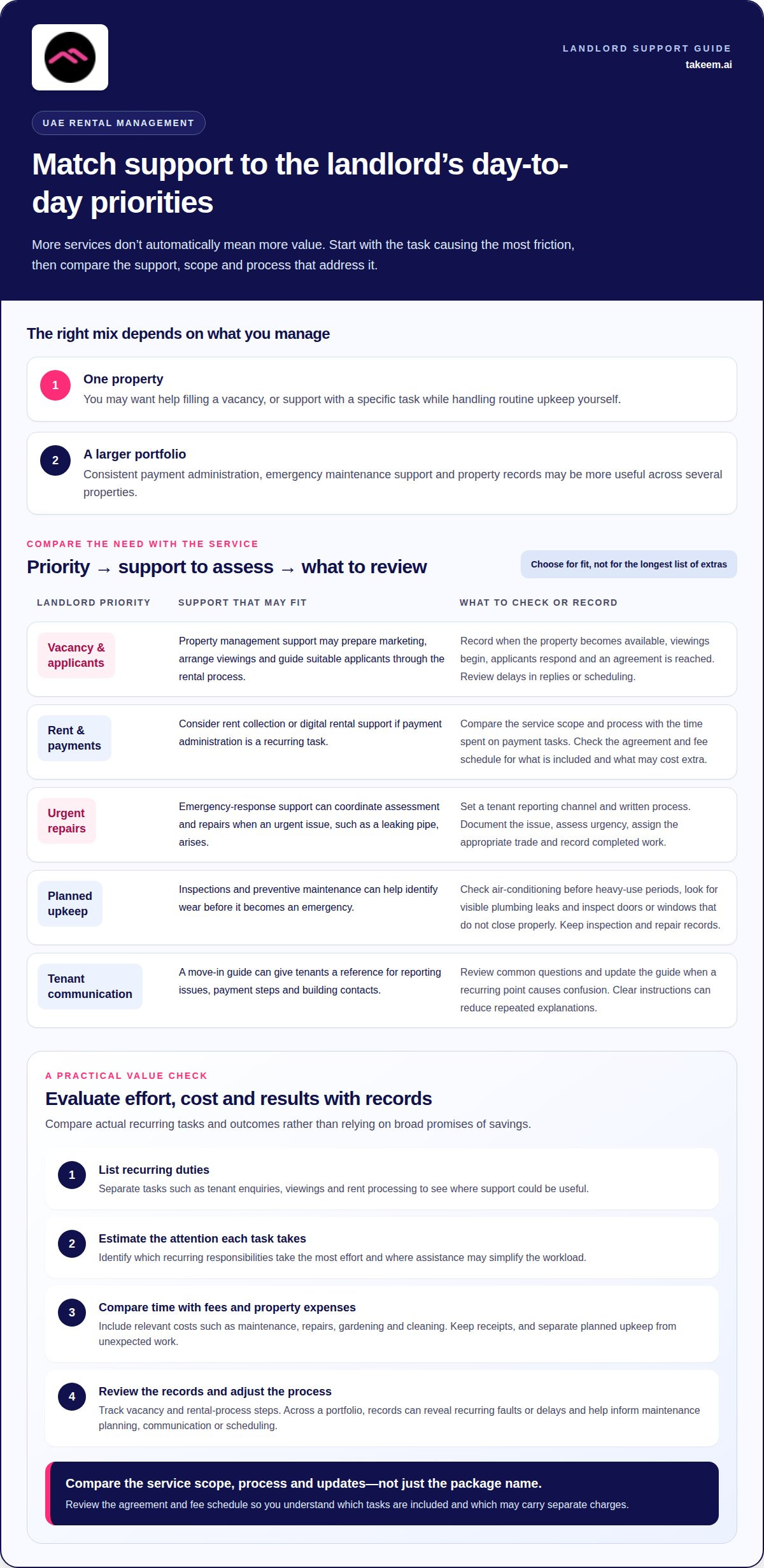
Assess value by tracking tasks completed, time saved and rental performance, rather than relying on broad promises. Start by listing recurring duties, estimating the attention each takes and identifying where support could reduce the workload. Coordinating tenant enquiries, arranging viewings and processing rent, for example, involve different tasks. Separating them helps landlords see where assistance would be most useful.
Property managers may help reduce vacancy by preparing marketing, arranging viewings and guiding suitable applicants through the rental process. Vacancy periods can help landlords assess how well marketing and tenancy arrangements are working. Competitive rent matters too: market rates can inform pricing, but a higher rent is not an automatic outcome.
Track the process with practical records. Note when a property becomes available, when viewings begin, how quickly applicants respond and when an agreement is reached. Reviewing these steps across a portfolio can reveal delays, such as slow replies or gaps between viewings. Managers can then adjust communication or scheduling and show where time is being spent.
Assess costs just as carefully. Compare the time spent on recurring tasks with the fees for support, and include relevant property expenses. General maintenance and repairs, along with services such as gardening and cleaning, may be rental-property expenses. Keep receipts and records for accurate budgeting, and separate planned upkeep from unexpected work. This gives you a more useful comparison than assuming a saving.
Clear information for tenants can prevent avoidable calls and repeated explanations. A move-in guide covering how to report issues, payment steps and building contacts gives tenants a reference they can use independently. Review common questions and update the guide when a recurring point causes confusion. This respects tenants’ time and helps landlords manage their obligations more efficiently.
For landlords focused on payment administration, digital rental support can be one part of a more streamlined process. Assess it alongside vacancy handling and routine tasks to see where it fits.
3. Personalising value for landlords
A service adds value when it fits a landlord’s actual priorities. One owner may want help filling a vacancy, while an investor with a portfolio may value consistent payment administration and emergency maintenance support. Identify the task causing the most friction, then focus on support for that need rather than choosing every available extra.
There is no single standard management package across the UAE. Services may cover tenant finding, rent and deposit collection, inspections, maintenance or tenancy administration, and some tasks may carry separate charges. Review the agreement and fee schedule to understand what is included and what may cost extra.
Compare packages by matching each service to a specific need: tenant finding, rent handling, property upkeep or tenant communication. A landlord who manages maintenance directly, for example, may prioritise support with rent payments instead. Compare the scope, process and updates, not just the package name.
UAE requirements depend on the emirate and tenancy arrangement, so the tenancy agreement and applicable registration process matter. Under current RERA regulations, applicants must register previous unregistered rental contracts before registering the current year’s contract.
Personalisation also means considering how each choice affects the property’s appeal and tenant experience. If an owner plans a rent increase, pairing it with a relevant upgrade or added service can help explain the change. For example, improving a frequently used shared area may matter more to tenants than an upgrade they rarely notice.
Insurance may form part of a landlord’s broader plan, alongside maintenance and payment support. The right cover depends on the property and the landlord’s concerns, such as protecting the building or its contents. Considering these priorities alongside the tenancy agreement helps clarify which services belong in the arrangement and which need separate attention.
For landlords with several properties, consistent records make tailored support more practical. Track recurring expenses, tenant feedback and common requests to identify where a change in service could help. A transparent review ties each service to a specific goal instead of assuming every landlord needs the same package.
4. How can landlords benefit from tenant screening and rent collection services?
Tenant screening helps landlords assess an applicant before agreeing to a tenancy. Common checks include employment and income verification, a credit history review and references from previous landlords. Taken together, these details provide a clearer picture of an applicant’s rental history and ability to meet rent commitments.
A consistent process also supports fair, organised decisions. Landlords can apply the same screening steps to each applicant, record relevant information and compare it with the property’s requirements. This can help avoid rushed decisions when several applications arrive close together. Screening informs a decision, but it does not replace clear communication about the tenancy terms.
Rent collection provides structure once a tenancy begins. A defined payment method and due date, together with a record of payments received, make it easier to track rent and follow up on missed payments. Digital payment collection can reduce manual administration, particularly for landlords managing several units. Clear records also help reconcile rental income with property expenses.
To make the process practical, landlords can use a straightforward sequence:
- Collect application details and complete consistent reference checks.
- Set out rent amount, due date and payment method in the tenancy agreement.
- Record each payment and promptly follow up on any discrepancy.
- Keep tenant communications and payment records together for later reference.
For landlords with multiple properties, centralised records make patterns easier to spot. A late payment at one unit, for example, can be addressed separately while keeping other rental accounts in view. Clear records also help distinguish a one-off delay from a recurring issue, supporting timely, measured communication with tenants.
Screening and collection work best as connected steps: assess applicants carefully, explain payment expectations, then keep reliable records. Landlords looking to simplify monthly payment administration can set up digital rent collection for tenant payments.
Lettings agencies should aim to find landlords responsible, problem-free tenants and may also provide hands-off property management. This offers a way to reduce landlords’ day-to-day involvement.
Takeem: Direct Debit setup for Landlords to digitally accept monthly payments from tenants
Takeem provides Direct Debit setup so landlords can accept monthly tenant payments digitally. This can suit owners who want a digital collection process instead of relying on manual reminders and records. Takeem also provides a Landlord Rental Guarantee, which includes emergency property maintenance service.
The right option depends on the need you want to address: payment administration, rental protection or emergency maintenance support. For investors with larger portfolios, Takeem also provides a Rental Guarantee for Property Investors with Large property Portfolios. These services offer focused support, but do not replace property management or cover every part of a landlord’s work.
To discuss which option fits your rental needs, contact Takeem.
Choose the next step for your rental priorities
Use your next review to set a clear operational priority for each property. A landlord with one unit may focus on simplifying payment administration, while an investor may want a consistent approach across a larger portfolio. This keeps decisions tied to the work that matters most, rather than adding services without a defined purpose. The best value-add services for landlord clients support specific goals and fit how each owner wants to manage rental activity.
Takeem provides a Landlord Rental Guarantee and a Rental Guarantee for Property Investors with Large property Portfolios. Agents can also offer the Landlord Rental Guarantee to their clients for commissions. These options give landlords and agents distinct ways to address their rental needs.
Start by identifying the priority you want to address, then explore the relevant service. Contact Takeem to discuss landlord services and take a considered next step for your rental plans.
Frequently Asked Questions
What value-added services do property managers offer landlord clients?
Property managers may support tenant move-in and move-out, inspections, tenant communication, rent collection and maintenance coordination. The scope depends on the service agreement, so landlords should understand which tasks are covered and how requests are handled. Takeem focuses on rental guarantees, digital monthly rent collection and emergency property maintenance as part of its Rental Guarantee, rather than full property management.
Which landlord services are included in standard management packages versus charged extra?
There is no standard package. Services may include tenant finding, rent and deposit collection, inspections, maintenance and tenancy administration, and some tasks may incur separate charges. Review the agreement and fee schedule to understand what is included.