
A property deal can close smoothly and still be the last time a client hears from an agent. Client retention strategies are the consistent actions that keep relationships active and encourage clients to return or make referrals. In the UAE, effective client retention strategies for property agents combine prompt communication, thoughtful follow-up and service tailored to each client’s needs.
Strong relationships don’t depend on constant messages; they depend on relevant ones sent at the right time. Clients value responsiveness and trust, but follow-up can fade after a transaction, updates can feel generic, and missed expectations can weaken confidence. Practical retention starts with using clients’ preferred channels, keeping useful relationship records and supporting buyers, sellers, landlords and tenants beyond a single deal. Avoiding common mistakes helps make communication useful rather than intrusive, with a clear purpose behind each interaction.
Key Takeaways
- Track repeat transactions and referrals to see whether client relationships continue after a deal closes.
- Use clients’ preferred communication channels and respond promptly with relevant updates.
- Keep useful client details organised so follow-ups reflect each person’s property needs and goals.
- Avoid generic, inconsistent outreach by making every post-transaction interaction timely and purposeful.
1. Why is Client Retention Important in Real Estate?
In UAE real estate, a completed sale or lease can mark the start of a longer client relationship. Well-planned client retention strategies for property agents help turn that relationship into future business and referrals. Track retention, referrals and repeat transactions separately, because each measures a different outcome. Retention shows who stays connected, referrals show who recommends you, and repeat transactions reveal who returns.
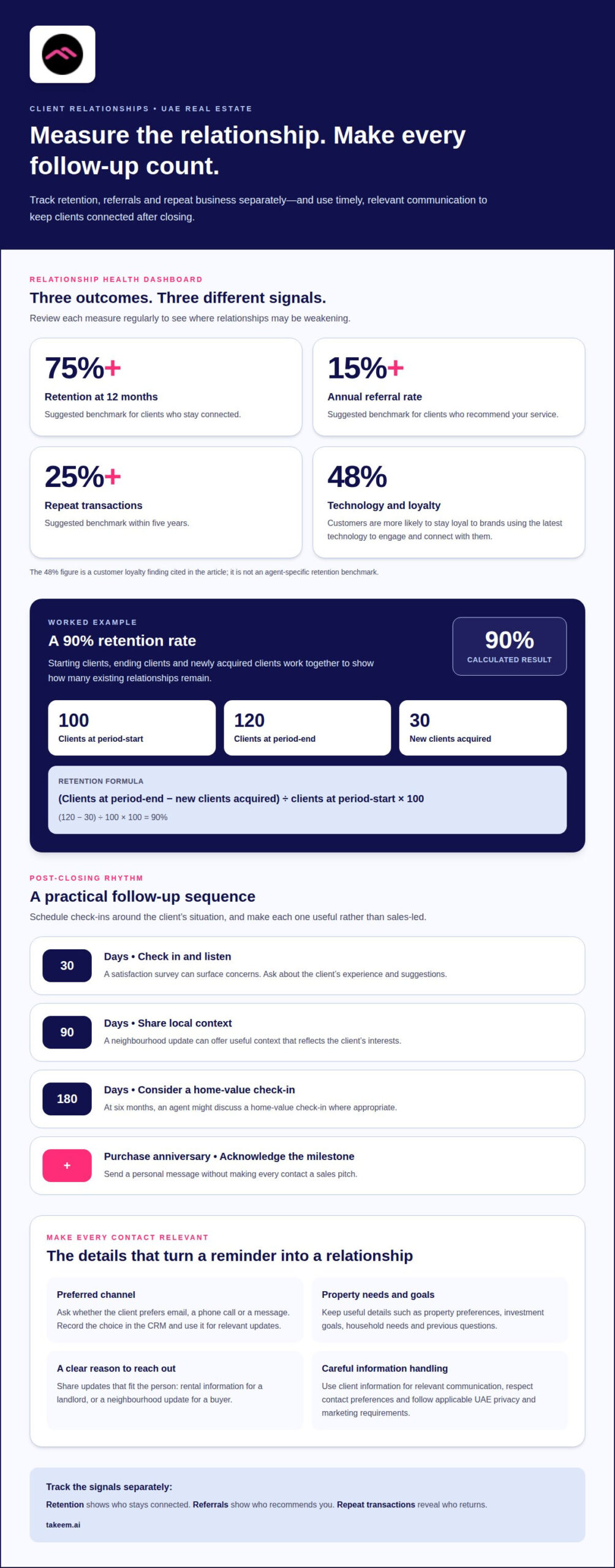
Calculate retention by subtracting new clients acquired from total clients at period-end, dividing by clients at period-start, then multiplying by 100. For example, starting with 100 clients, ending with 120 and acquiring 30 new clients produces a 90 percent retention rate. Suggested benchmarks are a 75%+ retention rate at 12 months, a 15%+ annual referral rate and a 25%+ repeat-transaction rate within five years. Review each measure regularly to identify where relationships weaken.
Satisfaction helps explain those results. After each transaction, send a short survey or ask clients directly about their experience and suggestions. A satisfied client may recommend you, but make the next step easy: ask personally after resolving an issue or receiving positive feedback. Referral rewards might include gift cards or vouchers; repeat clients may value discounts or exclusive benefits through a tiered loyalty programme. Set clear eligibility rules and track which approach leads to introductions or repeat business.
For follow-up and marketing in the UAE, handle client information carefully, use it for relevant communication and respect stated contact preferences. Record communication choices and feedback in your CRM, and follow applicable UAE privacy and marketing requirements.
Programme costs depend on the CRM’s scope, reward value and event format. Set a budget based on the activity you choose, such as digital follow-up, referral rewards or a client event. Costs will vary by agency and activity.
The strongest client retention strategies for property agents combine prompt, personal follow-up with useful information and a clear referral request. Remember client preferences, stay in touch after closing and invite satisfied clients to recommend your service when appropriate. Then compare referral and repeat-transaction results to improve your approach.
2. Fast communication through customers’ preferred channels
Ask each real estate client which channel they prefer, then record it in your CRM. Some clients respond to email; others prefer a phone call or message. Use their chosen channel for relevant updates rather than sending the same message across every platform. Forty-eight percent of customers are more likely to stay loyal to brands using the latest technology to engage and connect with them. For agents serving clients across the UAE, technology works best when it makes communication personal and easy to follow.
Set a clear follow-up routine around the client’s next decision or milestone. During a transaction, send concise progress updates when a key step changes and explain what happens next. After closing, schedule a check-in that invites a response rather than promoting another service. A CRM can prompt follow-ups, record conversations and assign the next action. Automation supports consistency, while a personal reply is best for questions that need context or judgement.
Useful communication helps agents anticipate clients’ questions. Share a neighbourhood update, explain a market movement in plain language or send a practical property guide that reflects the client’s interests. For example, a landlord may value relevant rental information, while a buyer may want updates about an area they are considering. Make each message specific, and explain why broader market information matters to that person.
Local connections can make those updates more useful throughout the UAE. Agents can share community news, local events and neighbourhood changes through a client newsletter or private group. Invite clients to share questions, then use recurring themes to shape future content. For landlord clients, a relevant option may be a Landlord Rental Guarantee for agents, which agents can present as part of a useful conversation about rental needs. Review replies and engagement in the CRM, then refine the channel and content for the next touchpoint.
3. Managing relationships with buyers, sellers, landlords and tenants
Map each relationship from first enquiry through active transaction, closing and future property decisions. Buyers may need guidance on viewing choices, while sellers value clear progress updates and next-step explanations. Landlords may need rental and property-care information; tenants may need practical guidance tied to their tenancy. In the UAE, professionals can schedule post-closing check-ins at 30, 90 and 180 days, then adjust each touchpoint to the client’s situation.
Personal communication starts with useful details, not just a first name inserted into a generic message. Record property preferences, investment goals, household needs and previous questions in your relationship management system. Before sending a message, use a relevant detail to shape its content. For example, a buyer interested in a particular neighbourhood could receive a local update, while an investor may value information about their portfolio. This makes campaigns more relevant and gives each client a reason to engage.
Keep the relationship active after closing with scheduled, practical follow-up. A satisfaction survey at 30 days can surface concerns; a neighbourhood update at 90 days can offer local context. At six months, an agent might discuss a home-value check-in where appropriate. A personal message on the purchase anniversary can acknowledge the milestone without making every contact a sales pitch. These steps help former clients remember the agent when another property decision arises.
Ongoing value should reflect the client’s role and timing. Send landlords relevant rental information, share buyer-focused market updates and give sellers useful context as they consider their next move. Ask for feedback after a transaction and use the response to improve future service. UAE professionals are also advised to reach out periodically with useful information and support. A thoughtful call can feel more personal than an automated campaign, especially when it addresses a client’s previous question. Personalisation means choosing the right topic, timing and format for each relationship.
4. Avoiding common client retention mistakes
A common mistake is treating closing as the end of the relationship. A buyer who hears nothing after collecting the keys may feel forgotten, even after a smooth purchase. Assign an owner to each post-transaction action and record the next step in the CRM before closing the file. This simple handover helps prevent past clients from being overlooked when an agent moves on to a new lead.
Generic campaigns create another problem. A broad property update may not matter to a tenant, landlord or seller with different priorities. Segment contacts by relationship and need, then make each message useful to its recipient. For example, send a landlord information about rental concerns, not a buyer-focused viewing invitation. Review replies and unsubscribes to spot messages that miss the mark, then adjust the audience or content.
Overpromising can damage trust faster than slow follow-up. Explain what you will deliver, who will provide the next update and what the client should expect. If a transaction step changes, communicate it directly instead of letting silence create uncertainty. After a complaint, acknowledge the specific issue, agree on a practical next action and follow through. A personal response shows the client that their feedback prompted action, not just an automated acknowledgement.
Finally, don’t mistake activity for progress. Track whether contacts lead to useful conversations, client satisfaction or new opportunities, rather than counting messages sent. Ask clients what felt confusing or repetitive, then use their answers to improve the process. Keep templates for routine updates, but leave room for personal context and human judgement. For agencies strengthening landlord relationships, explore practical landlord retention support as part of a more dependable client experience.
Takeem: Landlord Rental Guarantee that Agents can sell for healthy commissions
Takeem offers a Landlord Rental Guarantee that property agents can sell for healthy commissions. It gives agents a relevant option to discuss with landlords seeking rental-related support, and can naturally form part of conversations about maintaining landlord relationships.
The Landlord Rental Guarantee can also suit property investors with large portfolios. It includes emergency property maintenance, connecting rental support with a practical property concern. Agents can introduce it when landlords or investors are considering support for their rental arrangements and explain its role clearly in the conversation.
For agents, the next step is to discuss how the Landlord Rental Guarantee fits their landlord relationships and portfolio conversations. Contact Takeem to learn more.
Turn stronger relationships into a practical next step
Choose one relationship to strengthen first, such as a landlord seeking dependable rental support. Make the next conversation specific: understand the landlord’s needs, explain relevant options clearly and agree on a useful follow-up. Consistent service grows from focused actions, not a higher volume of messages.
For agents building landlord relationships, Takeem offers a Landlord Rental Guarantee, including an option for property investors with large portfolios. Agents can also sell the guarantee for healthy commissions. These offerings provide a relevant topic for landlord conversations while keeping the client’s priorities at the centre.
Use the client retention strategies for property agents that fit your relationships and working style, then review what leads to meaningful conversations and continued trust. A considered next step can help you support landlords while developing durable professional relationships. Contact Takeem to discuss your needs and explore whether its rental guarantee offering fits your landlord clients. Keep moving forward with clear communication and practical support.
Frequently Asked Questions
What are customer retention strategies?
Client retention strategies are planned actions that encourage clients to continue working with an agent after a transaction. In real estate, they can include tailored property updates, post-sale support and useful information for landlords. For example, an agent might share guidance relevant to a client’s next property decision instead of sending a general sales message. The aim is to remain helpful and relevant over time.
Which factors most influence retention?
Clients are more likely to maintain a relationship when communication is clear, relevant and dependable. They notice whether an agent follows through on agreed actions, understands their priorities and handles concerns respectfully. For instance, explaining a change to a transaction milestone gives a seller context, not just notice of a delay. Consistency matters too: follow-up should feel personal, not like an automated sales push.
Why is Client Retention Important in Real Estate?
Retention helps agents build professional relationships that continue beyond a single purchase, sale or lease. Past clients may return when their property needs change, and satisfied clients can introduce an agent to people in their network. A strong relationship also helps agents understand clients’ preferences over time. That context makes future conversations more relevant and means there is less need to start from scratch.
How can UAE property agents build long-term relationships with buyers, sellers, landlords, and tenants?
Start by noting what each person needs from the relationship, then tailor future contact accordingly. A buyer may appreciate neighbourhood information, while a landlord may want updates relevant to rental decisions. Invite feedback after service interactions, respond to concerns directly and record agreed next steps. In the UAE, periodic check-ins and useful information help agents maintain contact without making every interaction a sales pitch.
How often should property agents follow up with clients after a transaction?
Follow up at meaningful points rather than sending messages on an arbitrary schedule. A brief check-in after a client settles into a property can uncover immediate concerns; later contact can share information relevant to their ownership or investment plans. UAE real estate professionals are also advised to reconnect on the first anniversary of a purchase or lease. Let the client’s preferences and circumstances guide further contact.
How can agents measure client retention, repeat transactions, referrals, and satisfaction?
Use a CRM or tracking sheet to record client status, transaction history, referral source and feedback. Review these measures separately: retention reflects ongoing relationships, repeat transactions show returning clients, and referrals track introductions. To assess satisfaction, compare survey responses and recurring comments over time. For example, repeated feedback about unclear updates can point to a process that needs improvement, even before repeat business changes.