
Tag: rent protection

  • Landlord Rent Protection Schemes in the UAE: Rent and Eviction

    Landlord Rent Protection Schemes in the UAE: Rent and Eviction

    A rent protection scheme can help reduce the impact of missed rental income, but it does not replace the tenancy contract or legal eviction process. A landlord rent protection scheme in the UAE is a contractual arrangement, and its protection depends on its terms. Eviction procedures depend on the rules that apply to the property.

    It is understandable to want clarity about rent collection, contract terms and a tenant’s default. Different parties may handle these responsibilities, so it is important to know what a scheme covers and what remains governed by the tenancy contract and applicable rules. This guide explains how rental income schemes work, how contracts and payments are managed, and how eviction before a lease ends may be handled. It also explains how a rental guarantee can support landlords without confusing income protection with property management or the legal right to evict.

    Key Takeaways

    • Understand how tenancy contracts, rent collection and payment arrangements fit together, and which responsibilities stay with the landlord.
    • Compare the kinds of rental income protection available and identify what each arrangement is designed to cover.
    • Learn which policy terms and exclusions can affect protection when a tenant defaults.
    • See how Takeem’s Landlord Rental Guarantee can support landlords seeking rental income protection, with emergency property maintenance included as part of the guarantee.

    Contract and payment management responsibilities

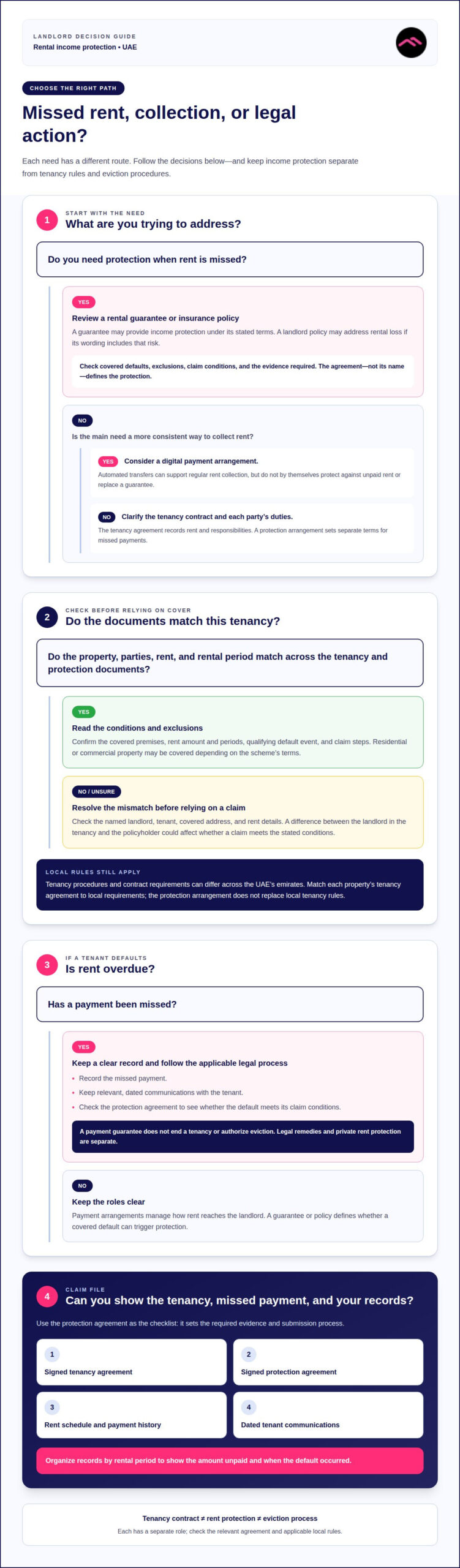
    A tenancy agreement records the rent and each party’s duties. A protection arrangement sets separate terms for missed payments. Make sure each document clearly states its role and the property it covers.

    Available Rent Protection Options

    Rent protection options include rental guarantees and insurance policies, while payment arrangements determine how rent is collected. Their value depends on the landlord’s needs: protection against a covered income loss is different from a way to receive regular payments. Residential and commercial properties may be covered, depending on the scheme’s terms. Check which property types and events are included before deciding whether an arrangement suits a tenancy.

    Differences Across Emirates

    Tenancy procedures and contract requirements are local, so they can differ across the UAE’s emirates. This matters when a landlord owns properties in more than one emirate: a notice or renewal process for one tenancy may not apply to another. Match each property’s tenancy agreement to the local requirements, then review the protection arrangement separately. Its contractual terms do not replace local tenancy rules.

    Protection Against Tenant Default

    Legal remedies and private rent protection are separate parts of a landlord’s response to default. A payment guarantee does not end a tenancy or authorize eviction. If rent is overdue, record the missed payment, keep relevant communications and follow the applicable legal process. The protection agreement governs whether the default meets its conditions for a claim.

    Required Documents and Claims Process

    A claim file links the tenancy, missed payment and landlord’s actions. The protection agreement sets out the required evidence and submission process, so use it as your checklist. Relevant records may include the signed tenancy and protection agreements, rent schedule, payment history and dated tenant communications. Organize these by rental period to show the amount unpaid and when the default occurred.

    What rent protection schemes are available to landlords in the UAE?

    Distinguish protection against lost rent from services that collect payments. A rental guarantee or insurance policy sets out whether a defined tenant default triggers a payment. A payment arrangement manages how rent reaches the landlord. The agreement determines the coverage, exclusions and claim conditions for every landlord rent protection scheme UAE property owners might consider.

    • Rental guarantee: A contractual arrangement may provide income protection under stated terms. The agreement defines covered defaults and the process for making a claim.
    • Insurance policy: A landlord policy may address rental loss if its wording includes that risk. Review the covered events and exclusions, not just the policy name.
    • Digital payment arrangement: Automated transfers can support regular rent collection. They do not, by themselves, protect against unpaid rent or replace a guarantee.

    These options address different needs. A landlord seeking protection when rent is missed should understand the guarantee or policy terms. One seeking a more consistent collection process may focus on payment arrangements. Combining them helps only when each has a clear role.

    Security deposits are another part of the rental framework, but they aren’t the same as ongoing income protection. In the UAE, the typical deposit is 5% of annual rent for an unfurnished property and 10% for a furnished property. The deposit provides security under the tenancy, while a protection arrangement’s scope comes from its own agreement.

    Dubai tenancy law does not explicitly require landlords or tenants to carry insurance. It is therefore important to distinguish legal requirements from voluntary contractual arrangements. Before relying on a scheme, identify the risk it protects against, how to make a claim and which tenancy or payment records support it. The terms show whether the arrangement suits the property and rental needs.
    Landlord Rent Protection Schemes in the UAE: Rent and Eviction

    What are the eligibility requirements and exclusions for UAE rent protection policies?

    Eligibility depends on the protection agreement, property and tenancy covered. Landlords should distinguish policy conditions from tenancy-law requirements: a clause in one agreement does not automatically apply to another. Before relying on a policy for a specific tenancy, read its definitions of landlord, tenant, premises and rent.

    Start with the property and rental details in the tenancy agreement. Check that the covered address, named landlord, tenant and rent period match the documents supporting the protection arrangement. For example, a difference between the landlord named in the tenancy and the policyholder could affect whether a claim meets the stated conditions.

    • Covered property: Confirm whether the agreement applies to the specific residential or commercial premises.
    • Covered rent: Identify which rent amount and rental periods the arrangement uses.
    • Default event: Check what tenant action or missed payment qualifies under the wording.
    • Claim conditions: Note the evidence and notice steps the agreement requires.

    Exclusions remove particular events or circumstances from cover. Wording varies by agreement, so do not assume every policy treats arrears, contract disputes or property damage alike. For example, an agreement may cover unpaid rent but exclude another type of loss. These are separate issues and should not be treated as interchangeable.

    Use a practical review: match the tenancy agreement to the protection document, then find the clauses on eligibility, exclusions and claims. Check how the agreement treats tenancy amendments, changes of tenant or rent, and missed payments that began before cover started. These details can affect whether a later claim meets the agreed conditions.

    Keep the signed tenancy agreement, payment records and written communications together. If a tenant falls behind, the date and period of each unpaid amount can help establish the sequence of events. The protection agreement is the key reference for eligibility and exclusions. A security deposit or payment collection method does not change its terms.

    Does UAE law protect landlords against tenant non-payment or default?

    UAE tenancy law and rent protection agreements address different risks. The law sets out the landlord’s available legal remedies, while a private agreement may address rental income under its own terms. Neither replaces the other.

    In Dubai, a landlord may seek eviction for non-payment if the tenant has failed to pay even after thirty (30) days’ notice, according to the Dubai Land Department. The notice period is a legal step, not an automatic eviction. If the tenant still occupies the property, the landlord must pursue the relevant process rather than treating the lease as ended.

    Keep the rent claim separate from possession of the property. An unpaid instalment creates an arrears issue, while eviction concerns the tenant’s right to remain. For example, a landlord may need to document the missed payment and notice, then use the appropriate dispute process if the matter remains unresolved. A rent guarantee or policy operates under its contract and does not itself grant possession.

    In Dubai, the Rental Dispute Centre’s Arbitration Department aims to resolve rental disputes within 15 days. That stated aim concerns dispute resolution, not a promise that every non-payment case will conclude within that period. Keep the tenancy agreement, rent schedule, payment record and notice together, so the timeline is clear if the dispute reaches the Centre.

    For a landlord, the practical distinction is straightforward: follow the legal route for eviction, and use a separate contractual arrangement for any covered rental loss. The arrangement’s wording determines the covered event and claim requirements. To explore a landlord rental guarantee as an income-protection option, review how its terms address missed rent alongside the tenancy process.

    Dubai tenancy law sets no specific rental deposit amount but requires its return at tenancy end. The landlord holds it during the tenancy rather than placing it with a third-party deposit holder. For annual rent of AED 100,000, a typical deposit is AED 5,000 for an unfurnished property and AED 10,000 for a furnished property.

    Takeem: Landlord Rental Guarantee

    Takeem offers a Landlord Rental Guarantee for landlords seeking rental income protection alongside their tenancy arrangements. It may suit landlords concerned about missed rent, while the tenancy contract and legal process continue to govern the landlord-tenant relationship.

    Property investors with large portfolios can use Takeem’s Rental Guarantee for Property Investors with Large property Portfolios, which includes emergency property maintenance. Takeem also sets up Direct Debit for landlords to accept monthly tenant payments digitally. This supports payment administration, while the guarantee addresses rental protection under its terms.

    Agents can also sell Takeem’s Landlord Rental Guarantee for healthy commissions. The right option depends on whether you are a landlord, portfolio investor or agent looking for a relevant rental guarantee. Contact Takeem to discuss the Landlord Rental Guarantee.

    Make your next rental decision with confidence

    Decide what you want to make more predictable: rental income, payment administration or both. This priority can guide your review of a landlord rent protection scheme in the UAE and help you focus on terms that suit your properties.

    For a single property, start with the outcome you need. For a portfolio, consider how a consistent approach could work across different tenancies. Agents can explore whether a rental guarantee suits the landlords they support. A clear view of your needs makes it easier to assess a landlord rent protection scheme in the UAE.

    Contact Takeem to discuss your rental needs and consider a practical next step for your properties. A focused decision can help you approach future rental arrangements with confidence.

    Frequently Asked Questions

    What are Rental Income Schemes?

    Rental income schemes are designed to support landlords’ rental income or rent collection. A landlord may use a rental guarantee for protection under agreed terms, while digital payment collection can help receive monthly rent without traditional cheques. These arrangements serve different purposes. Decide whether your priority is income protection, payment administration or both before choosing.

    How does rent guarantee insurance work for UAE landlords?

    A rent guarantee sets out the conditions under which a landlord may receive support after a tenant defaults. The agreement defines its scope and claim requirements, so the label alone does not establish what is covered. Keep the rent schedule and payment history aligned with the tenancy records. Digital collection can simplify payment administration, but it is separate from the guarantee’s terms.

    Which UAE insurers offer rental income protection, and what do policies cover?

    An insurer’s name alone does not show whether a policy protects rental income. Coverage depends on the policy wording, including covered events, exclusions, evidence requirements and the claim process. When comparing insurance with a rental guarantee, distinguish the product types and read the terms for the specific property and tenancy. Do not assume a general property policy covers missed rent.

  • Tenant Default Guarantee UAE: Complete Landlord Protection Guide (2026)

    Tenant Default Guarantee UAE: Complete Landlord Protection Guide (2026)

    A post-dated paper cheque is no longer the ironclad financial safety net property investors once counted on. When rent bounces, landlords instantly face tedious legal filings, lost time, and unexpected cash flow interruptions that directly threaten mortgage and operational commitments. That’s why securing a reliable tenant default guarantee UAE property owners trust has become an essential strategy. Instead of chasing arrears reactively through cumbersome administrative channels, modern rental security safeguards your balance sheet before disruptions happen.

    Managing rental property shouldn’t involve continuous manual follow-ups, dispute resolution stress, or tenant liquidity surprises. You entered the property market for dependable returns, not administrative headaches. In this guide, you’ll discover how a tenant default guarantee protects your UAE rental income against non-payment, bounced cheques, and costly vacancies. We’ll explore how transitioning to automated digital Direct Debit collections, paired with bundled emergency maintenance coverage, delivers uninterrupted monthly cash flow and total portfolio preservation across the country.

    Key Takeaways

    • Understand how an active tenant default guarantee UAE property owners utilize safeguards cash flow far more effectively than standard property insurance.
    • Eliminate the administrative strain and legal vulnerability of bounced paper cheques by adopting automated Direct Debit payments.
    • Learn how to evaluate rent guarantee solutions based on payout speed and rigorous tenant screening to protect essential debt service commitments.
    • Discover why bundling emergency property maintenance prevents tenant non-payment disputes and preserves long-term asset value.
    • Follow a practical implementation roadmap to audit active leases and onboard property portfolios onto digital protection platforms without disruption.

    Understanding Tenant Default Guarantee: How Rental Income Protection Operates

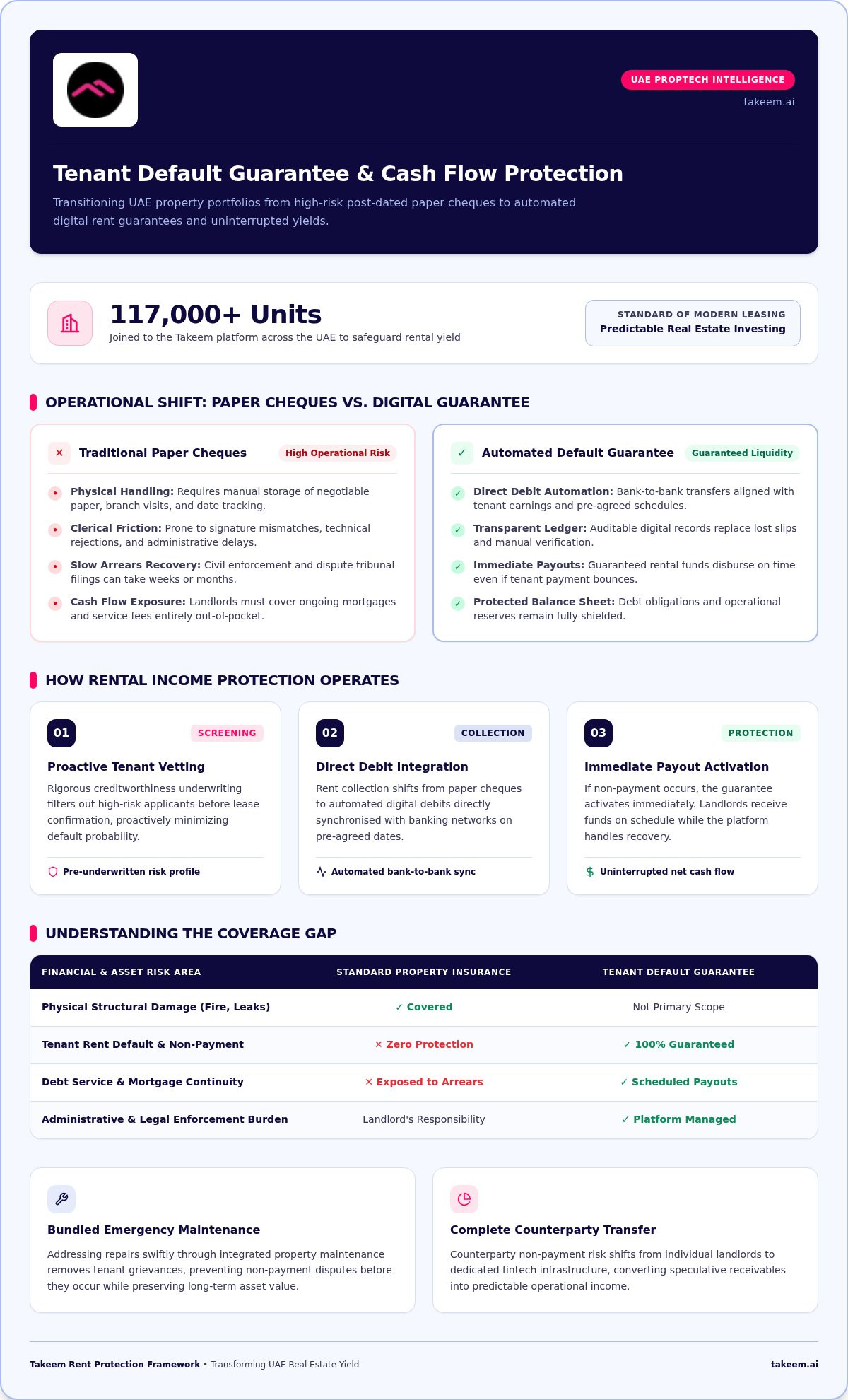
    A tenant default guarantee is a contractual financial mechanism that secures a property owner’s rental income against non-payment. While standard property insurance covers physical building damage from fires or leaks, it leaves operational cash flow completely unprotected when an occupant defaults. A dedicated tenant default guarantee UAE landlords adopt bridges this critical gap. By transferring the counterparty risk from the individual property owner to a dedicated fintech platform, landlords transform speculative receivables into guaranteed monthly cash flow.

    Rental arrears inflict severe disruption on real estate balance sheets. A sudden missed payment quickly derails mortgage amortisation schedules, service fee obligations, and maintenance reserves. When portfolio owners manage multiple units, even a single prolonged default triggers compounding operational friction. Across the UAE, progressive property investors are moving away from manual collection uncertainties, embracing financial technology platforms like Takeem to safeguard their yield. With over 117,000 units joined to the platform, digital rent protection has established itself as the modern standard for predictable real estate investing.

    The Mechanics of a Tenant Default Guarantee

    How does the protection function in daily practice? The process operates through three streamlined steps:

    • Proactive Tenant Vetting: Before issuing coverage, the platform assesses tenant creditworthiness through rigorous underwriting, filtering out high-risk applicants early.
    • Automated Direct Debit Integration: Collections shift from paper cheques to automated digital debits, synchronised directly with banking networks.
    • Immediate Payout Activation: If a tenant defaults or faces liquidity delays, the guarantee activates. Guaranteed funds disburse directly to the landlord’s account on schedule, preserving steady cash flow while the platform manages recovery.

    Why Traditional Leases Expose Landlords to Payment Risk

    Conventional tenancy setups place all the burden of non-payment on the individual owner. Collecting rent manually or presenting post-dated paper cheques creates ongoing friction. If an instalment fails, the landlord is left to serve formal legal notices, file claims before rental dispute tribunals, and wait months for administrative resolution. During that recovery period, outgoing property expenses don’t pause. Mortgages must still be paid, building maintenance must continue, and liquidity drains away. By replacing outdated payment instruments with a modern tenant default guarantee UAE investors rely on, property owners eliminate payment uncertainty entirely and secure uninterrupted net operating income.

    The Pitfalls of Post-Dated Cheques Versus Automated Rent Guarantees

    For decades, post-dated cheques served as the primary payment method for property leasing across the country. In practice, a paper cheque offers only the illusion of financial security. Holding a drawer full of paper slips does not guarantee liquidity when deposit day arrives. Pairing automated Direct Debit technology with a robust tenant default guarantee UAE landlords rely on eliminates this exposure, transforming erratic physical collection into predictable digital revenue.

    The Operational Risks of Relying on Cheques

    Manual cheque processing introduces continuous friction for property owners. Landlords must physically store negotiable paper, track maturity dates, visit bank branches, and manage clerical rejections like signature mismatches. When a cheque bounces, the recovery path becomes frustrating and slow. Even though updated federal commercial laws treat dishonoured cheques as executive deeds for direct civil enforcement, filing claims and waiting for asset attachment still takes weeks or months. During that delay, mortgage obligations don’t stop, forcing landlords to cover property overheads out of pocket.

    Transforming Collections with Direct Debit Integration

    Direct Debit solves the structural flaws of paper-based leasing by automating bank-to-bank transfers. Payments execute automatically from the tenant’s bank account on pre-agreed dates, creating an auditable, transparent ledger. This shift matches how modern residents budget their earnings, removing the friction of large lump-sum commitments. To examine this transition step by step, read our comprehensive overview on Modernizing Rent: Moving from Cheques to Direct Debit.

    When you combine automated digital bank debits with an integrated tenant default guarantee UAE property investors depend on, tenant liquidity gaps no longer threaten your yield. Rent lands in your account on schedule, while the platform handles recovery in the background. If you want to protect your portfolio against payment failures, switching to Takeem rental protection delivers effortless security and steady net operating income.

    Key Evaluation Criteria: Choosing the Right Rent Guarantee Solution

    Selecting the right rental protection partner requires a structured approach. Not every guarantee model provides identical liquidity assurances, legal delegation, or operational software. To protect residential yields effectively, property investors must evaluate prospective providers across four core benchmarks:

    • Disbursement Speed: Rapid payment triggers that protect mortgage and operational schedules without delay.
    • Underwriting Rigor: Robust digital screening standards that filter high-risk applicants before contracts begin.
    • Recovery Delegation: Complete provider assumption of dispute filings and legal enforcement during default events.
    • Fintech Integration: Centralised dashboard tracking combined with automated Direct Debit payment rails.

    Assessing these criteria ensures that your chosen tenant default guarantee UAE provider acts as an active financial shield rather than an administrative bottleneck.

    Coverage Scope, Payout Timelines, and Recovery Terms

    Payout speed directly determines whether debt service and service fees stay current. If a tenant defaults, waiting weeks for claim assessments defeats the purpose of cash flow security. Leading providers disburse funds directly to your bank account immediately after an unpaid rent milestone, bridging liquidity gaps effortlessly.

    Equally critical is full recovery delegation. The platform should assume entire responsibility for issuing formal notices and managing legal enforcement proceedings. This insulates you from time-consuming dispute administration. For a detailed breakdown of policy terms and structural mechanics, check The Definitive Guide to Landlord Rental Guarantees in the UAE.

    Fintech Platform Usability and Automation Capabilities

    A dependable tenant default guarantee UAE framework relies on modern financial technology. Managing properties through spreadsheets and manual bank checks creates unnecessary blind spots. Intuitive landlord dashboards deliver real-time transparency across active leases, upcoming payment schedules, and account verifications.

    Direct Debit automation forms the backbone of this efficiency. By linking tenancy contracts directly to secure national banking infrastructure, recurring collections happen seamlessly without manual intervention. Look for solutions that provide responsive, bilingual account support to resolve technical questions quickly and keep property operations running smoothly.

    Tenant Default Guarantee UAE: Complete Landlord Protection Guide (2026)

    Preserving Asset Yield: Integrating Maintenance with Default Guarantees

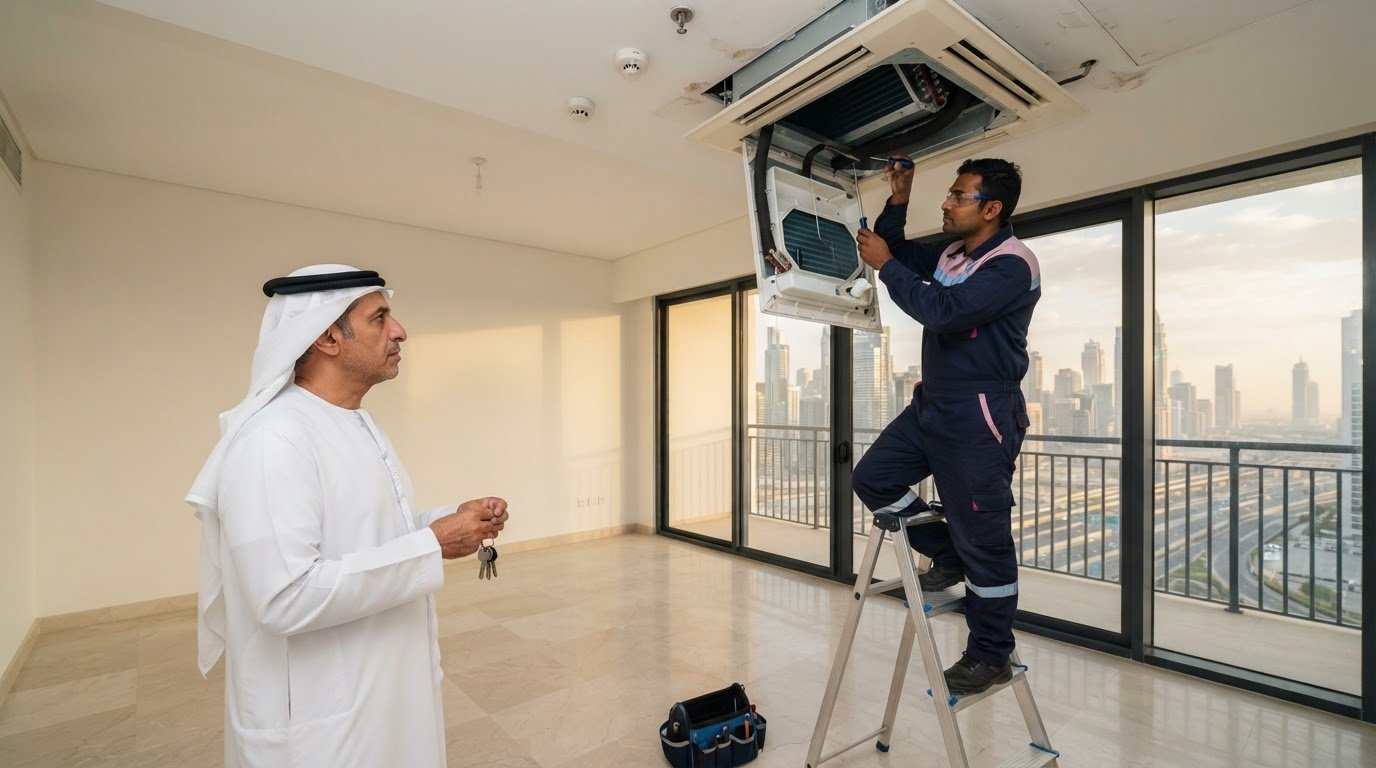
    Rental default rarely happens in complete isolation. In many leasing relationships, payment non-compliance begins as a retaliatory response to unresolved maintenance failures. When air conditioning breaks down in peak summer or severe plumbing leaks go unaddressed, frustrated occupants often withhold payments or initiate formal dispute proceedings. A forward-thinking tenant default guarantee UAE landlords implement doesn’t just treat the financial symptom. It actively removes the operational catalyst by bundling rapid emergency maintenance directly into the coverage.

    How Maintenance Conflicts Precipitate Rental Defaults

    When vital systems fail, residential tenancies strain quickly. Landlords hold clear statutory obligations to maintain essential cooling, electrical, and structural plumbing infrastructure in workable order. Neglecting critical repairs gives occupants defensible leverage to contest non-payment claims before statutory dispute committees, delaying financial recovery. Routine disputes over cooling failures or pipe leaks can freeze revenue for months. To examine dispute mitigation strategies in detail, consult The Landlord’s Guide to Rental Guarantees with Maintenance.

    The Advantage of Bundled Emergency Property Protection

    Integrating emergency property maintenance directly into a rental guarantee provides complete asset preservation. Instead of property owners coordinating ad-hoc technicians during sudden breakdowns, emergency repair protocols resolve urgent mechanical, electrical, and plumbing failures swiftly.

    This integrated framework delivers decisive operational benefits:

    • Preserved Asset Condition: Immediate emergency interventions stop localised failures, such as water leaks or electrical faults, from turning into costly capital repairs.
    • Conflict Elimination: Timely emergency repairs keep tenants satisfied, eliminating the primary friction point used to excuse payment delays.
    • Reduced Overhead: Property investors avoid unexpected out-of-pocket service charges by relying on structured emergency coverage.

    Safeguarding physical property condition directly reinforces income stability. When physical asset protection and financial security operate side by side under a single tenant default guarantee UAE framework, portfolio owners enjoy total peace of mind. To shield both your real estate investment and your monthly cash flow, secure your rental guarantee with Takeem.

    Implementing a Tenant Default Guarantee for Your Property Portfolio

    Adopting modern rent protection across your residential assets requires a clear, methodical transition. Rather than waiting for a payment failure or an expired lease, proactive investors begin by auditing existing tenancy agreements. Identifying upcoming lease renewals gives you the perfect window to replace legacy payment structures. Setting up an active tenant default guarantee UAE landlords rely on ensures that your properties transition into guaranteed, predictable revenue generators without operational downtime.

    Step-by-Step Onboarding and Tenant Alignment

    Onboarding your assets onto a fintech protection platform follows a straightforward sequence:

    • Documentation Review: Compile registered tenancy contracts, title deeds, and tenant identification details to establish account verification.
    • Direct Debit Authorisation: Present digital Direct Debit setup to incoming or renewing tenants, replacing the need for multiple post-dated paper cheques.
    • Bank Mandate Confirmation: Confirm electronic bank mandates through secure national banking rails, locking in automated recurring transfers.
    • Coverage Activation: Activate the rental guarantee alongside bundled emergency maintenance protection before executing the final lease documentation.

    Tenants readily embrace this shift because predictable monthly debits ease household budgeting far better than large, infrequent payouts.

    Securing Long-Term Yield Across Multiple Rental Units

    Managing several residential units compounds administrative vulnerability if collections remain fragmented. Consolidating your assets under a single intuitive dashboard gives you complete portfolio transparency. You monitor payment clearances, track active lease renewals, and oversee maintenance statuses in real time.

    Standardising rent protection across your entire portfolio effectively neutralises cross-property arrears risk. If an unexpected vacancy or tenant liquidity crisis impacts one unit, the guarantee keeps disbursements flowing seamlessly, preventing cross-collateral strain on other investments. Collaborating with leasing agents who offer guaranteed rent frameworks also attracts higher-calibre tenants who value streamlined, professional digital agreements. For institutional scaling strategies and multi-unit portfolio risk management, review our dedicated guide on Portfolio Protection for Large-Scale Property Investors. Adopting a unified tenant default guarantee UAE framework provides the institutional resilience needed to expand your holdings with total confidence.

    Future-Proof Your Rental Income with Intelligent Protection

    Relying on manual collections and post-dated paper cheques leaves property yields unnecessarily exposed to administrative friction and payment defaults. Modern real estate investing demands financial predictability over reactive dispute resolution. By establishing an active tenant default guarantee UAE property owners rely on, you effectively insulate your cash flow from unexpected tenant payment delays while eliminating the stress of manual banking.

    Combining automated Direct Debit collections with integrated emergency maintenance protection creates an end-to-end operational shield. Your monthly income arrives on schedule, minor repair issues get resolved before sparking lease disputes, and your asset retains its long-term capital value. You don’t have to manage payment vulnerabilities or debt service risks alone.

    Trusted across 117,000+ rental units nationwide, Takeem provides a seamless transition from post-dated paper cheques into automated financial stability. Take control of your real estate investments today and Protect Your Rental Income with Takeem to enjoy consistent, stress-free returns across your entire portfolio.

    Frequently Asked Questions

    What is a tenant default guarantee and how does it protect landlords?

    A tenant default guarantee is a contractual financial mechanism that protects landlords by securing monthly rental income against tenant non-payment. If an occupant defaults or delays payment, the guarantee platform steps in to disburse scheduled funds directly to the landlord’s account. This shields property owners from cash flow interruptions, legal chasing, and the costly downtime associated with formal dispute proceedings across the country.

    How does Direct Debit replace traditional post-dated rental cheques?

    Direct Debit replaces paper cheques by establishing secure, automated bank-to-bank electronic transfers. Once a tenant confirms a digital mandate via national banking rails, rent deducts automatically on pre-agreed dates. Landlords avoid collecting physical paper, travelling to bank branches, or handling dishonoured payments. It transforms sporadic, administrative cheque presentations into a continuous, transparent digital payment trail that suits modern household budgeting.

    What happens if a tenant misses a monthly rent payment under the guarantee?

    When a tenant misses a scheduled rent deduction, the platform activates the protection immediately. The landlord receives the full guaranteed disbursement on time, ensuring mortgages, service charges, and property commitments remain fully funded. Meanwhile, the platform assumes recovery operations and engages the tenant directly. Landlords stay insulated from the administrative friction of serving formal legal notices or filing claims before rental dispute tribunals.

    Can a tenant default guarantee be applied to existing tenancy contracts?

    Yes, you can apply a tenant default guarantee UAE landlords trust to existing tenancy agreements, most commonly during lease renewals. Landlords audit active agreements and onboard tenants onto digital Direct Debit before executing renewal documents. Prospective tenancies can also be onboarded prior to move-in, letting landlords implement continuous protection across both legacy occupancies and new leases without interrupting cash flow.

    Does the guarantee package include physical property emergency repairs?

    Yes, comprehensive rental guarantee packages integrate emergency property maintenance coverage to protect physical asset condition. Urgent issues involving cooling systems, severe plumbing leaks, or electrical faults receive prompt intervention by certified service teams. Resolving sudden repairs quickly preserves capital asset value, keeps tenants satisfied, and stops property maintenance conflicts from escalating into retaliatory rent withholding or complex tribunal filings.

    Is a tenant default guarantee the same as standard property insurance?

    No, they fulfill completely different financial functions. Standard building insurance protects against physical structural damage resulting from fires, natural perils, or major water leaks, but it excludes tenant non-payment risks. A tenant default guarantee safeguards operational income, ensuring landlords receive monthly rent regardless of tenant insolvency. Pairing building insurance with an active default guarantee creates complete physical and financial asset protection.

    How does automated rent collection improve cash flow for portfolio investors?

    Automated rent collection via Direct Debit eliminates the administrative chaos of tracking dozens of post-dated cheques across multiple banks. Portfolio investors gain real-time visibility into incoming payments, cleared funds, and lease renewals through a single dashboard. Synchronised recurring transfers standardise cash inflows, making debt service, vendor contracts, and property maintenance forecasting predictable while neutralising the cross-property contagion risk of unexpected arrears.