

A tenant says the rent was sent, but your records show no payment. Before a simple misunderstanding turns into a tense exchange, check the agreed payment date, method and transaction details. For UAE landlords, avoiding tenant payment disputes starts with setting clear expectations before the tenancy begins.
It’s understandable to feel uncertain when a payment appears late or a transfer is hard to trace. Clear rental terms, consistent records and calm, timely communication help both parties understand what’s due and what has been received. A digital collection routine, such as monthly rent collection through Direct Debit, can also make payments easier to track.
This guide explains how to set out payment expectations, keep records that are easy to review and raise concerns early. You’ll also learn how to respond when rent is overdue, when to seek qualified legal advice, and how rental guarantees can help protect rental income without replacing clear agreements or legal guidance.
Key Takeaways
- Avoiding tenant payment disputes starts with agreeing on the rent amount, due date and payment method before the tenancy begins.
- Use a simple monthly routine to confirm receipts and update a consistent payment record.
- Compare post-dated cheques and digital monthly collection by how each supports visibility, confirmation and follow-up.
- When a payment appears late, verify the details and raise the concern calmly, using dates and amounts rather than assumptions.
- Takeem’s Direct Debit setup can support a more consistent, traceable routine for collecting monthly rent digitally.
Avoiding tenant payment disputes starts with clear rent expectations
Prevention begins with shared expectations, not assumptions about how a tenant usually pays. A rent-payment dispute may concern when rent is due, how much is owed, which payment method to use, or whether the landlord received the payment. Clear terms before the first payment give both parties the same reference point.
A missed confirmation or a transfer recorded under an unfamiliar reference may be a correctable administrative misunderstanding. Verify the details and update the record. If the concern remains unresolved or a payment problem repeats, follow up deliberately and keep the conversation focused on the facts.
A preventable rent-payment dispute is a disagreement that clearer payment instructions or records could have resolved before it escalated.
Which rent-payment terms should landlords make explicit?
A lease agreement establishes the rental relationship, so make sure its payment terms match the instructions you give in practice. Before the tenancy begins, clarify:
- Due date: State the date rent is expected and how the timing is understood.
- Payment frequency: Specify whether rent is paid monthly or on another agreed schedule.
- Accepted method: Explain which payment method to use and provide accurate instructions.
- Confirmation: Tell the tenant how you’ll acknowledge payment and what evidence they should retain.
If both parties agree to a change or exception, record what changed and when it applies. Avoid having the agreement say one thing while payment messages direct the tenant to do another. Consistent instructions make it easier to identify an actual missed payment instead of debating which direction applied.
How can both parties avoid different assumptions?
Share the payment instructions before the first due date, along with a short explanation of what confirmation to expect. For example, clarify whether the tenant should send a payment receipt and how you’ll confirm that the rent has been recorded. When instructions change, use a written channel that can be reviewed later and keep the update with the tenancy records.
A simple checklist can prevent uncertainty:
- Confirm the amount, due date and payment frequency.
- Provide the agreed method and accurate payment instructions.
- Explain how receipt of payment will be confirmed.
- Record exceptions and changes in writing, then update any affected instructions.
These habits support rental guarantees in the UAE by keeping payment expectations clear. A rental guarantee is an income-protection option, not a replacement for a clear agreement.
Build a reliable rent-payment record before a disagreement begins
A consistent record turns each rent cycle into a clear timeline rather than a search through old messages and account entries. It helps you check what was due, what arrived and what still needs follow-up. Records support a calm discussion, but they don’t determine legal liability or replace qualified legal advice.
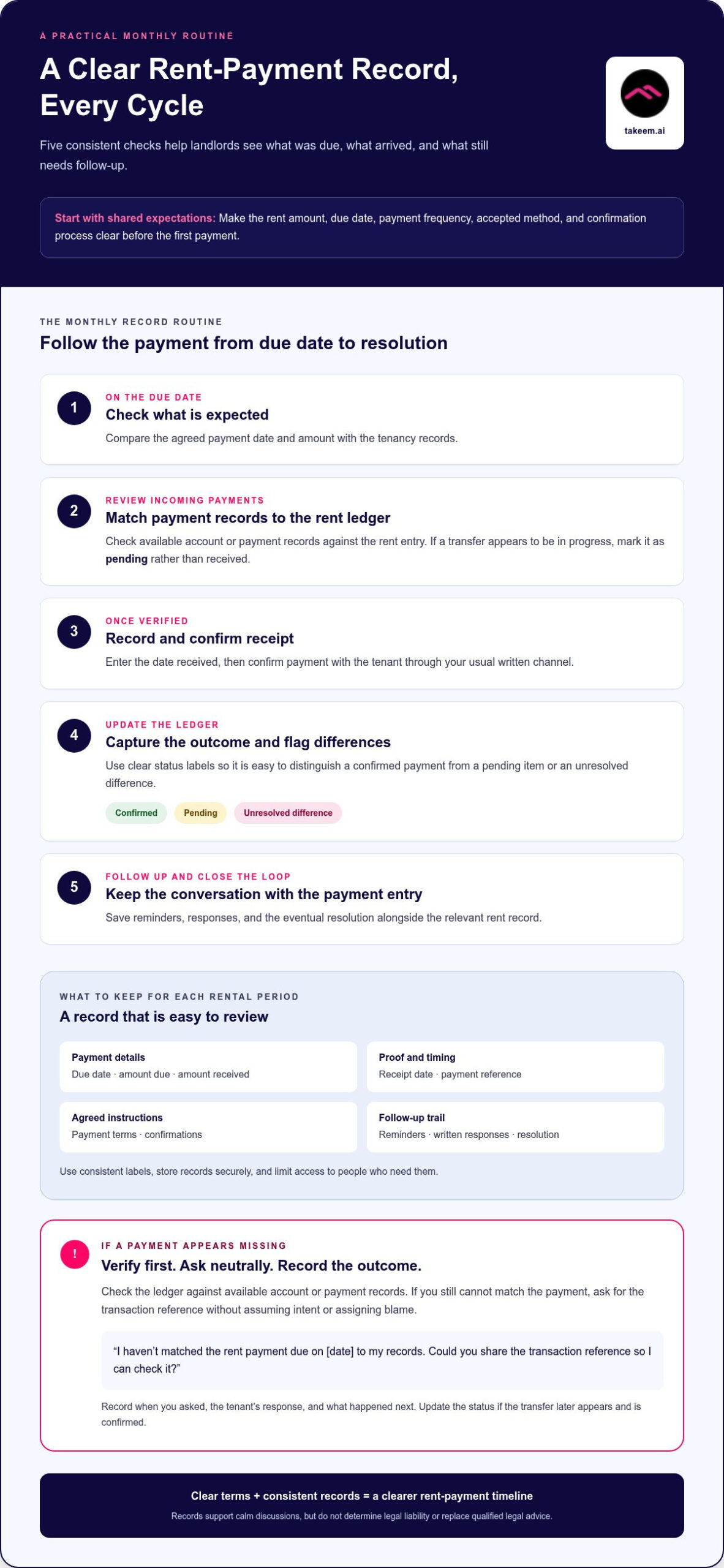
Payment records improve clarity by capturing what happened, when it happened and how both parties responded. Use the same monthly routine for every property and rental period:
- 1. On the due date: Check the agreed amount and payment date against the tenancy records.
- 2. Review incoming payments: Compare available account or payment records with the rent ledger. Mark a transfer as pending if it appears to be in progress, rather than treating it as received.
- 3. Confirm receipt: Once the payment is verified, record the date received and send the tenant confirmation through your usual written channel.
- 4. Update the ledger: Record the outcome and flag any difference that still needs clarification.
- 5. Follow up and close the loop: Save any reminder, response and resolution with the relevant payment entry.
What should a landlord record for each rent payment?
For each rental period, note the due date, amount due, amount received, receipt date and payment reference. Keep the agreed payment terms, confirmations, reminders and written responses alongside the matching entry. Consistent labels, such as “confirmed,” “pending” and “unresolved difference,” make the status easy to understand. Store records securely and limit access to people who need them.
How should landlords reconcile a payment that appears missing?
Check the ledger against available account or payment records before contacting the tenant. If you still can’t match the payment, ask neutrally for the transaction reference. For example: “I haven’t matched the rent payment due on [date] to my records. Could you share the transaction reference so I can check it?” Avoid assuming the tenant’s intent or assigning blame.
Record when you made the inquiry, the tenant’s response and the outcome. If a transfer later appears, update its status and note when it was confirmed. For a consistent, traceable monthly collection routine, explore Direct Debit setup for landlords.
Compare payment methods by clarity, traceability and administration
Payment methods create different tracking routines. Post-dated cheques set out agreed payment dates, while digital monthly collection can make payment events easier to review electronically. Neither method guarantees punctual payment or prevents every disagreement. To avoid tenant payment disputes, compare how each method fits the documented tenancy terms and the practical work needed to track rent.
| Practical criterion | Post-dated cheques | Digital monthly collection |
|---|---|---|
| Visibility | Agreed cheque dates provide a schedule to track. A landlord still needs to monitor each cheque as its date approaches. | Payment events may be visible in digital records, depending on the collection setup and available records. |
| Payment confirmation | Record when a cheque is received and deposited, then update the ledger when its status is clear. | Review the available transaction information and record whether the payment is confirmed, pending or needs follow-up. |
| Record retrieval | Keep cheque details and related records organised by tenant and rental period. | Digital entries can help bring payment information together for review, alongside tenancy and communication records. |
| Administrative follow-up | Track receipt, deposit and any payment issue for each cheque. | Monitor the collection record and follow up on payments that are not confirmed. |
What can landlords learn from cheque-based payment routines?
Agreed cheque dates provide a clear schedule, but the schedule is only one part of collection. Record when each cheque is received and deposited, and note any issue against the relevant rental period. Keep these entries with the tenancy terms so you can distinguish the planned date from the confirmed payment status. Don’t rely on the cheque schedule alone as proof that rent has been received.
How does digital rent collection support clearer records?
Digital monthly collection can make payment events easier to track and retrieve, supporting a consistent review routine. Takeem facilitates Direct Debit setup so landlords can digitally accept monthly rent payments. Setup doesn’t guarantee that funds will always arrive, so continue to reconcile records and follow up on any unconfirmed payment. The key benefit is a digital collection record that can support your regular reconciliation process.
Whichever method you use, make sure the payment arrangement matches the documented tenancy terms and applicable requirements. If the parties agree to change the method or schedule, record the update clearly so the payment instructions and agreement remain aligned.
Respond to a payment concern early without escalating the disagreement
A payment that doesn’t appear in your records may be delayed, pending or recorded with an unfamiliar reference. Start with verification, not blame. A measured response helps clarify the facts while keeping communication professional.
Use this sequence:
- Verify your records. Check the agreed due date and amount against your ledger and available account or payment information.
- Send a factual reminder. State what your records show, including the due date and amount, without claiming to know why the payment hasn’t appeared.
- Invite clarification. Ask whether the tenant has a transfer reference or other payment details that could help reconcile the entry.
- Document the response. Save the message, reply and outcome with dates in the tenancy records. Update the payment status when you resolve the difference.
This process supports avoiding tenant payment disputes by creating space to correct an error before frustration takes over.
What should a first rent reminder say?
Keep the message brief, professional and specific. For example: “Hello, my records show that rent of [amount] due on [date] hasn’t appeared yet. If you’ve made the payment, could you share the transaction reference so I can check it? Please let me know if there’s anything you’d like to clarify.” Include an existing payment reference if relevant, and save the reminder with the corresponding rental-period records.
When does a payment concern need professional guidance?
A one-off mismatch that both parties can reconcile is different from repeated discrepancies or a tenant contesting the amount or payment status. If the issue persists, gather the agreement, ledger and written communications, then seek advice from a qualified UAE legal professional before taking formal action or relying on an assumed procedure.
Formal notices, deadlines and dispute procedures can depend on current UAE requirements and the relevant jurisdiction. Verify the applicable rules with a qualified legal adviser before sending a formal notice or acting on a deadline. A rental guarantee may support income protection, but it doesn’t replace legal advice or resolve the underlying payment record.
For a more structured digital rent collection approach, explore Direct Debit setup for monthly rent collection.
Use a consistent collection system to reduce future payment friction
Clear terms work best when supported by the same collection and recordkeeping routine each rental period. Set the payment schedule out in the tenancy terms, use the agreed collection method, reconcile incoming payments against the ledger, and document reminders or adjustments. A repeatable process makes it easier to spot a mismatch early and explain what happened without relying on memory.
How can Direct Debit fit into a landlord’s monthly process?
Takeem facilitates Direct Debit setup for landlords who want to move from post-dated cheques to digital monthly rent collection. Once the payment arrangement is documented, follow the same monthly rhythm: review the collection record, confirm received payments, flag anything pending and follow up on unresolved entries. Digital collection can make payment events easier to trace, but setup doesn’t guarantee funds will arrive every time. This routine supports clearer records and more consistent follow-up.
What role can a rental guarantee play in income planning?
Collection and dispute prevention are separate from income protection. Takeem’s rental guarantee service is available to individual landlords and property investors, including those with large portfolios. It’s an option to consider as part of income planning, not a promise that every disagreement will be prevented or resolved, and not a substitute for clear tenancy terms or qualified legal advice. Emergency property maintenance is included as part of Takeem’s rental guarantee service.
Keep the process straightforward: align payment instructions with the tenancy terms, follow the scheduled collection method, reconcile each rental period, and save any follow-up with the payment record. This creates a clearer account of what was expected and what happened, whether you manage one property or a larger portfolio.
To support a more structured digital collection routine, explore Takeem’s landlord rental solutions.
Make rent collection clearer, month after month
A steady process can make payment concerns easier to resolve. Set clear expectations in the tenancy terms, reconcile each payment against a consistent record, and raise discrepancies early with calm, factual communication. These practical habits are the foundation of avoiding tenant payment disputes, whether you collect by cheque or digitally.
For landlords seeking a more structured routine, Takeem facilitates digital monthly rent collection through Direct Debit setup. Takeem also offers rental guarantee services for individual landlords and property investors, with emergency property maintenance included as part of the service. A rental guarantee can support income protection, while clear agreements and qualified legal advice remain important when a disagreement arises.
Build a collection approach that supports your records and fits your tenancy terms. Explore Takeem’s digital rent collection and rental guarantee solutions to take the next step toward clearer, more manageable rent-payment routines.
Frequently Asked Questions
Is a written rent-payment agreement enough to prevent every dispute?
No. Clear written terms reduce ambiguity, but they can’t prevent every disagreement or guarantee that rent will be paid. Specify the amount, due date, payment frequency and accepted method, then document any changes in writing. Keep consistent records of what was due and received. These are practical steps, not legal advice. Check current UAE requirements with a qualified legal professional before relying on particular contract wording or assuming it is enforceable.
Can digital rent collection help landlords avoid payment disputes?
Digital collection can make payment events easier to track and support a consistent monthly routine, which can help with avoiding tenant payment disputes. It can’t guarantee that every payment will succeed or settle a disagreement. Collection records show transaction activity, but they don’t by themselves establish legal liability. If a payment appears missing, compare the transaction details with your records first, then ask the tenant calmly for a reference if you still can’t reconcile it.
What should a landlord do if a tenant says rent has already been paid?
Check the rent ledger and available account or payment records before deciding how to update the entry. If you can’t match the payment, ask neutrally for the transaction reference. Compare the dates and amounts with the tenant’s information, and confirm the payment status before changing the record. Save the exchange with the relevant rental-period entry. Avoid assuming the tenant is mistaken, and verify current UAE procedures before considering formal action.
How should landlords document rent payments and reminders?
For each rental period, record the amount due, due date, amount received, receipt date and payment reference. Keep confirmations and relevant reminders or replies with the matching entry, using consistent labels across properties and periods. If you correct a record, note what changed and when. Organised documentation helps establish a clear timeline of payment activity and communication, but it doesn’t by itself settle a legal dispute or determine who is liable.
Are post-dated cheques the only way to collect rent in the UAE?
No. Landlords can consider different payment arrangements, including digital monthly rent collection. The method should match the documented tenancy terms and applicable requirements, so record any agreed change and keep the instructions consistent. Takeem facilitates Direct Debit setup for landlords to digitally accept monthly tenant payments. Avoid relying on general claims about which methods are legally permitted or the consequences of a cheque issue. Verify current UAE rules for your circumstances.
When should a landlord seek legal advice about a rent-payment dispute?
Consider qualified legal advice if payments are repeatedly missing, the parties contest the amount or payment records, or you’re considering formal action. Before seeking guidance, organise the tenancy agreement, payment history, transaction details and related communications. These records can help explain the timeline. Don’t rely on assumed deadlines, notices or dispute procedures. Formal requirements can depend on current UAE rules and the circumstances, so have the applicable process verified by a qualified legal professional.
Does a rental guarantee prevent tenant payment disputes?
No. A rental guarantee is an income-protection service, not a promise that disagreements will never happen. Clear payment terms, accurate records and prompt communication remain important, and a guarantee doesn’t replace legal advice. Takeem offers rental guarantee services for individual landlords and property investors, with emergency property maintenance included as part of the service. Review Takeem’s landlord rental guarantee information to learn about the service without assuming specific coverage conditions or outcomes.