

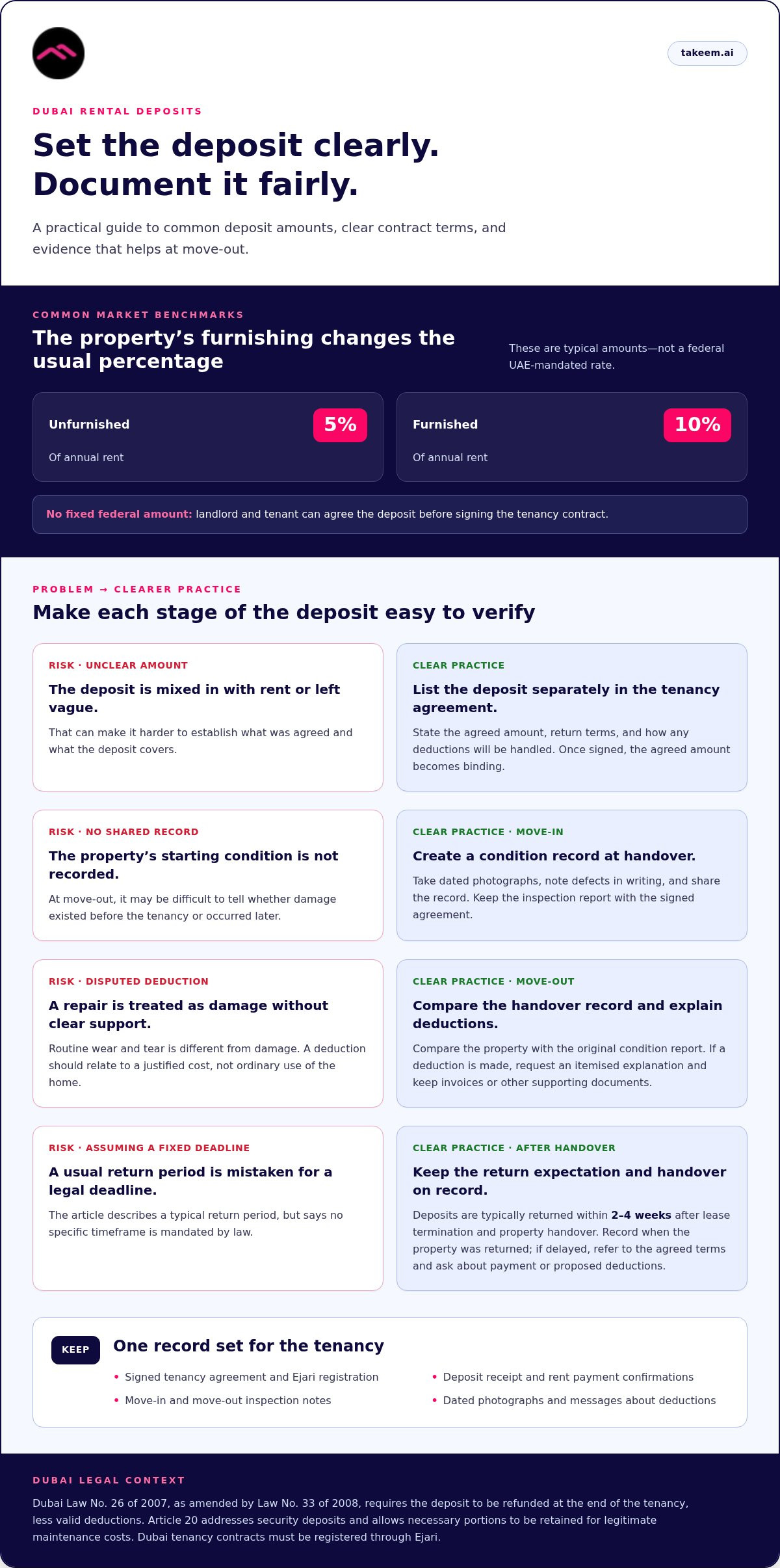
The rental security deposit across the country is usually a percentage of annual rent, not a single fixed fee. For rental payment security, the typical deposit is 5% of annual rent for an unfurnished property and 10% for a furnished one. No federal UAE law mandates a fixed deposit amount, so the amount can be agreed before the tenancy contract is signed.
That upfront cost can shape a tenant’s moving budget, while clear deposit terms help both sides understand what happens at the end of the tenancy. The deposit is generally refundable when the property is returned in good condition, subject to any valid deductions.
This guide explains how the usual percentages apply, what to consider when assessing property and resident eligibility, and how deposit rules interact with other rental costs. It also covers potential benefits for landlords and property companies, helping you understand the options and make an informed decision with Takeem.
Key Takeaways
- Understand what can affect a rental deposit and how the agreed amount becomes part of the tenancy contract.
- Use a traceable payment method and keep a receipt so there’s a clear record of rent and deposit payments.
- Learn how landlords can handle legitimate maintenance deductions and what tenants should document at move-out.
- See why paying before signing carries risk and which contract details help protect both parties.
- Explore how Takeem’s Landlord Rental Guarantee may support landlords, property investors and agents.
Eligible properties and residents
In Dubai, the usual rental deposit depends on whether the home is furnished. For an unfurnished property, the typical deposit is 5% of annual rent; for a furnished property, it is 10%. These are common market amounts, not a federal UAE-mandated rate. The landlord and tenant can negotiate the deposit before signing the tenancy contract.
There is no single property or resident category defined by these typical percentages. They provide a practical reference for residential tenancies, while the agreed deposit amount and contract terms determine what applies to a particular home. A furnished apartment, for example, commonly uses the 10% benchmark, while an unfurnished apartment commonly uses 5%.
The deposit is separate from rent. List it separately in the tenancy agreement, with clear terms for its return and any deductions. Once signed, the agreed amount becomes binding. Dubai requires tenancy contracts to be registered through Ejari, so keep the registered contract alongside payment records and evidence of the property’s condition.
Dubai Law No. 26 of 2007, as amended by Law No. 33 of 2008, requires landlords to refund the deposit upon expiry of the tenancy contract, less valid deductions. The deposit is refundable when the tenant returns the property in good condition. A deduction should relate to a justified cost, such as damage beyond normal wear and tear, rather than routine use of the home.
Before move-in, document the property’s condition. Take dated photographs of existing damage, note defects in writing, and share the record with the landlord or agent. For example, recording a cracked tile at handover helps distinguish pre-existing damage from damage during the tenancy. Keep the inspection report with the signed agreement.
At move-out, compare the property with the original condition report. Ordinary wear and tear is different from damage, and evidence can help clarify the difference. If the landlord makes a deduction, request an itemised explanation and keep invoices or other supporting documents. Disputes can arise over whether a repair was justified or the issue existed before the tenancy.
A bounced rent cheque leaves that instalment unpaid. Replace the payment using a traceable method and keep written confirmation of the arrangement. Any further consequences depend on the tenancy terms and applicable rules.
Dubai tenants should keep the signed tenancy agreement, Ejari registration, deposit receipt, rent-cheque copies or bank-transfer confirmations, and messages about payments or deductions. Store move-in and move-out inspection notes and dated photographs with these records to make the payment history and property condition easy to establish.
After lease termination and property handover, Dubai security deposits are typically returned within 2-4 weeks. This is a usual return period, not a legal deadline: no specific timeframe is mandated by law. A Dubai rental security deposit is refundable when the tenant moves out, provided the property is returned in good condition. To make the handover clear, tenants can keep a written record of when the property was returned and retain communications about the deposit. If the return takes longer than expected, they can refer to the agreed tenancy terms and ask the landlord for an update on the payment and any proposed deductions.
Residents considering Dubai’s FlexiRent initiative should review the rental options with the participating property management company and ensure the agreed terms are included in the tenancy contract. Check the contract for what the parties have accepted, including the terms that apply to the tenancy. Ask for clarification before signing if an option or condition is unclear, and keep a copy of the final agreement. This helps ensure the arrangement is recorded alongside the other tenancy terms.
Landlord and property company benefits
A clearly documented security deposit gives Dubai landlords a defined source for justified maintenance deductions and makes expectations easier to explain before move-in. For example, the tenancy contract can state the deposit amount, the return process, and how documented damage beyond normal wear will be assessed. Specific terms reduce ambiguity for both parties.
Article 20 of Dubai Law No. 26 of 2007 addresses security deposits and allows landlords to retain necessary portions for legitimate maintenance costs, according to Dubai Government. This does not make every repair a valid deduction. Landlords should distinguish damage from normal wear and retain documentation that connects each deduction to the property’s condition.
Start the record at handover. The landlord or property company can prepare a condition report, photograph existing defects, and give the tenant a copy. At move-out, comparing the report with the property’s condition helps clarify whether a repair is justified. For example, a documented broken fixture that was intact at move-in differs from a surface worn through normal use.
Ejari registration creates an official record of the tenancy contract and its parties, giving landlords and tenants a shared reference to the agreed terms if a dispute arises. Dubai requires tenancy contracts to be registered through Ejari. Keep the registration details with the contract and payment records to establish which agreement applies.
For a real estate company handling furnished and unfurnished homes, consistent documentation can make deposit decisions more consistent across properties. A standard handover form, dated photographs, and written repair-cost records help teams explain deductions clearly. They also make it easier to distinguish unpaid rent from a maintenance claim, rather than combining them into one unexplained amount.
Payment records support the same process. A bank-transfer confirmation or cheque receipt can show when rent or a deposit was paid. Match each transaction to the tenancy agreement and record whether it covers rent, the security deposit, or another agreed payment. Clear labels help property teams reconcile accounts and answer questions without relying on memory.
If a landlord requests cash or payment to a personal account, use a traceable method where possible, such as a bank transfer or a cheque payable to the landlord named on the title deed. Request a receipt and ensure the tenancy agreement lists the deposit separately from rent. This creates a clear record for both sides.
For landlords who want a more structured way to record monthly rent, digital rent collection for landlords can support clearer payment tracking. A consistent record helps property companies see which payments have arrived and which require follow-up, while keeping payment history connected to the relevant tenancy.
What payment methods are safe for paying rent in Dubai?
For rental payment security in Dubai, a bank transfer or cheque provides a traceable record of rent paid. Make a cheque payable to the landlord named on the property title deed. Check the recipient’s details against the tenancy documents before paying. This helps link the payment to the right landlord and property.
A bank transfer gives the tenant a dated record that includes the recipient and payment reference. Use a clear reference, such as the property address and rent instalment, and save the confirmation. If the agreement names an agent or representative, make sure the payment instructions match the documented arrangement before sending funds.
Cheques remain a common way to pay rent in Dubai. The first rent cheque is due upfront along with the initial fees. Check that the amount, date, payee, and tenancy period match the signed agreement. Keep a copy or image of each cheque and any receipt confirming the landlord received it.
Cash is harder to trace than a bank transfer or cheque. If you pay in cash, get a signed receipt immediately. It should identify the payer, recipient, property, purpose of payment, date, and amount in AED. Keep it with the tenancy contract to avoid confusing rent and deposit payments later.
Whichever method you use, record rent separately from the security deposit. The tenancy contract should list the deposit separately and explain its return terms. For example, label a transfer reference “security deposit” rather than simply “payment.” This helps both parties reconcile their records and identify what each transaction covered.
Dubai requires tenancy contracts to be registered through Ejari. Keep the Ejari details with the signed contract and use the property and tenancy information when labelling payments. This creates a consistent record across the agreement, registration, and bank history. If an agent provides payment instructions, retain them with the relevant tenancy documents.
Before sending funds, compare the payee name and payment details with the contract and landlord information. If the requested recipient differs, pause the transaction and seek written clarification through the documented tenancy contact. Don’t rely on a verbal change alone. Save any messages explaining an agreed change with the final payment confirmation.
Monthly payment arrangements can also use direct debit, with the tenant authorising recurring payments from an account. Landlords should align the schedule and amount with the tenancy agreement. Tenants should keep the setup confirmation and monitor bank records. If a payment is missed or duplicated, both parties can compare transaction dates and details.
Good rental payment security in Dubai also means keeping a single set of records for each tenancy. Store the contract, Ejari details, payment instructions, transaction confirmations, cheque copies, and receipts together. Label each item by payment purpose and period. These records help resolve questions about individual rent instalments without relying on memory.
Is it safe to pay rent or a deposit before signing a tenancy contract in Dubai?
Paying before signing the tenancy contract creates avoidable uncertainty. The signed agreement should identify the property, landlord, rent schedule, security deposit, and refund terms. In Dubai, the deposit amount can be negotiated before signing, but the agreed terms become binding once the contract is signed. Complete the agreement before transferring rent or deposit funds.
Dubai has no statutory security-deposit cap, so landlords and tenants can agree on an amount. An 8% deposit or a flat د.إ 15,000 deposit does not, by itself, mean the landlord is breaking the law. The key is to record the agreed amount and return conditions clearly in the tenancy contract.
Before signing, compare the contract details with the property and the person receiving payment. Confirm that the landlord’s name matches the title deed and that the address and rent schedule describe the home you intend to rent. If an agent provides payment instructions, keep them with the tenancy documents.
Use a traceable payment method, such as a bank transfer or a cheque payable to the landlord named on the title deed. Avoid handing over cash without a receipt. Keep the transaction confirmation, cheque copy, or signed receipt, and ensure it identifies whether the funds cover rent or the deposit.
The tenancy agreement should show the security deposit as a separate line from rent. It should also explain when the deposit is returned and which deductions may apply. For example, a contract that records a د.إ 15,000 deposit separately gives both parties a clear reference if they later disagree about the payment or refund.
The first rent cheque is due upfront along with the initial fees. It is especially important to distinguish rent from the deposit and other payments in your records. Match each cheque or transfer to the corresponding contract item. Keep the first rent receipt and deposit receipt separately, even if both payments are made on the same day.
Rental security deposits in Dubai are governed primarily by Law No. 26 of 2007. The deposit amount may vary by agreement, because Dubai does not set a statutory cap. A common market reference is 2-6 months’ rent paid in advance, so clarify whether the proposed amount is a deposit or prepaid rent before signing.
After signing, tenancy contracts in Dubai must be registered through Ejari. Keep the signed contract, Ejari details, payment receipts, and written payment instructions together. If a landlord changes the recipient account or payment method, get the change in writing and retain the message with the original agreement.
For landlords arranging recurring monthly collections after a tenancy is documented, set up digital direct debit for rent to accept tenant payments electronically.
Confirm any new payment instructions before sending funds and keep a written record of what was agreed. Do not treat a payment instruction as a replacement for the signed tenancy terms. The Dubai rental contract should list the security deposit separately from rent and include its return terms. Make sure the amount paid is identified as the deposit, not rent or another payment, so your records match the agreement.
Tenants in Dubai should request a receipt for the security deposit and ensure the refund terms are stated in the tenancy agreement. Keep the receipt with the signed agreement and payment confirmation. If the receipt shows a different amount or purpose, request corrected documentation before relying on it. Clear, matching records help both parties refer to the agreed payment and refund conditions if questions arise.
Takeem: Landlord Rental Guarantee
Takeem offers a Landlord Rental Guarantee for landlords seeking added support with rental income and property maintenance. Property investors with large portfolios can also consider its Rental Guarantee for Property Investors with Large property Portfolios. Agents can offer Takeem’s Landlord Rental Guarantee to clients and earn commissions.
The Rental Guarantee also includes an emergency property maintenance service. It may suit landlords seeking rental-related support alongside maintenance, as well as investors managing multiple properties. Agents can offer it to their clients.
To discuss whether Takeem’s Landlord Rental Guarantee fits your needs, visit takeem.ai.
Plan your next rental decision with confidence
A clear approach to rental payment security in Dubai starts with deciding what level of rental income protection and administrative support suits your property. For landlords, this can form part of a wider review of how rental income fits into financial planning. For property investors, it can help frame discussions about managing risk across a portfolio.
Use what you’ve learned to assess your priorities before the next tenancy begins. Consider whether your current arrangements provide the structure and support you want, then explore an option that fits those needs. The right next step depends on your role, whether you own a single rental property, oversee a larger portfolio, or work with landlords as an agent.
Takeem offers rental security options for landlords, property investors, and agents. If you’d like to discuss your requirements, contact Takeem about rental security. A considered decision now can help you move into your next tenancy with a clearer plan.
Frequently Asked Questions
How Much Does It Cost?
Budget roughly 13-15% of annual rent for additional upfront payments, excluding the first rent cheque. This estimate can include the security deposit, agency fee, Ejari registration, and utility deposits. The actual total depends on the property and the services connected to it. For example, district cooling charges may add a separate deposit where that service applies, while moving costs depend on distance and furniture.
How Much Is It?
The rental security deposit is typically 5% of annual rent for an unfurnished property and 10% for a furnished one. To calculate it, multiply the annual rent by the applicable percentage. For an annual rent of د.إ 100,000, that means د.إ 5,000 unfurnished or د.إ 10,000 furnished. The amount is agreed between landlord and tenant before signing the tenancy contract.
What About Fees?
Separate charges can apply beyond the deposit. Ejari registration is stated at د.إ 220, and the typical agency fee is 5% of annual rent, with a minimum of د.إ 5,000. Utility deposits may also affect the move-in budget: DEWA’s stated deposit is د.إ 2,000 for an apartment and د.إ 4,000 for a villa. These are distinct from rent and the refundable rental deposit.
What Happens If There Is a Dispute?
For a rental dispute, the Dubai Rental Dispute Center handles claims between landlords and tenants. Its registration fee is 3.5% of annual rent; financial-claim fees range from د.إ 500 to د.إ 15,000, depending on the claim. Keep the tenancy contract, payment evidence, and relevant messages together. For a deposit complaint, tenants can file within 30 days of vacating if deductions are unjustified or undocumented.
Can tenants pay Dubai rent by bank transfer, card, or instalments, and what fees apply?
Tenants can use bank transfers or rent cheques when those methods match the agreed payment terms. Card acceptance and any associated charge depend on the arrangement with the landlord. Under Dubai’s voluntary FlexiRent initiative, participating property management companies may offer monthly, quarterly, or semi-annual instalments. The selected option is agreed with the participating company and incorporated into the tenancy contract, so clarify the payment terms before signing.