
Tag: rental property

  • Budgeting for Unexpected Property Repairs and Setting a Reserve

    Budgeting for Unexpected Property Repairs and Setting a Reserve

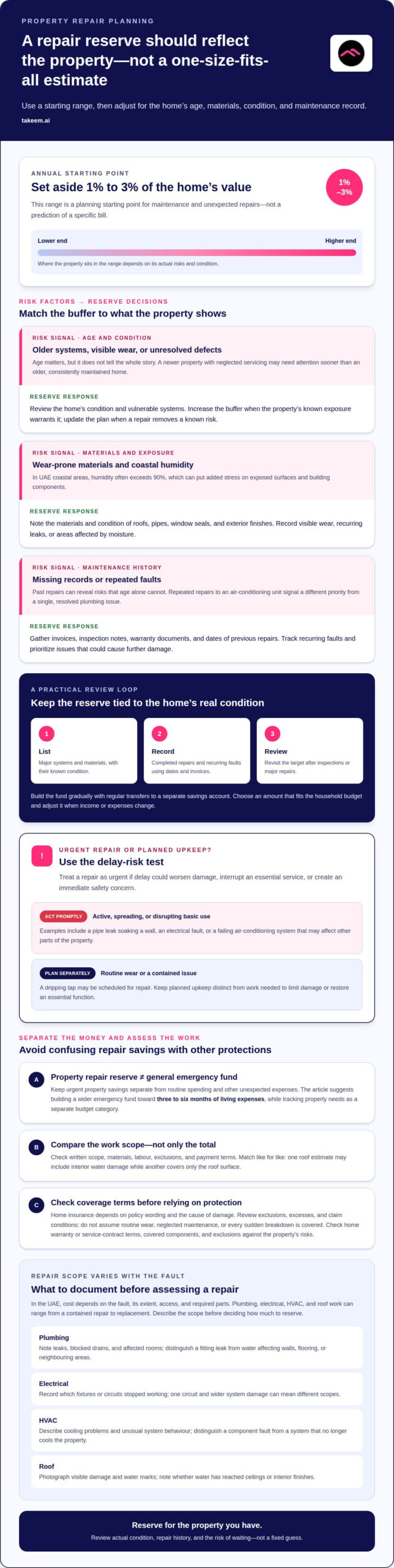
    A repair reserve should reflect the property, not a one-size-fits-all estimate. A practical starting point for budgeting for unexpected property repairs is to set aside 1% to 3% of the home’s value each year for maintenance and unexpected repairs. Older systems, wear-prone materials and gaps in maintenance history can all affect where a property sits within that range.

    It’s easy to treat repairs as occasional surprises, but planning ahead makes them easier to manage. In the UAE, heat and coastal humidity can put added pressure on building materials and property systems. Consider the home’s age and condition when deciding how much to reserve.

    This article explains how age, materials, and maintenance records shape a sensible reserve, and how to distinguish an urgent repair from routine upkeep. You’ll also learn how to build a property emergency fund and where emergency maintenance support may help when an urgent issue affects a rental property.

    Key Takeaways

    • Use 1% to 3% of a home’s value as an annual reserve starting point, then adjust for the property’s age, materials and maintenance history.
    • Prioritize issues that are actively damaging the property or affecting essential functions; plan routine wear and upkeep separately.
    • Review vulnerable systems and past repairs to identify where a sudden failure could create the greatest disruption.
    • Older homes and UAE summer heat can call for a larger buffer. For rental properties, Takeem’s Rental Guarantee includes emergency property maintenance.

    Building age, materials, and maintenance history

    A useful reserve reflects a property’s age, materials, and maintenance record. For annual maintenance and unexpected repairs, use 1% to 3% of the home’s value as a starting point. This range supports planning, but it doesn’t predict a specific bill. A building with recently serviced systems may need a different reserve from one with unresolved defects.

    Materials help explain where repair risks may emerge. In UAE coastal areas, humidity often exceeds 90%, which can place added stress on exposed surfaces and building components. Note the materials used in roofs, pipes, window seals, and exterior finishes. Then record visible wear, recurring leaks, or areas where moisture has affected the property.

    Maintenance history adds context that age alone can’t provide. A newer property with neglected servicing may need attention sooner than an older, consistently maintained home. Gather invoices, inspection notes, warranty documents, and dates of previous repairs. Repeated repairs to one air-conditioning unit, for example, point to a different reserve priority than a single, resolved plumbing issue.

    • List major systems and materials, then note their known condition.
    • Record completed repairs and recurring faults using dates and invoices.
    • Separate planned upkeep from faults that could cause further damage.

    Build the emergency fund gradually with regular transfers into a separate savings account. Choose an amount that fits your household budget, then adjust it when your income or expenses change. Review the balance alongside maintenance records instead of treating it as general spending money. A separate account makes the repair reserve easier to track.

    Revisit your target after each inspection or major repair. If a replaced system removes a known risk, update your plan; if maintenance reveals new wear, prioritize that exposure. Budgeting for unexpected property repairs is an ongoing process, guided by the property’s actual condition rather than a fixed guess.

    Distinguishing financial emergencies from nonemergencies

    Treat a repair as urgent if delay could worsen damage, interrupt essential services, or create an immediate safety concern. A dedicated reserve helps you respond without treating every maintenance task as an emergency.

    Repair Reserves and Emergency Savings

    An emergency repair reserve is money set aside for urgent property work, while a general contingency fund covers other unexpected expenses. Keeping these savings separate from routine spending helps ensure funds are available when a repair disrupts the household budget.

    Build your wider emergency fund toward three to six months of living expenses, while tracking property needs as a separate budget category. Apartment and villa repair costs differ in scope: apartments may involve shared building systems, while villas have their own exterior and systems. Responsibility depends on the property arrangement and the component affected.

    When comparing contractor quotes, check the written scope, materials, labour, exclusions, and payment terms. Comparing like for like can reveal unexplained price differences and help you spot vague estimates or pressure to pay before the work is clearly described.

    UAE home insurance coverage depends on the policy wording and cause of damage. Don’t assume routine wear, neglected maintenance, or every sudden breakdown is covered. Review exclusions, excesses, and claim conditions before relying on insurance to pay for repairs.

    Urgent Repairs and Delay Risks

    An urgent repair is work that needs prompt attention to limit damage or restore an essential function. Delaying a leak, electrical fault, or failing air-conditioning system can allow the problem to affect other parts of the property.

    Separate immediate action from planned work by asking whether the fault is active, spreading, or disrupting basic use. A dripping tap may be scheduled for repair; a pipe leak soaking a wall needs faster attention. Borrowing may bridge a shortfall, but repayment costs can add pressure, so use available savings first where practical.

    Home warranties or service contracts may cover repairs or replacement of major systems and appliances. Check the terms, covered components, and exclusions against the property’s actual risks before counting on that protection.
    Budgeting for Unexpected Property Repairs and Setting a Reserve

    Common structural and functional repair issues

    In the UAE, emergency repair costs depend on the fault, its extent, access, and required parts. Plumbing, electrical, HVAC, and roof work can range from a contained repair to replacement. Assess the exact scope before deciding how much to reserve.

    Plumbing failures can include burst pipes and sewer-line problems. A small leak at one fitting is different from water affecting walls, flooring, or neighbouring areas. Electrical repairs also vary: a fault in one circuit has a different scope from wider system damage. Describe the affected area and symptoms clearly when arranging an assessment.

    For HVAC issues, distinguish a component fault from a system that no longer cools the property. Roof repairs depend on the damaged area and whether water has reached ceilings or interior finishes. Record what stopped working, when it began, and any visible damage. These details help define the work being priced.

    • Plumbing: note leaks, blocked drains, and affected rooms.
    • Electrical: record which fixtures or circuits stopped working.
    • HVAC: describe cooling problems and unusual system behaviour.
    • Roof: photograph visible damage and any resulting water marks.

    Compare quotes by matching the scope, materials, labour, and exclusions, not just the total. One roof estimate, for example, may include interior water damage while another covers only the roof surface. Ask for itemized work descriptions and payment terms in writing. This makes differences easier to understand and reduces the risk of agreeing to unclear work.

    Keep invoices and repair notes with the property’s maintenance records. A recurring pipe fault or repeated HVAC failure may signal a wider issue than one isolated repair. Track the cause, work completed, and affected components, then use that record to refine your reserve. Separate urgent repairs from planned replacements and routine upkeep in your budget.

    Higher reserves for older or disaster-prone homes

    Estimate an annual reserve at 1% to 3% of property value, adjusting for size and condition. Homes 20 or more years old should lean toward the higher end, especially in the UAE, where summer temperatures can reach 50°C.

    Estimating Reserves by Property Condition

    A reserve estimate is a yearly savings target based on property value, size, age, and condition. A larger home has more components and surface area to maintain, while visible wear or deferred work can raise expected needs. Use the 1% to 3% range as a starting point, then assess the property’s systems, finishes, and maintenance record.

    Compare two homes of similar value: the one with older equipment and recurring faults needs a larger buffer. Review inspection notes, repair invoices, and planned replacements. A recently repaired system may reduce one known exposure, while several aging systems may justify a reserve nearer the upper end of your range.

    Higher Reserves for Riskier Homes

    Older or damage-prone homes may need higher reserves because more components can require repair, and exposure can increase the consequences of a fault. For a home aged 20 or more years, the recommended approach is to save toward the higher end of the annual range. UAE summer heat reaching 50°C also makes system condition important to assess.

    Consider the property’s specific risks rather than applying a blanket increase. A history of water intrusion, repeated system failures, or repairs after severe weather can indicate where funds may be needed. Keep those records with inspection findings, then prioritize components with recurring or unresolved issues.

    • Use property value and the 1% to 3% annual range as the baseline.
    • Adjust upward for larger homes, older systems, or documented recurring faults.
    • Reassess after inspections, major repairs, or changes in condition.

    This approach keeps the reserve responsive to the home’s actual condition. A clear record of age, size, condition, and repair history helps explain why your target falls at a particular point in the range.

    Takeem: Landlord Rental Guarantee

    Takeem’s Landlord Rental Guarantee is a relevant option for landlords planning for rental-property risks, including urgent maintenance needs. Emergency property maintenance is part of the Rental Guarantee, connecting an unexpected repair concern with a service designed for rental properties.

    The service can complement a reserve, but it does not replace funds for planned upkeep and repairs. Keep those costs in your budget and consider the maintenance service when an urgent property issue needs attention. Property investors with large portfolios can also explore Takeem’s Rental Guarantee for Property Investors with Large property Portfolios.

    If you’re considering how a rental guarantee could fit your property plans, visit Takeem’s website to learn more.

    Make your reserve part of your property plan

    A repair reserve works best when it has a clear role in your wider property finances. Give it a separate place in your budget, review it after major changes to the property, and avoid treating it as spare cash for unrelated expenses. This keeps decisions focused on the property’s needs rather than competing household costs.

    For landlords, budgeting for unexpected property repairs can form part of a wider plan for rental income and maintenance responsibilities. Consider how you want to manage those risks as your plans develop, whether you own one rental home or invest across a larger portfolio.

    Take the next step at your own pace. Contact Takeem about your property to discuss your rental-property plans and explore whether its offering fits your needs. A considered plan today can make future property decisions more manageable.

    Frequently Asked Questions

    How much should homeowners budget annually for unexpected property repairs?

    A practical annual target is 1% to 3% of the home’s value for maintenance and unexpected repairs. Treat it as a reserve contribution, not a prediction of exactly what repairs will cost. To make the target easier to manage, divide the annual amount into regular monthly savings and review it when the home’s condition or planned work changes.

    What percentage of a home’s value should be set aside for maintenance and repairs?

    Set aside 1% to 3% of the home’s value each year as a starting benchmark. The percentage applies to property value, not rent or household income. A well-maintained home with newer systems may suit the lower end, while wear, deferred upkeep, or older components can support choosing the higher end. Reassess the target after major upgrades or repairs.

    What are the most common unexpected home repairs and their typical costs?

    Common costly repairs involve plumbing, electrical systems, air conditioning, roofs, and foundations. In the UAE, an AED estimate depends on the fault’s extent, replacement parts, access, and whether repair or replacement is needed. Replacing a failed system, for example, differs from repairing one component. Compare quotes with matching work descriptions and materials so you can assess the scope, not just the totals.

    What steps can homeowners take to build an emergency repair fund?

    Choose a separate savings account, set a recurring transfer, and label the balance for property emergencies. Start with an amount that fits your budget, then increase it when finances allow. Keep receipts and repair records together so every withdrawal has a clear purpose. After using the fund, update your savings plan to rebuild it while accounting for upcoming maintenance.

  • Compare Leasing Support With Managing Vacancies Yourself

    Compare Leasing Support With Managing Vacancies Yourself

    Full property management isn’t the only way to run a rental in the UAE. Alternatives to full property management services include leasing-only support, a tailored partial-service arrangement, or managing the property yourself. The right fit depends on how much responsibility you want to retain for maintenance, rent records, and finding tenants.

    It makes sense to want control over costs and decisions without taking on more day-to-day work than you can manage. Each option divides responsibilities differently: leasing support can help fill a vacancy, while ongoing maintenance and accounting may remain your responsibility.

    This comparison explains what each approach typically covers and where the owner’s workload begins. You’ll see how full-service, partial-service, leasing-only, and owner-managed arrangements compare across maintenance, accounting, and vacancy management, then use a practical guide to weigh the trade-offs for your rental.

    Key Takeaways

    • Compare who handles rent records, reporting, maintenance and tenant communication before choosing a management arrangement.
    • A half-service setup can divide responsibilities, but clear agreements on repair approvals and reporting help prevent gaps.
    • Leasing support can help with marketing and tenant placement; ongoing property tasks may still sit with you.
    • Use your available time, portfolio complexity and vacancy needs to decide which responsibilities to manage yourself and where support matters most.

    Accounting, reporting, and portfolio complexity

    Rent collection and financial reporting are key differences between full-service management and leasing support. A full-service arrangement typically handles incoming rent and prepares financial reports. With leasing-only support, the owner usually takes over collection and financial tracking once a tenant is placed. That means recording each payment, following up on missed rent, and matching expenses to the relevant rental period.

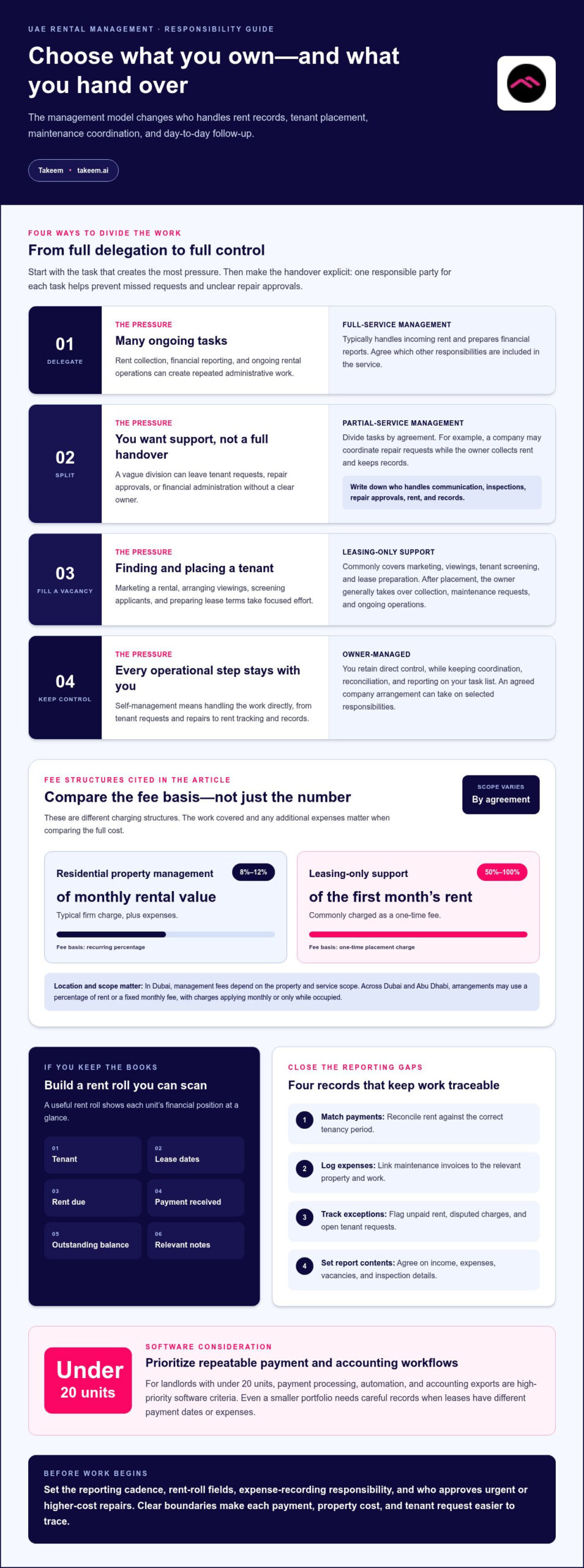
    A useful rent roll shows each unit’s financial position at a glance. Include the tenant, lease dates, rent due, payment received, outstanding balance, and relevant notes. Pair it with an income-and-expense record covering maintenance invoices, inspections, and other property costs. If a repair request leads to an invoice, for example, record the expense against that apartment rather than as an unexplained portfolio total.

    Reporting frequency varies, so agree on a schedule and the information each report will include. Decide whether updates arrive monthly or at another interval, and whether they cover rent status, arrears, expenses, open requests, and inspection findings. A report showing only total collections can hide a late payment or rising maintenance costs. Use consistent categories to compare periods and spot changes without rebuilding the figures.

    • Match payments: Reconcile each rent payment against the rent roll and the correct tenancy period.
    • Log expenses: Attach maintenance invoices to the relevant property and record what work they cover.
    • Track exceptions: Flag unpaid rent, disputed charges, and outstanding tenant requests for follow-up.
    • Set report contents: Agree which income, expense, vacancy, and inspection details appear in each update.

    Portfolio size affects the value of automation. For landlords with under 20 units, payment processing, automation, and accounting exports are high-priority software criteria. Those tools can reduce repeated entry when several units share the same reporting workflow. A smaller portfolio may still need careful records, especially when different leases have different payment dates or expenses.

    Among the alternatives to full property management services, owner-managed accounting offers direct control but keeps reconciliation and reporting on your task list. Half-service arrangements can divide administrative work, while full-service management typically combines collection with financial reporting. In Dubai, service inclusions depend on the agreement, so define the reporting cadence, rent-roll fields, and responsibility for recording expenses before work begins. That clarity makes each payment and property cost easier to trace.

    Half-service property management and owner-managed operations

    Landlords can manage a rental themselves, divide tasks with a property management company, or delegate ongoing rental operations. The key difference is who coordinates tenant requests, maintenance, inspections, and financial administration.

    Duties for Self-Managed Landlords

    Hiring a property manager does not remove the owner’s legal responsibilities. Self-managed landlords remain responsible for their obligations as property owners; those responsibilities cannot be reduced to a task list that applies to every UAE tenancy.

    For a practical division of work, write down who receives rent, responds to tenant requests, coordinates repairs, and keeps records. If you manage the property yourself, you handle each step directly. With partial management, identify the tasks the company handles and those that remain yours, including decisions about urgent or higher-cost repairs.

    Leasing Agent and Property Manager Costs

    Costs differ by service model. A typical residential property management firm charges 8% to 12% of a property’s monthly rental value, plus expenses. Leasing-only support is commonly charged as a one-time fee equal to 50% to 100% of the first month’s rent. These are different fee structures, so compare the work covered as well as the amount.

    In Dubai, management fees depend on the property and service scope. Across Dubai and Abu Dhabi, a percentage of rent or a fixed monthly fee can shape the arrangement; charges may also apply monthly or only while the property is occupied. Separate the management charge from additional expenses to understand the full cost.

    Partial-service management suits owners who want to retain some tasks and delegate others. A property management company might coordinate repair requests while the owner handles rent collection and records. Another arrangement could cover tenant communication but leave inspection decisions with the landlord. List each task and who is responsible before agreeing on the scope.

    Self-management gives owners direct control, but they coordinate each operational step themselves. A company can reduce that workload by handling agreed responsibilities, while the owner remains involved in decisions outside the arrangement. Compare the options by assigning each task to one responsible party, especially maintenance approvals, tenant communication, and financial administration. Clear boundaries help prevent requests or repairs from being overlooked.

    Compare Leasing Support With Managing Vacancies Yourself

    Leasing and vacancy management

    Landlords can screen applicants by assessing their information against consistent rental criteria, then prepare a tenancy contract that records the agreed terms. To manage rent payments yourself, set due dates, track receipts for each tenancy, and follow up promptly on missed payments.

    Leasing-only support focuses on filling a vacancy rather than managing the property after move-in. Services commonly cover marketing, property viewings, tenant screening, and preparing the lease agreement. Once a tenant is placed, the owner generally takes over rent collection, maintenance requests, and ongoing rental operations.

    That handover matters. Before marketing begins, decide who prepares the listing details, arranges access for viewings, responds to applicant questions, and reports feedback. For example, an owner can set the viewing schedule and pricing strategy while a leasing agent coordinates appointments and screening. Also clarify who communicates the final decision to applicants.

    A vacant residential property also needs a clear readiness plan. Walk through the unit, note visible maintenance issues, and decide which repairs must be completed before showings. Keep a record of the condition and outstanding work. That gives you a practical basis for assessing feedback, responding to maintenance requests, and presenting the property consistently to prospective tenants.

    • Prepare the listing: Confirm the property details, availability, and viewing arrangements before advertising.
    • Screen consistently: Apply the same documented criteria to each applicant and retain relevant records.
    • Complete the handover: Record the agreed tenancy terms, payment schedule, and point of contact for requests.

    Leasing support can suit an owner who wants help placing a tenant but can manage ongoing operations. Handling leasing yourself gives you control over each step, but requires time for viewings, screening, contract preparation, and payment tracking. Some services help landlords find tenants; others begin only after a tenancy is in place. Clarify where the service starts and ends before relying on it to cover a vacancy.

    For an investment property, compare the support provided with the work you can reliably handle after move-in. A leasing agent may help secure a tenant, but maintenance coordination and reports may remain with you. If digital collection would simplify recurring rent payments, explore digital rent payment setup as part of your rental operations.

    Takeem: Landlord Rental Guarantee

    Takeem’s Landlord Rental Guarantee is an option for landlords comparing ways to support their rental investment without handing over every property operation. For investors with larger portfolios, Takeem’s Rental Guarantee for Property Investors with Large property Portfolios is designed for that context. Emergency property maintenance is included as part of the Rental Guarantee.

    This can be relevant when your priority is rental assurance and emergency maintenance support, while you continue managing responsibilities such as tenant placement, routine administration, and financial records. It’s a focused offering, not a replacement for full property management. Agents can also sell the Landlord Rental Guarantee for healthy commissions.

    Visit takeem.ai to learn more about Takeem’s Landlord Rental Guarantee.

    Choose a setup that can adapt with you

    Your preferred rental arrangement can change as your priorities shift. A hands-on approach may suit you when you have time to oversee daily decisions; later, more support could help free up that time. Rather than treating the choice as permanent, decide which responsibilities you want to keep and revisit the division when your portfolio or availability changes.

    Choosing among alternatives to full property management services is ultimately about balancing oversight and delegation. Write down the tasks you want to handle, those you’d rather hand over, and where support would make the greatest difference. This gives you a clear starting point for a practical conversation about your needs.

    Takeem offers rental guarantee options for landlords and property investors, including a solution for larger portfolios. Agents can also sell its Landlord Rental Guarantee for healthy commissions. If you’d like to explore how these options fit your circumstances, discuss your options with Takeem. Choose the next step that helps you manage your rental investment with greater clarity.

    Frequently Asked Questions

    What alternatives are there to full-service property management for landlords?

    Landlords can manage everything themselves, hire leasing-only support, or arrange partial help with specific tasks. For example, you might handle tenant communication and rent records while delegating applicant sourcing or repair coordination. The practical difference is how much ongoing work remains yours after a tenant moves in. Map responsibilities before choosing so every essential task has a clear owner.

    How do rent collection and lease administration services compare with full property management?

    Rent collection support focuses on receiving and tracking payments, while lease administration can cover documentation and tenancy records. Full-service management typically combines these tasks with tenant placement, maintenance coordination, and financial reporting. If you use separate services, establish one process for recording lease changes, payment status, and tenant correspondence. This helps prevent records from becoming fragmented across different tools or people.

    Can landlords manage maintenance and repairs themselves while outsourcing tenant management?

    Yes. You can delegate tenant sourcing or communication while keeping repair decisions and coordination under your control. Set a simple process: tenants report issues through one channel, you assess urgency, then arrange the work and keep the related records. For example, a recurring leak should have a dated request, repair notes, and an invoice filed against the relevant property.

    What are the risks and time commitments of self-managing rental property?

    Self-management means handling each tenant interaction and operational task yourself, from arranging viewings to tracking payments and responding to repair requests. The main risk is a missed handoff or delayed follow-up when responsibilities compete for your attention. A written task calendar, shared property records, and a clear way to log requests can make the workload more visible and manageable.

    How do full-service management, tenant-find-only, and self-management compare in cost and services?

    Full-service management bundles ongoing administration, while tenant-find-only support focuses on marketing and placement. Self-management avoids a management package but leaves the work and coordination to you. Costs depend on the chosen scope and charging structure, so compare what is included, what is billed separately, and whether charges continue after a tenant is placed. Weigh the total workload alongside the fee.

    Which UAE property-management tasks can landlords outsource individually?

    Landlords can arrange individual support for tenant sourcing, leasing administration, rent collection, maintenance coordination, inspections, and financial reporting. The available combinations vary by service agreement. For example, an owner could outsource leasing preparation but retain payment tracking and repair approvals. Define the handover point and the records each party will maintain, especially when one task depends on information from another.