
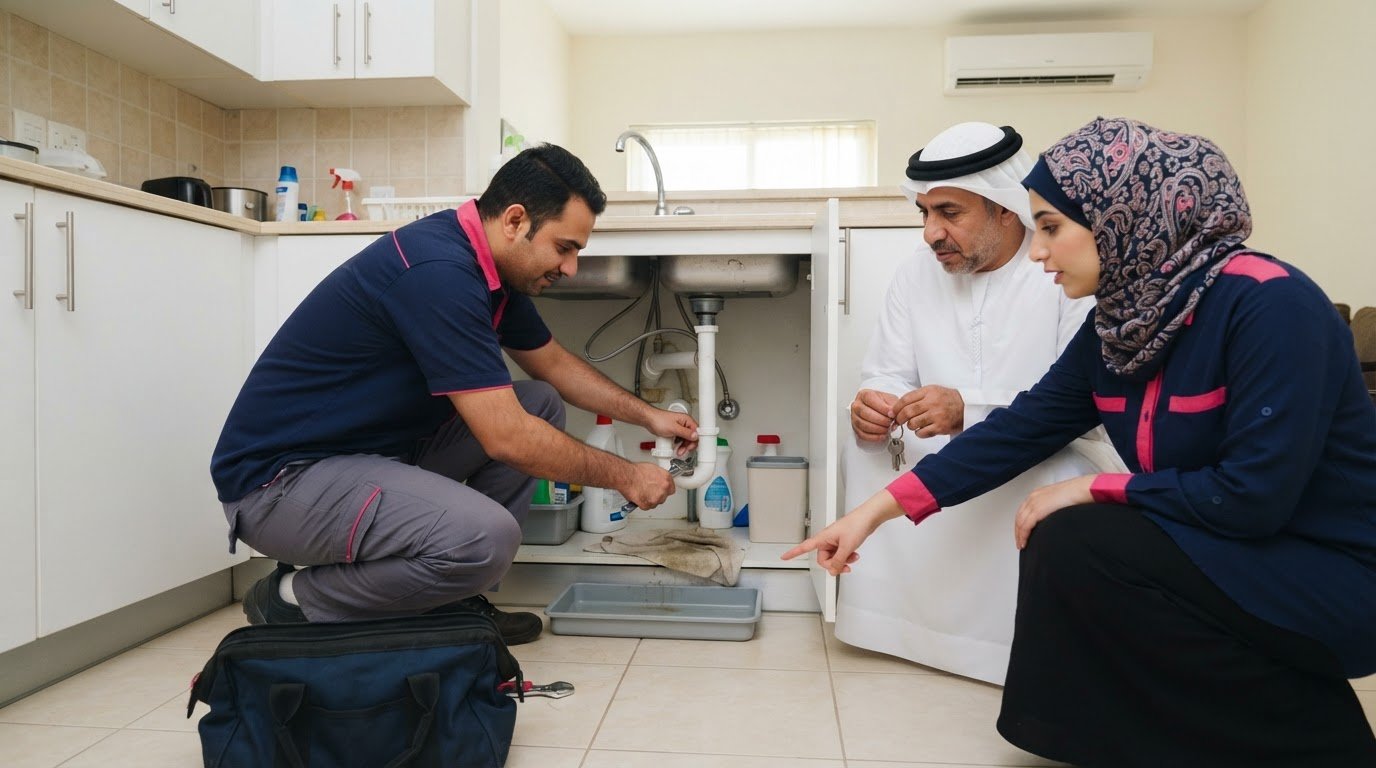
A rental agreement can spell out the rent and still leave room for disputes if it describes the property, repairs, or included amenities vaguely. The rental contract clauses every landlord needs should clarify who handles maintenance, how the security deposit is managed, which house rules apply, and exactly what comes with the home.
A practical contract distinguishes major repairs and essential services, which landlords are generally responsible for, from tenants’ day-to-day care of the property. Clear wording helps both parties understand their responsibilities throughout the tenancy.
Before move-in, tenants should be able to understand the agreement’s terms. This guide covers clauses that help make them clear, from accurate property details and an appliance inventory to deposit deductions, repair reporting, and rules for pets, smoking, and subletting. Describing included amenities precisely also prevents a mismatch between expectations and what the property provides.
Key Takeaways
- Set out who handles major repairs, routine upkeep and fault reporting so maintenance responsibilities are clear.
- Explain how the deposit may be used, how deductions are documented and when the tenant can expect a refund.
- Write clear policies for smoking, pets, subletting and prohibited activity to reduce uncertainty during the tenancy.
- Describe the property and its included amenities precisely, and consider digital rent collection to make monthly payments easier to manage.
1. Landlord and tenant maintenance responsibilities
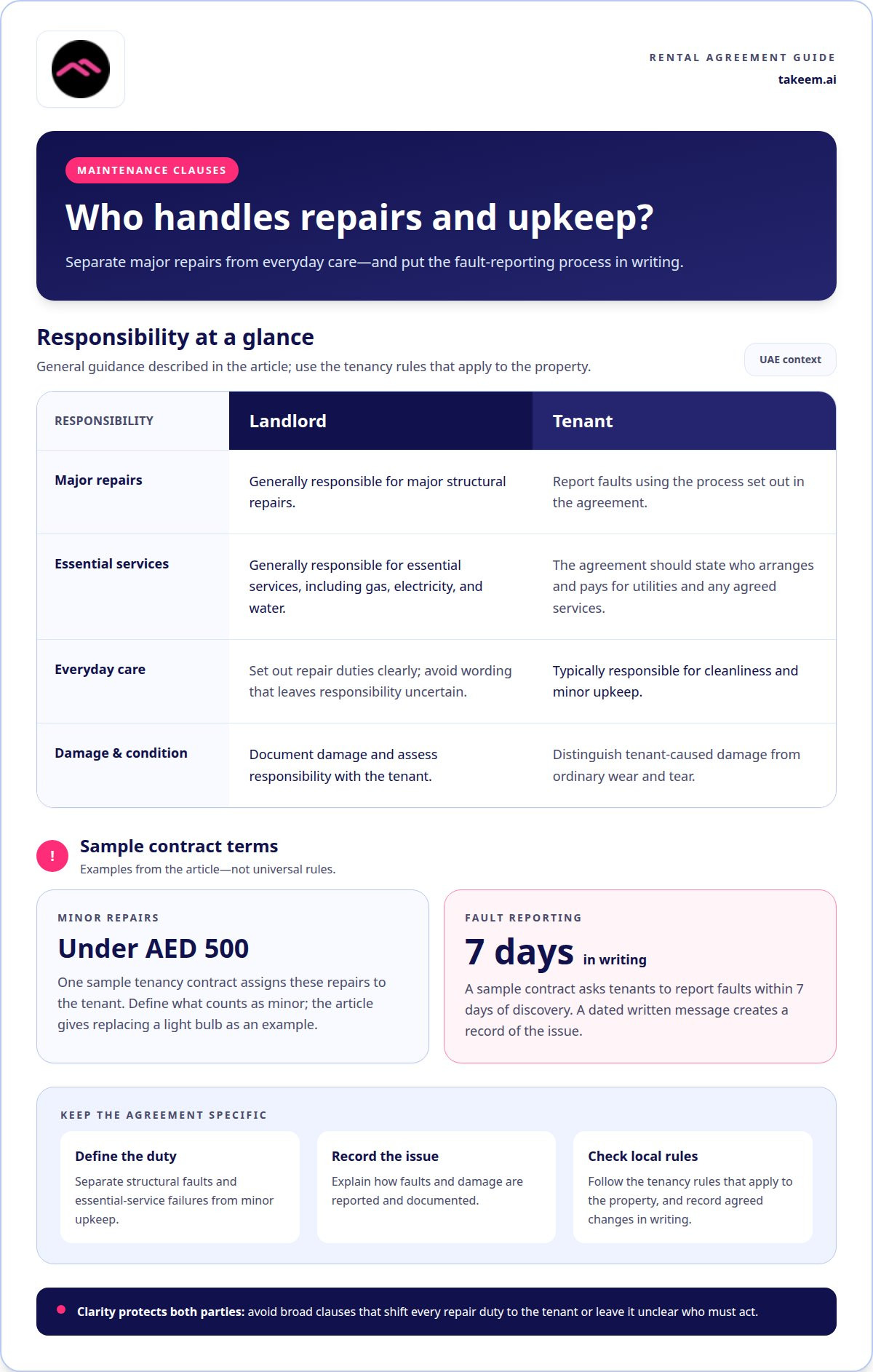
In the UAE, state repair responsibilities clearly in the tenancy agreement. Landlords are generally responsible for major structural repairs and essential services, including gas, electricity, and water. Tenants typically handle cleanliness and minor upkeep. The rental contract clauses every landlord needs should distinguish these responsibilities before a fault occurs.
A sample tenancy contract assigns minor repairs under AED 500 to the tenant. Define what counts as minor, using practical examples such as replacing a light bulb, and separate these tasks from structural faults or essential-service failures. Specific wording protects both parties from disputes over who should arrange a repair.
Set a clear fault-reporting process. A sample tenancy contract asks tenants to report faults in writing within 7 days of discovery. A dated message about a leaking pipe, for example, creates a record and helps the landlord identify the issue and arrange a response.
Clauses that shift every repair duty to tenants or conflict with applicable tenancy rules can create problems. Assign responsibilities precisely and avoid broad wording that leaves it unclear who must act.
For damage, distinguish tenant-caused harm from ordinary wear and tear. Explain how the parties will document the damage and assess responsibility. If the agreement addresses insurance, describe the tenant’s obligations without implying that insurance removes the landlord’s repair responsibilities.
List utilities and other charges separately. Specify who arranges and pays for electricity, water, gas, and any agreed services. Explain how utility accounts are set up and payments handled, so neither party has to infer the arrangement from a general clause.
Required terms vary by jurisdiction. In the UAE, follow the tenancy rules that apply to the property rather than importing clauses from another country. Review repair, utility, and reporting terms at renewal, and record any agreed changes in writing.
2. Security deposit amount, deductions and refund timeline
State the agreed security deposit in AED and provide a receipt. Identify who holds it and explain how it will be returned. Deposit requirements can depend on the property and applicable tenancy rules, so set out the agreed terms rather than relying on assumptions.
Specify potential deductions, such as unpaid rent or tenant-caused damage, and distinguish them from ordinary wear and tear. Explain how inspection findings support each proposed deduction. Photos taken before move-in and after move-out can document the property’s condition. A dated inventory can also link a deduction to a particular item or room.
Set the refund process and timeline in writing. One practical contract example is returning the balance within 14 days after the final inspection. Explain how the landlord will provide an itemised statement when deductions apply and how the remaining balance will be paid. These steps help both parties understand the same situation.
Keep rent terms separate from deposit terms. Specify the rent in AED, payment dates and frequency, and accepted methods. If rent is paid by cheque, record the cheque dates and amounts in the agreement. Explain how tenants receive payment confirmation. Describe late-payment consequences only when permitted under applicable tenancy terms.
For monthly rent, digital payment records can make tracking easier. Digital rent collection lets landlords accept monthly tenant payments by Direct Debit, alongside written terms covering due dates and receipts.
3. Smoking, pet, subletting, and illegal activity policies
Clear house rules show tenants what the rental agreement permits. State whether smoking is allowed indoors, outdoors, or nowhere on the property. Identify any designated smoking area and explain how tenants should prevent smoke or odours from affecting neighbours. For pets, specify which are permitted and whether tenants are responsible for reasonable, lawful pet-related cleaning charges or deposits.
Occupancy terms should identify approved residents and explain how guests differ from additional occupants. Set out how to request written consent before another person moves in. This addresses unauthorised occupancy without leaving tenants to guess what the agreement allows. Rules can also cover shared spaces, guest conduct, and internet use, including access details and acceptable use of the property’s connection.
Address subletting and assignment in separate, direct terms. A tenancy agreement may prohibit subletting or taking in lodgers without the landlord’s prior written consent. Explain how a tenant can request consent, and state that transferring the agreement to another person also requires written approval. Describe how a breach will be handled under the agreement and applicable tenancy rules. Do not imply that a clause alone permits immediate eviction or termination.
For unlawful activity, prohibit using the property for illegal purposes and describe the tenant’s obligation to report serious property concerns. Focus the rule on conduct, not assumptions about a tenant or guest. Keeping a written record of complaints, dates, and relevant communications can clarify a dispute and the issue being addressed.
In Dubai, a sample tenancy contract sets a 12-month term, with 60 days’ written notice from the tenant before vacating and 90 days’ written notice from the landlord before the contract end date. State the term, renewal process, notice method, and how any rent increase will be communicated, subject to applicable rules. These clauses should align so tenants know which obligations continue at renewal.
4. Accurate property description and included amenities
Identify the exact home being rented, not just the building name. Record the unit number, building, community, and full address, then describe the leased space. Clarify, for example, whether the tenancy includes a balcony, storage area, parking space, or shared facilities. These details distinguish the rented premises from nearby units with similar layouts.
List the amenities included with the property and their condition at handover. Name each appliance, such as a refrigerator, washing machine, or cooker, and note whether it works. Specify which furniture stays, which access cards or keys are provided, and whether internet service is included. A signed inventory and dated photographs can help establish these details if a disagreement arises later.
Every residential agreement should clearly state the parties, rental period, rent, deposit terms, maintenance responsibilities, permitted use, and notice process. For a Dubai tenancy, align the written property description with the premises identified in the tenancy contract. Do not call a facility “private” if residents share it, or describe an appliance as included if it will be removed before move-in.
Define boundaries that affect everyday use. For example, state whether a parking bay is assigned to the unit or shared, and identify any included terrace or garden. Describe structural features accurately, but do not imply that a defect is acceptable or that essential repair duties no longer apply. Clear descriptions support a transparent landlord-tenant relationship throughout the rental period.
Before signing, compare the agreement’s property details with the handover inventory, then record any mismatch in writing. This simple step connects the contract to the home tenants actually receive. Review your rental property details and make sure each included amenity is described clearly.
Takeem: Direct Debit setup for Landlords to digitally accept monthly payments from tenants
Takeem helps landlords set up Direct Debit to accept monthly rent payments digitally from tenants. This is a practical next step after specifying rent amounts, due dates, and payment arrangements in the tenancy agreement. A consistent digital collection method can make recurring rent administration more straightforward.
Landlords seeking additional rental support can also consider Takeem’s Landlord Rental Guarantee. The right option depends on whether the priority is digital monthly payments or rental guarantee support. These services complement clear contract terms; they do not replace the need to document responsibilities, deposits, and property details in the agreement.
For a straightforward next step, contact Takeem to discuss Direct Debit setup for tenant rent payments.
Put a clearer rental process into practice
A well-written agreement gives your tenancy a stronger foundation. Next, connect its written terms with support that fits your rental plans. Use the rental contract clauses every landlord needs as a practical framework, then consider whether digital rent collection or rental guarantee support suits your priorities.
Takeem offers a Landlord Rental Guarantee, including a Rental Guarantee for Property Investors with Large property Portfolios. Agents can also sell Takeem’s Landlord Rental Guarantee for healthy commissions. These options serve different landlord and agent needs, so focus on the type of support that aligns with your rental arrangement.
Clear terms and a suitable payment or guarantee solution can help you move forward with greater structure. Contact Takeem to discuss your rental and explore a practical next step for your property.
Frequently Asked Questions
What Does Your Rental Contract Include?
A rental contract records the agreed terms for using a specific home. It typically identifies the landlord and tenant, premises, tenancy period, rent arrangements, deposit, and each party’s responsibilities. Attach an inventory listing furniture, appliances, keys, and access cards. For example, listing a parking space separately clarifies whether it belongs to the rented unit or is shared.
What Information Should a Lease Contain?
A useful lease combines the main agreement with supporting records. Include the property’s identifying details, payment terms, occupancy rules, maintenance arrangements, and the process for handling notices. Add relevant annexes, such as an inventory or signed handover record, so the written terms match the home’s condition and contents. In Dubai, tenancy contracts must be registered with Ejari within 30 days of signing.
What information must a landlord and tenant provide in a rental contract?
Write each party’s full legal name and reliable contact details, then identify who is signing as landlord and who will occupy the property. If an authorised representative signs, clearly record that person’s role. Use consistent names throughout the agreement and its attachments. This helps prevent confusion about who should receive a notice, approve a request, or address an issue during the tenancy.
How should rent amount, due dates, late fees, and payment methods be stated?
Write the rent in AED, list each payment due date, and state the agreed method, such as bank transfer, cheque, or Direct Debit. Explain how payment confirmation is recorded and where the tenant should report a failed transaction. Any late-payment term should be clear and consistent with applicable rules. Avoid unexplained charges or terms that leave the amount or trigger uncertain.
What security deposit limits, handling rules, and refund deadlines apply?
Deposit practices can depend on the property and applicable local rules. State the agreed amount in AED, document receipt, and explain how the deposit will be held and assessed at the end of the tenancy. Set out the refund process and deadline in the contract. If deductions are proposed, provide an itemised explanation linked to documented property condition or unpaid obligations.
Which lease terms cover maintenance, repairs, utilities, and access to the property?
Use separate clauses for repairs, utilities, and property access. Explain how tenants report a fault, who coordinates repairs, and how utility accounts are managed. For access, describe how the landlord arranges routine visits and communicates their purpose and timing. Include a process for urgent situations while ensuring access terms comply with applicable tenancy requirements.