

Rental cheques aren’t the only way to schedule rent in the UAE. If you’re considering how to set up direct debit for a tenant, the key step is to have the tenant authorise recurring rent collection from their nominated UAE bank account on agreed due dates. A standing order works differently: the tenant instructs their bank to send each payment.
It’s understandable to want rent collection to be predictable without asking the tenant to arrange a manual transfer each time. Direct debit offers a digital alternative to cheques, with a payment schedule agreed around the tenancy terms and authorised by the tenant.
This guide explains what direct debit means, how rent collection is set up, and what to agree before payments begin. You’ll also learn how to switch from rental cheques and what to consider when arranging setup support, so you can decide whether this approach suits your tenancy.
Key Takeaways
- Arrange direct debit alongside the tenancy terms so the payment schedule and tenant authorisation are clear from the outset.
- Understand how a provider coordinates recurring rent collection from the tenant’s nominated account and keeps payment details aligned with agreed terms.
- Consider how scheduled payments can reduce the need for tenants to make manual transfers while keeping the rent routine predictable.
- Plan a move from rental cheques around the tenancy agreement, with advance notice if the payment method changes during the lease.
How a provider sets up direct debit at the start of a tenancy
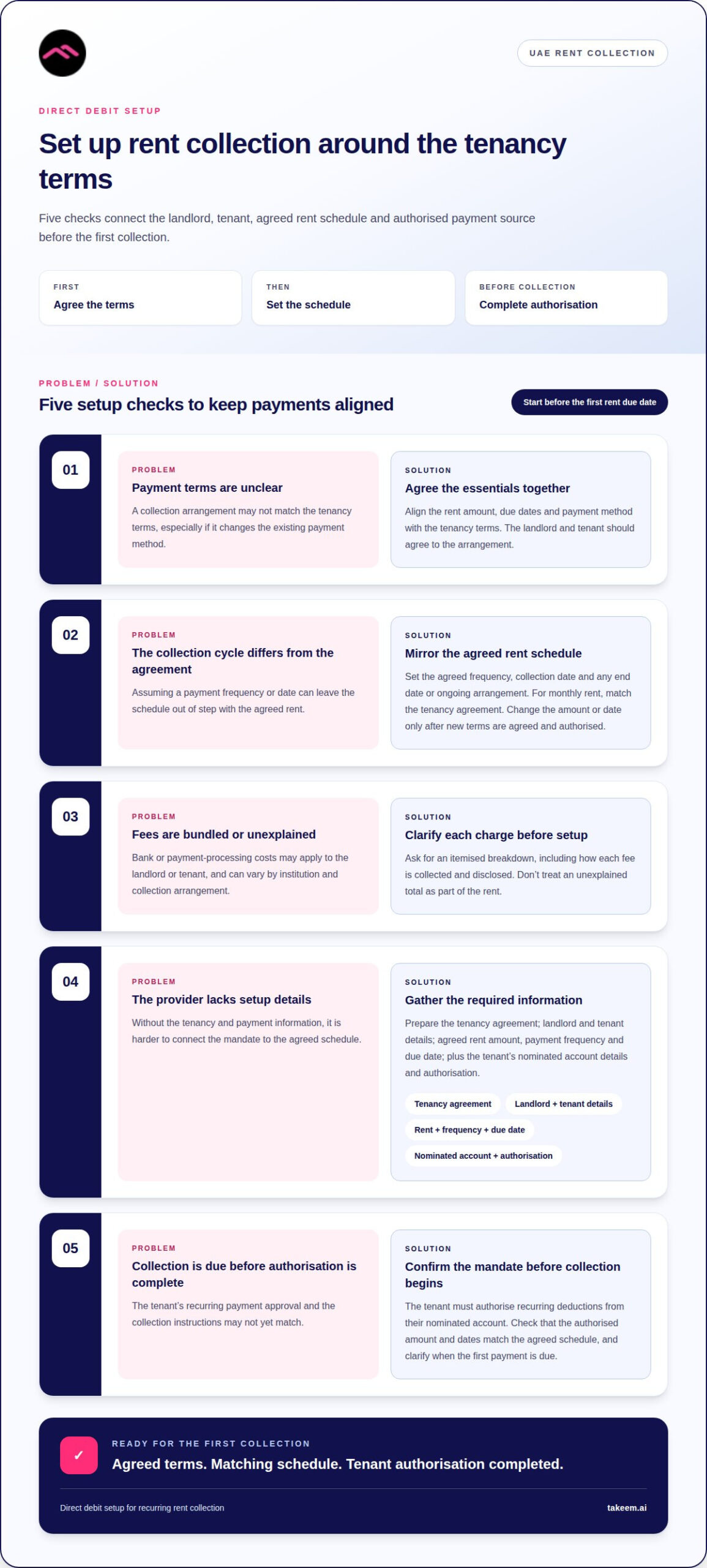
The setup connects the landlord, tenant, and tenancy terms to the payment schedule. Start before the first rent due date to leave time to agree on the schedule and complete the tenant’s authorisation.
- Align the payment method with the tenancy terms. In the UAE, rent collected by direct debit should match the agreed rent amount, due dates, and payment method. The tenant must authorise recurring deductions from their nominated account. The landlord and tenant should agree to the arrangement, especially if it changes the existing terms.
- Set the schedule around the agreed rent. The payment schedule should reflect the agreed frequency, collection date, and any end date or ongoing arrangement. If rent is due monthly, for example, set the schedule to match the tenancy agreement rather than assuming a different cycle. If the rent or due date changes, update the schedule only after the new terms are agreed and authorised.
-
Check Bank and Provider Fees
Before setup, clarify any fees that apply to the landlord or tenant, including bank or payment-processing charges. Costs can vary according to the institutions and collection arrangement. Ask for an itemised breakdown and how each fee is collected and disclosed. Don’t treat an unexplained total as part of the rent.
-
Provide the Required Documents and Information
Provide the tenancy agreement, landlord and tenant details, agreed rent amount, payment frequency, and due date. The tenant’s nominated account details and authorisation are also needed to arrange collection. These details connect the payment mandate to the tenancy and help keep the schedule consistent with the agreed terms.
- Complete tenant authorisation before collection begins. The tenant must approve recurring payments from their nominated account. Confirm that the authorised schedule matches the agreed amount and dates. This step links the tenancy details to the collection instructions and clarifies when the first payment is due.
How a provider collects rent from a tenant’s nominated bank account or credit card
The provider connects the tenant’s authorisation to the agreed rent schedule, then tracks each collection against the tenancy record.
- Choose a provider for the payment method and records you need. For UAE rent collection, look for support for authorised bank-account debits, clear payment records, and updates when tenancy terms change. Understand how payments are identified and how missed or unsuccessful collections are reported. These details help landlords manage rent without checking for each manual transfer.
- Link the tenant’s authorisation to the right payment source. The Direct Debit System says recurring payments can be authorised using UAE PASS biometrics. The tenant’s mandate should identify the nominated account and match the agreed rent schedule. If the agreed method is a credit card, the provider must process card authorisation, not treat it as a bank-account debit.
- Schedule each collection for the agreed due date. According to the Direct Debit System, scheduled payments are automatically debited from the payer’s preferred UAE bank account on that date. Collection follows the authorised schedule. If rent terms change, update the payment amount or date only after the landlord and tenant agree to and authorise the new arrangement.
- Match incoming payments to the tenancy. A tenant reference linked to the rent record helps identify which tenancy a payment relates to. This makes reconciliation clearer for landlords handling several properties. Payment confirmations and records should also be accessible, so the tenant and landlord can refer to the same collection history.
- Keep the collection record current. Review the schedule when a tenancy is renewed, rent changes, or the tenant changes their authorised payment source. A provider that manages these updates and records supports a more orderly process than relying on separate manual notes. For a streamlined digital rent collection setup, use a service designed for landlords and recurring tenant payments.
Convenience for tenants
Scheduled collections can reduce the effort tenants spend arranging rent manually. These steps show how direct debit can fit into a tenant’s monthly routine.
- Explain the payment schedule before activation. Make sure the tenant can see the agreed collection date and recurring amount. This helps them plan rent alongside other monthly commitments. Reviewing the schedule and upcoming payment can be more reliable than relying on memory or arranging a manual transfer each time.
- Set up useful advance notifications. Direct Debit services can send tenants SMS and email notifications before a scheduled deduction. A reminder gives notice of the upcoming collection and its amount. During setup, clarify when and how notifications are sent, so the tenant knows where to look for updates.
- Make schedule details easy to review. Tenants benefit from access to their payment schedule and upcoming collections. A provider can present the dates and amounts in an accessible record, helping tenants plan ahead. This is particularly useful when a tenant wants to check the next due date without searching through old messages or manually reviewing previous transfers.
- Communicate changes promptly. When the landlord and tenant agree to new terms, update the authorised payment details and notify the tenant. Clear communication helps distinguish the current arrangement from an earlier schedule. The tenant can review the revised date or amount before the next collection.
- Keep manual payment tasks to a minimum. Manually transferring rent or paying in cash can be inconvenient. With an authorised recurring schedule, the tenant does not need to initiate each payment. They should still track the agreed schedule and ensure funds are available. Payment records provide a practical reference for completed collections.
Direct debit as an alternative to rental cheques
- Compare the payment pattern with the tenancy agreement. Rental cheques set out payment dates in advance, while direct debit uses an authorised schedule for recurring collections. Monthly rent can be collected by direct debit when that matches the agreed terms. It can follow post-dated cheque dates only if the landlord and tenant agree to and authorise that schedule.
- Choose a suitable point to switch. Tenants who have already issued rent cheques may be able to move to direct debit at renewal or earlier, depending on their agreement. Review which cheque dates are still outstanding and how the proposed debit schedule fits. Agree on the transition before replacing the existing arrangement, so both parties know which method applies to each instalment.
- Give advance notice if the lease is still running. If switching tenants to direct debit during a lease, notify them in advance. Explain the change, first collection date, and scheduled amount. If a cheque already covers an upcoming rent period, clarify how it fits with the new arrangement before starting a debit.
- Keep the new schedule tied to agreed terms. Direct debit replaces the tenant’s repeated payment action, not the need for a clear agreement. The authorised amount and dates should match the tenancy terms. If rent or the billing date changes, agree on the revised terms and authorise the updated schedule before collection. This prevents cheque dates and debit instructions from conflicting.
- Make the switch a documented handover. Record which payment method applies, the date direct debit begins, and how any existing cheques are treated. This gives the tenant and landlord a shared reference if a payment appears under the old method. For landlords moving from cheques to recurring digital collections, arrange direct debit rent setup around the agreed tenancy schedule.
Takeem: Direct Debit setup for Landlords to digitally accept monthly payments from tenants
Takeem helps landlords set up direct debit to accept monthly rent payments from tenants digitally. It’s a practical option when you’ve agreed to move from rental cheques or manual transfers to an authorised recurring schedule. The setup connects the tenant’s nominated payment method to the rent terms agreed for the tenancy.
Landlords can use Takeem’s digital collection service on its own or alongside a Landlord Rental Guarantee. Property investors with large portfolios can also explore the Rental Guarantee for Property Investors with Large property Portfolios. The right fit depends on whether you need digital rent collection alone or broader support through a rental guarantee.
Ready to arrange digital rent collection for your tenancy? Contact Takeem to discuss direct debit setup.
Make rent collection part of a clearer tenancy process
Decide how digital rent collection will fit your tenancy workflow. Consider who will coordinate tenant authorisation, how payment records will be reviewed, and how agreed schedule changes will be communicated. Settling these details helps landlords and tenants begin with shared expectations.
For landlords, deciding how to set up direct debit for a tenant is an opportunity to modernise rent collection in a way that fits their portfolio. Takeem provides direct debit setup for landlords and rental guarantees, including an option agents can sell for healthy commissions. Choose the support that matches your role and property needs, then move forward with an agreed process.
Contact Takeem about rent collection to discuss the next step. A more organised payment process can begin with one practical decision.
Frequently Asked Questions
What is a direct debit?
A direct debit lets a tenant authorise recurring rent collection from a nominated UAE bank account. For landlords considering how to set up direct debit for a tenant’s rent, the process links the tenant’s approval to an agreed payment schedule. Rather than initiating a bank transfer for every instalment, the tenant authorises a mandate. The amount and timing should match the tenancy terms and authorisation.
What about control?
The tenant gives permission for recurring collections through a mandate that sets out the authorised payment arrangement. When setting up direct debit for a tenant, link that authorisation to the agreed terms. A tenant who needs to defer a debit can make a request in advance. Keep the request and response in writing for a clear record.
What if I’m already mid-lease and cheques have been issued?
A mid-lease switch needs a clear handover between cheque payments and the new debit schedule. List the rent instalments covered by issued cheques, then agree which instalment will be the first collected by direct debit. If a cheque already covers the next rent period, for example, set the debit start date for a later agreed instalment to avoid confusion about what has been paid.
What if my rent amount changes, such as at renewal?
A rent change should affect direct debit only after the landlord and tenant agree to the new terms. Then update the schedule and have the tenant authorise the revised amount before collection. At renewal, compare the new rent amount and due date with the existing mandate. Don’t assume the old authorisation automatically covers a different payment.
What if there aren’t enough funds on the day?
If the nominated account does not have sufficient funds, the scheduled collection may not complete. The tenant should promptly contact the landlord or property manager and arrange payment using the method agreed for the tenancy. The landlord can then record the payment against the correct rent period. Don’t assume a failed debit will be retried automatically, as this depends on the provider’s process.
Will I still get receipts?
Successful debit payments are confirmed, and tenants can access payment records, according to the Direct Debit System. Keep the relevant confirmation with the tenancy documents and use it to identify the payment date and rent period. If the landlord or agency also issues a separate receipt, retain it alongside the confirmation for a clear record of rent paid.