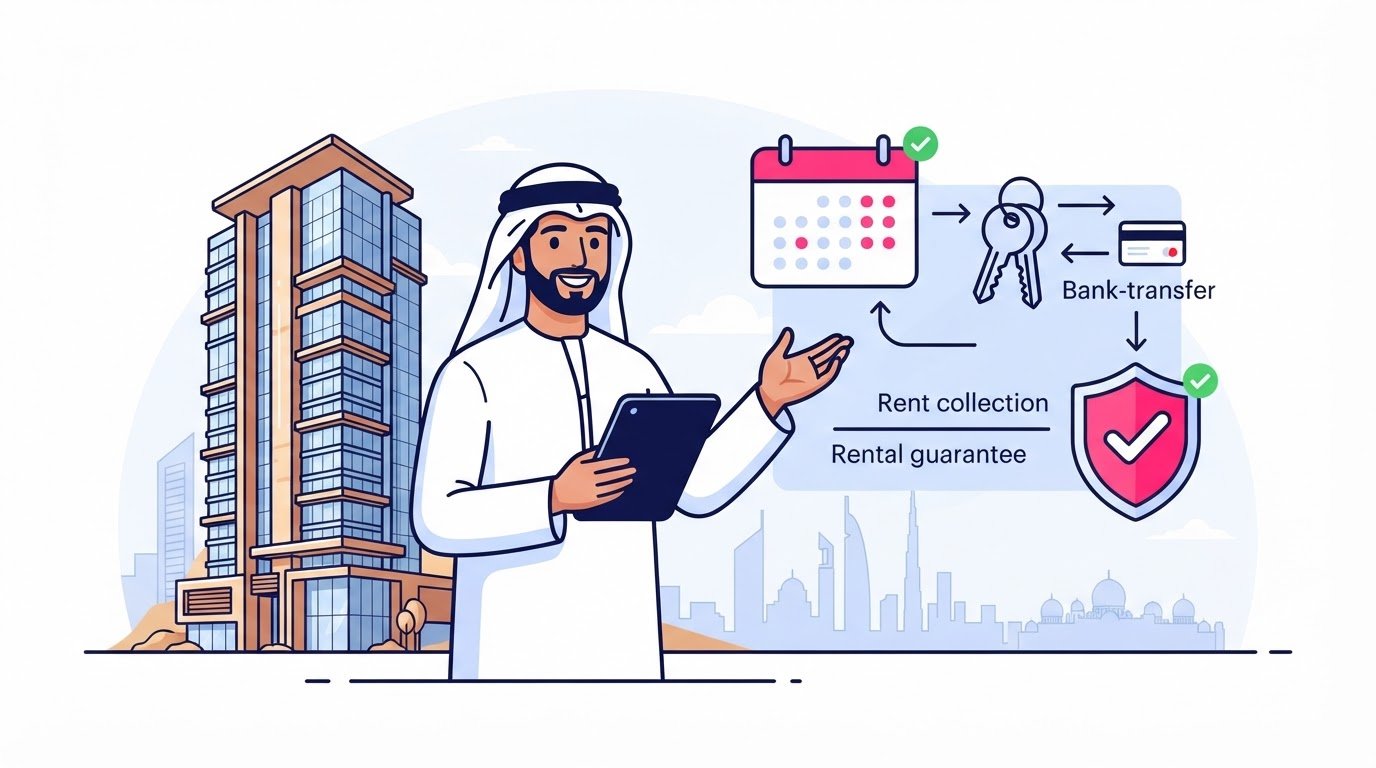
A rent collection system can make payments easier to track, but it doesn’t by itself protect you if a tenant doesn’t pay. For UAE landlords, understanding how to guarantee rental income starts with separating payment collection from income protection, then checking exactly what any protection service covers.
It’s reasonable to want rent to arrive on time and in full without repeated follow-ups or managing post-dated cheques. A clear collection process can make payments easier to manage, while written protection terms help you understand what may happen if payments stop.
This guide explains the difference between digital rent collection and a rental guarantee, and how to compare options by eligibility, exclusions, claims processes, and service scope. It also provides steps for organising collection and assessing Takeem’s Direct Debit and rental guarantee services, including the emergency maintenance component. Confirm current terms and conditions before deciding, so you know what applies to your circumstances.
Key Takeaways
- Learn how to guarantee rental income by distinguishing payment collection from protection if a tenant doesn’t pay.
- Understand how Direct Debit can support recurring digital rent payments, subject to setup and tenant authorisation.
- Compare self-managed collection, digital collection, and rental guarantees by reviewing service scope, landlord responsibilities, exclusions, and terms.
- Prepare tenancy documents, payment records, property details, and service agreements before comparing options.
- Assess Takeem’s UAE rental guarantee and Direct Debit services, and confirm current eligibility, conditions, claims processes, and maintenance scope.
How to Guarantee Rental Income: Start by Identifying the Risk
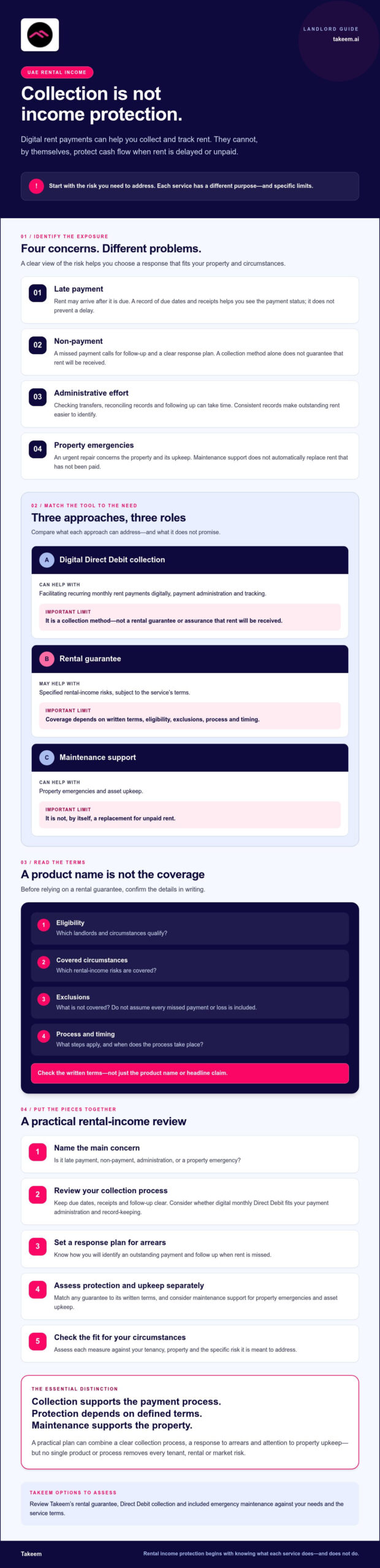
A tenancy schedule tells you when rent is due, but it can’t ensure that payment will arrive on time or in full. A tenant may miss a payment, a collection instruction may need attention, or an urgent property issue may affect your finances. Before deciding how to guarantee rental income, identify which risks you need to manage. Each may call for a different solution.
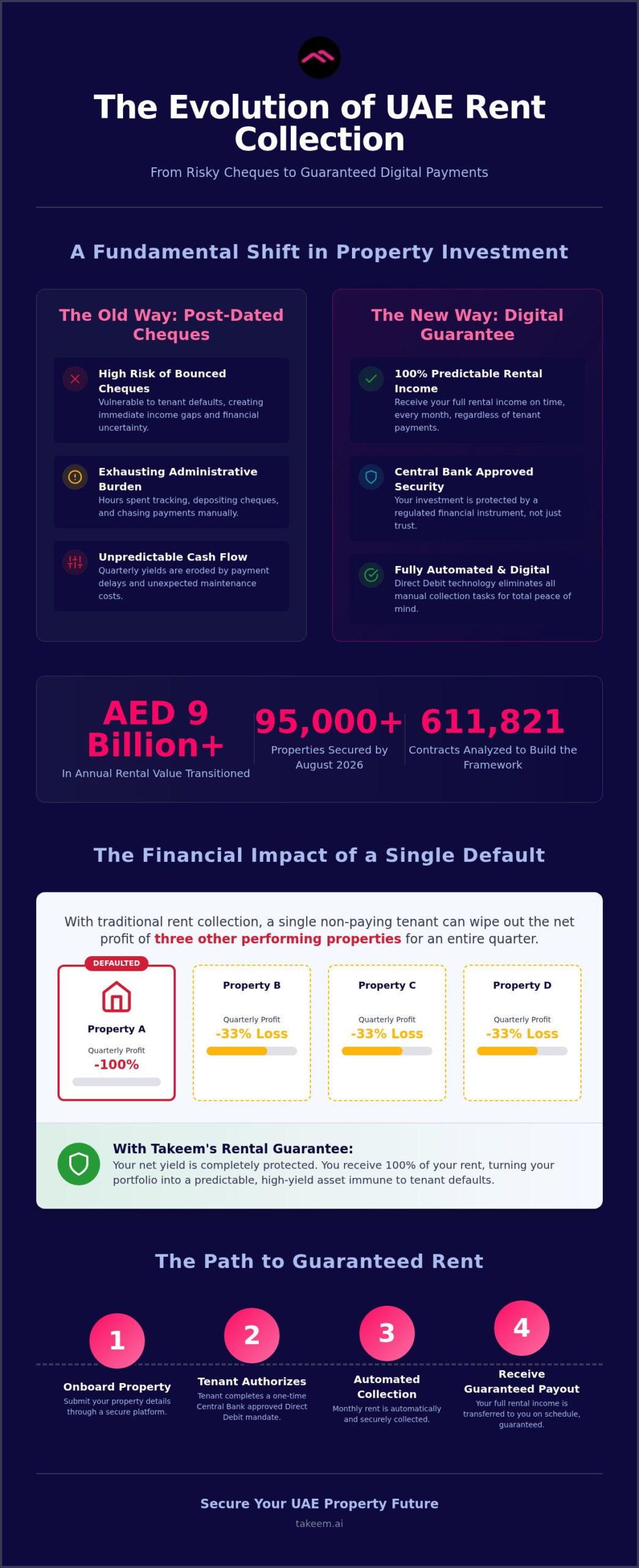
A rental income guarantee is a service arrangement that provides defined support when specified conditions are met. The term doesn’t describe one standard product: providers may set different payment triggers, limits, exclusions, and processes. The guaranteed rental model, for example, can involve an owner receiving an agreed sum while another party assumes vacancy risk. Don’t assume every rental guarantee works this way. Read the written agreement to understand who bears each risk.
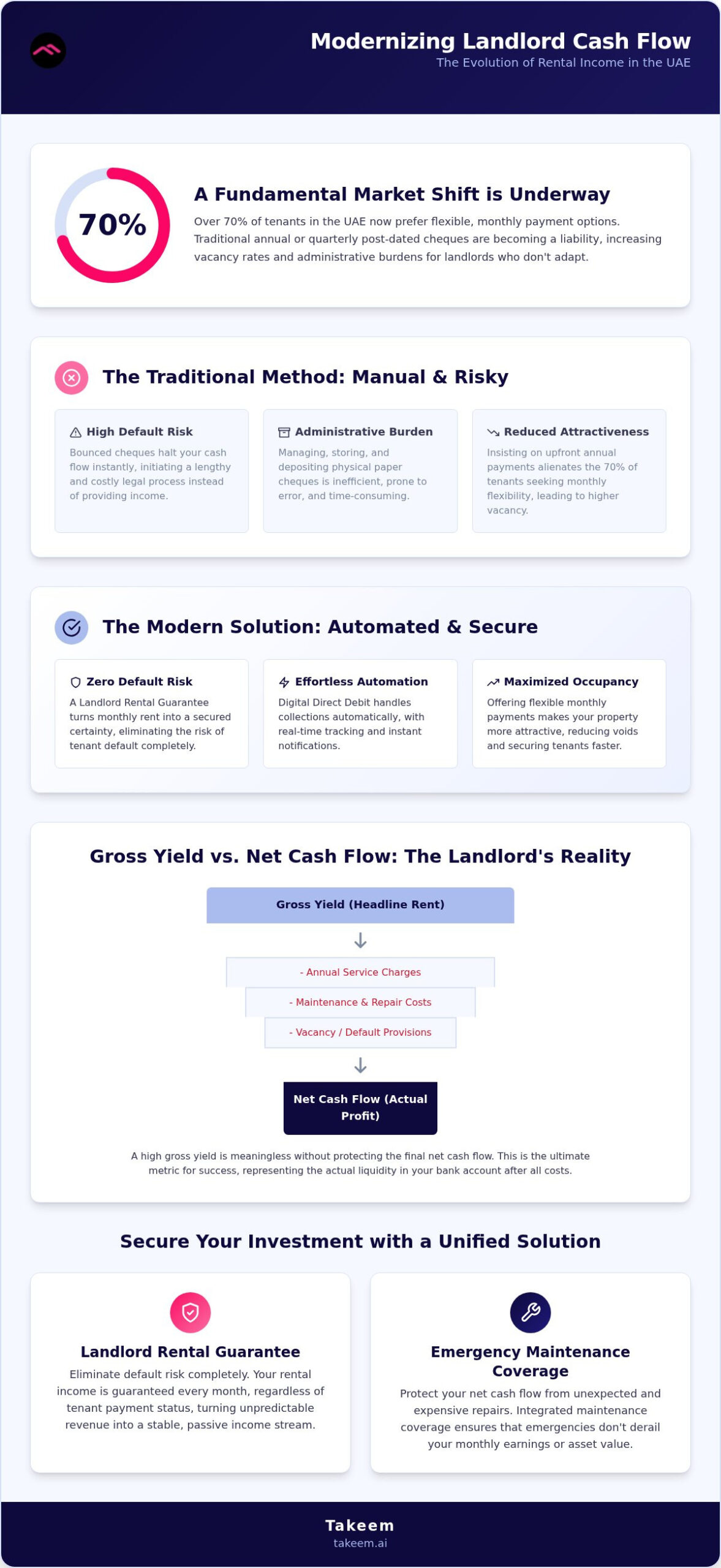
A rental income guarantee may support agreed rental payments; it doesn’t guarantee the property’s investment returns. Vacancy, property damage, market changes, and operating expenses can affect an investment even if a service addresses a defined non-payment risk.
What does a rental income guarantee actually protect?
A guarantee is intended to support income continuity under the conditions in its service agreement. Before relying on that support, confirm what event triggers it, what amount or period may be covered, how to make a claim, and which exclusions apply. Ask specifically whether vacancy or damage is included. The word “guarantee” alone doesn’t confirm that either is covered.
Which rental income risks should landlords assess first?
Start with the interruptions that could put pressure on your cash flow:
- Missed or delayed payments: Consider how a late or absent payment would affect property expenses and other commitments.
- Administrative gaps: Manual reminders, payment tracking, and unresolved collection issues can take time and make it harder to spot problems promptly.
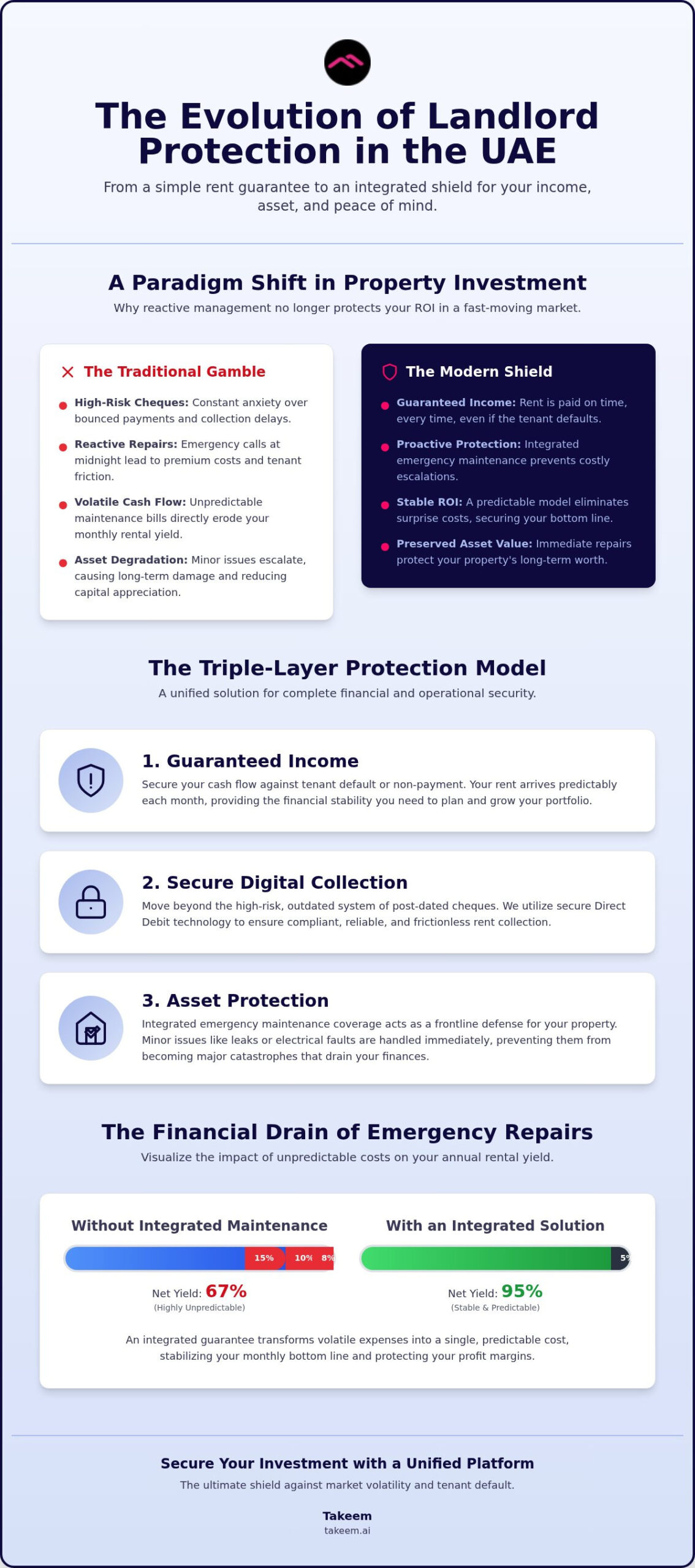
- Urgent property issues: Unexpected repairs may need attention and create costs. Check separately whether a service includes emergency maintenance and which events or costs qualify.
- Vacancy and market changes: These risks differ from tenant non-payment. Check explicitly whether an agreement addresses them instead of assuming it does.
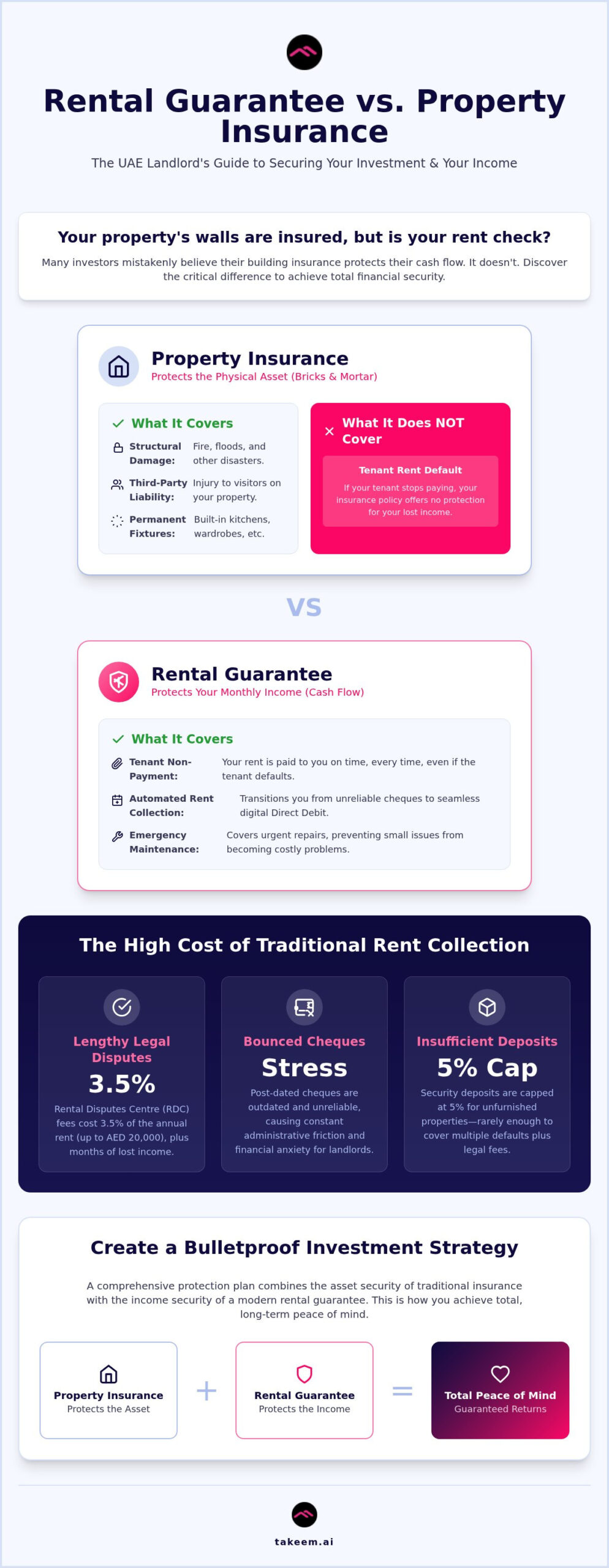
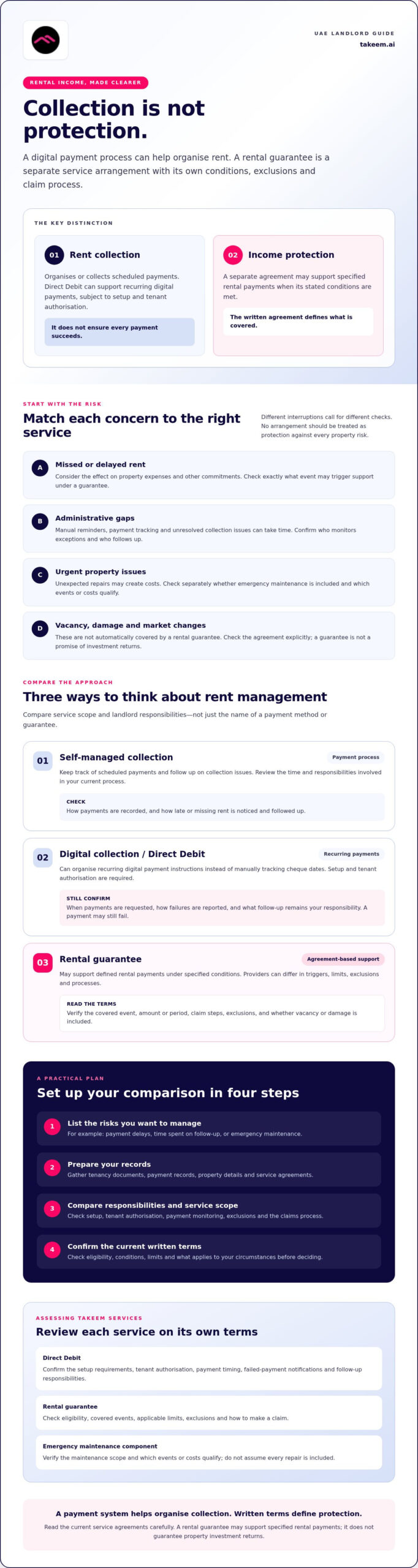
A payment method can help organise or collect scheduled payments, but it doesn’t necessarily protect you if a tenant doesn’t pay. A separate agreement may address specified income risks, subject to its terms. List your main concerns, such as payment delays, time spent on follow-up, or emergency maintenance, then match each one to the relevant service provision. Consider your cash-flow needs, portfolio size, and tolerance for interruptions. This makes it easier to compare options without treating any arrangement as protection against every property risk.
How Rental Guarantees and Digital Rent Collection Work
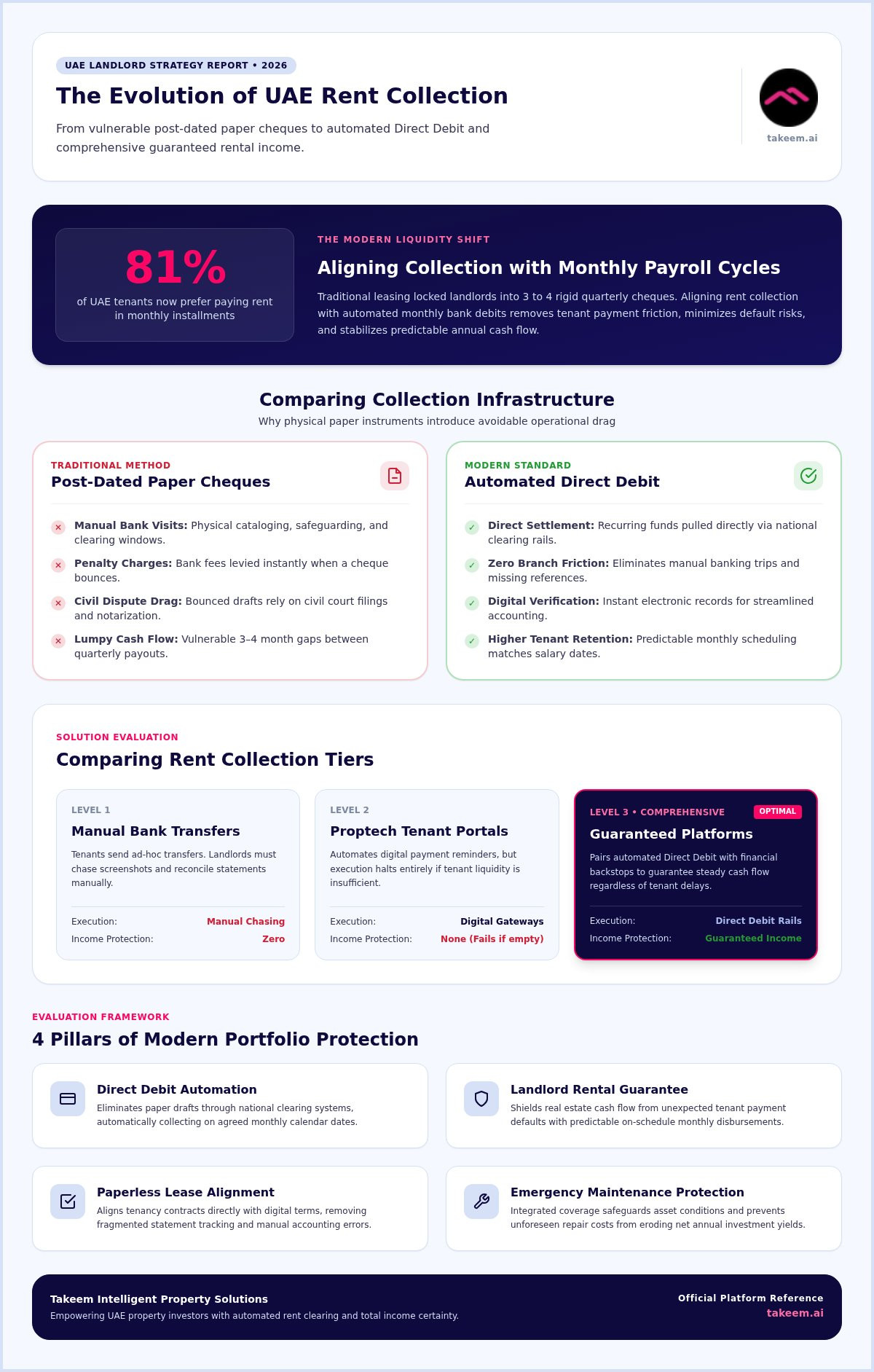
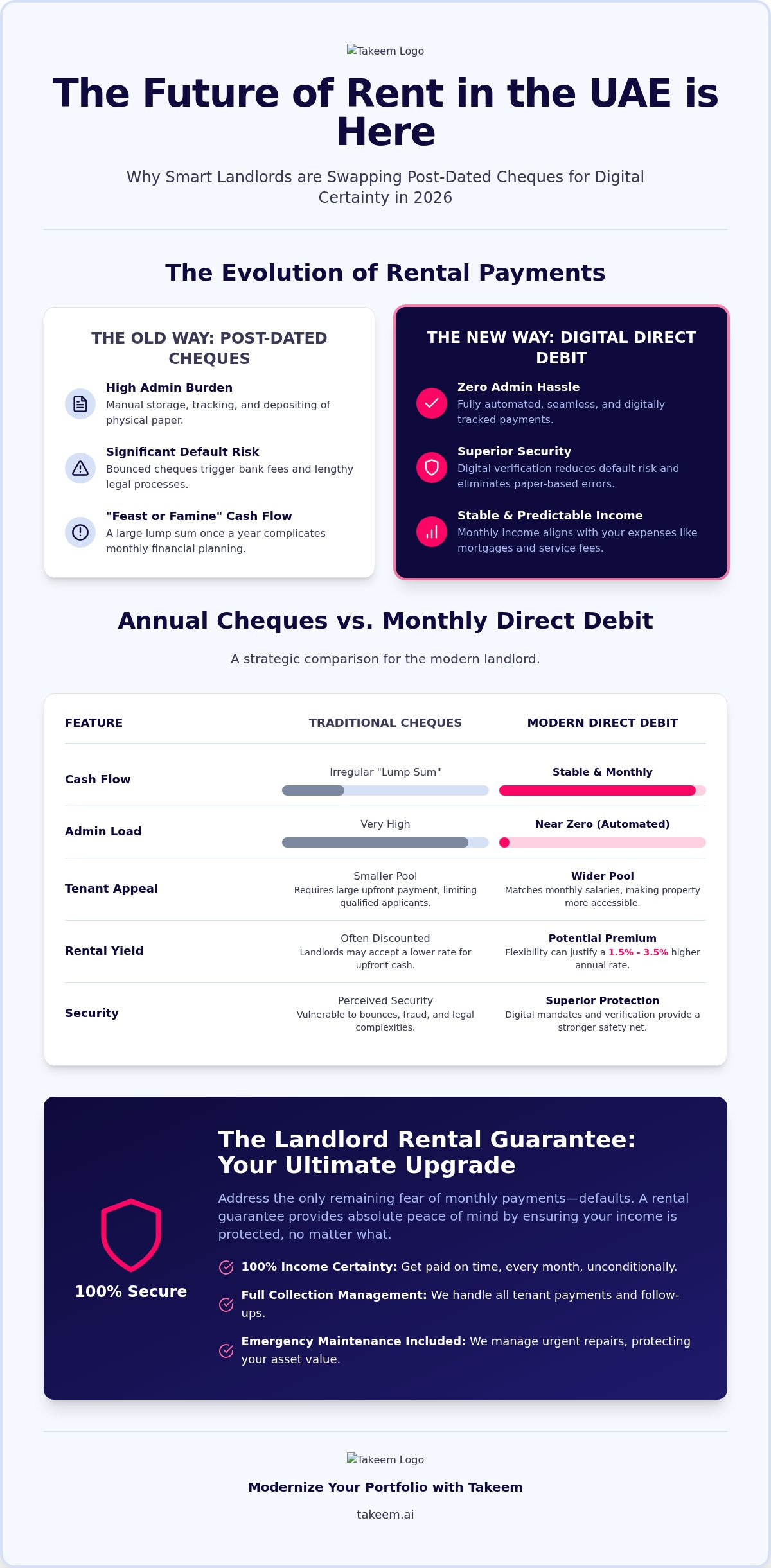
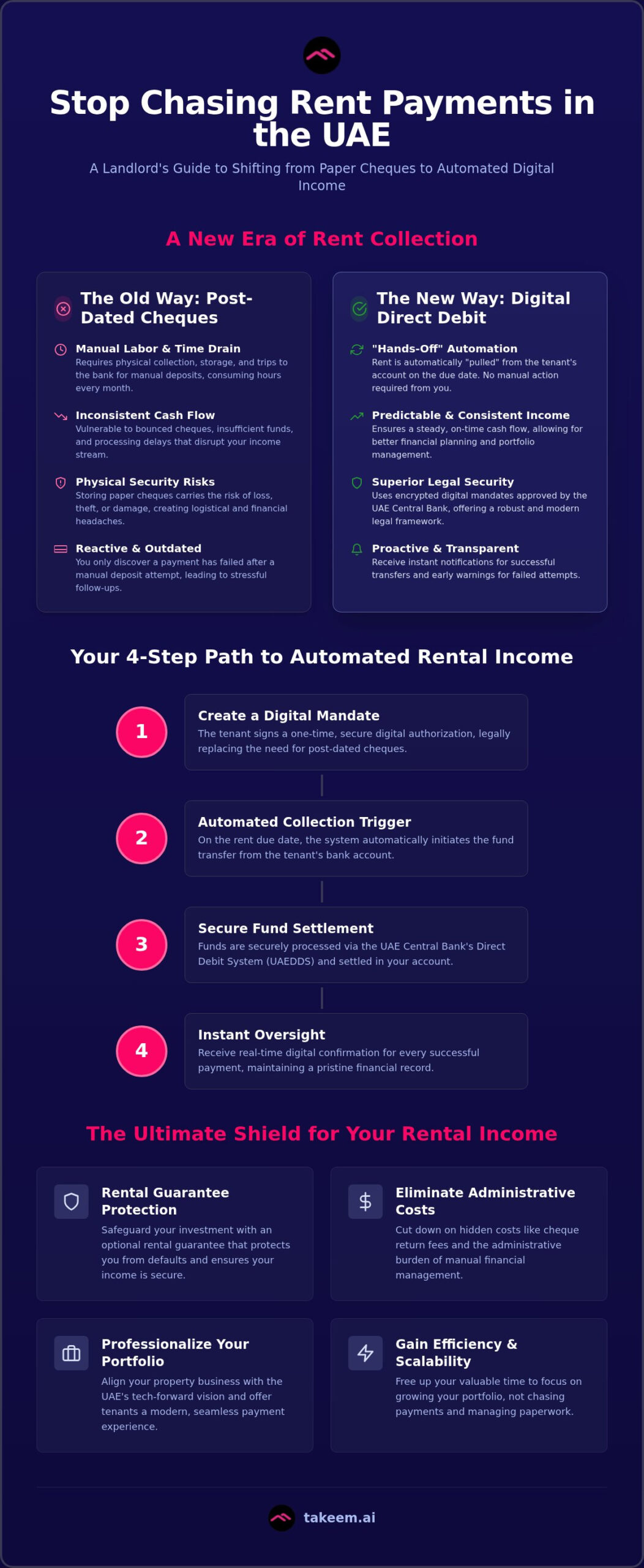
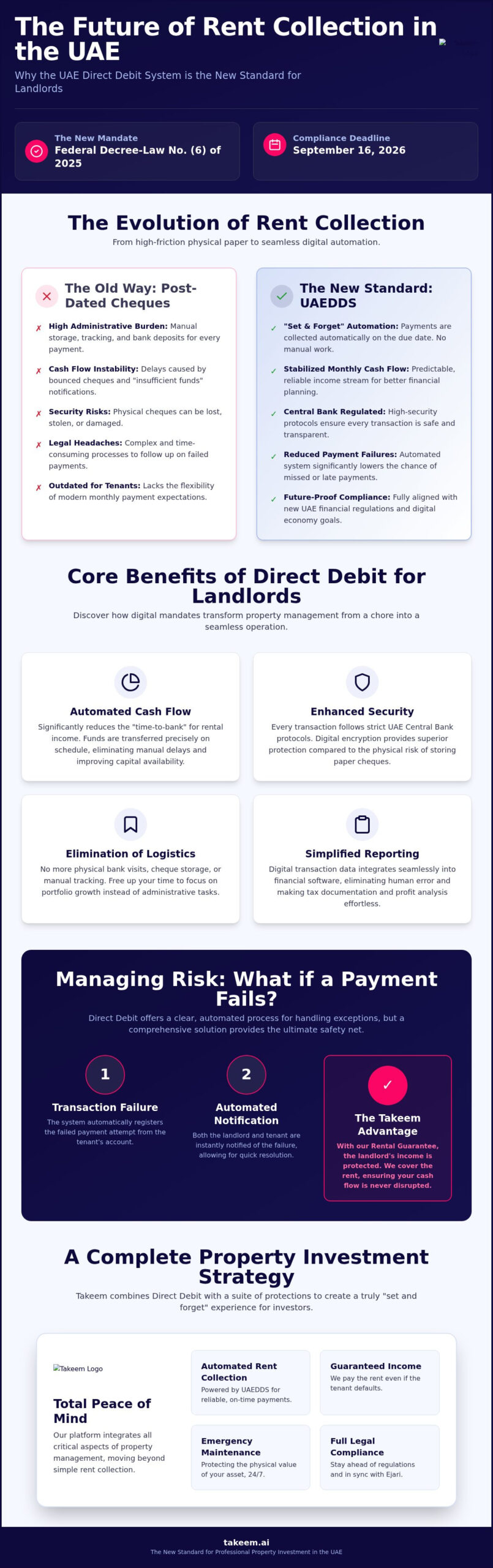
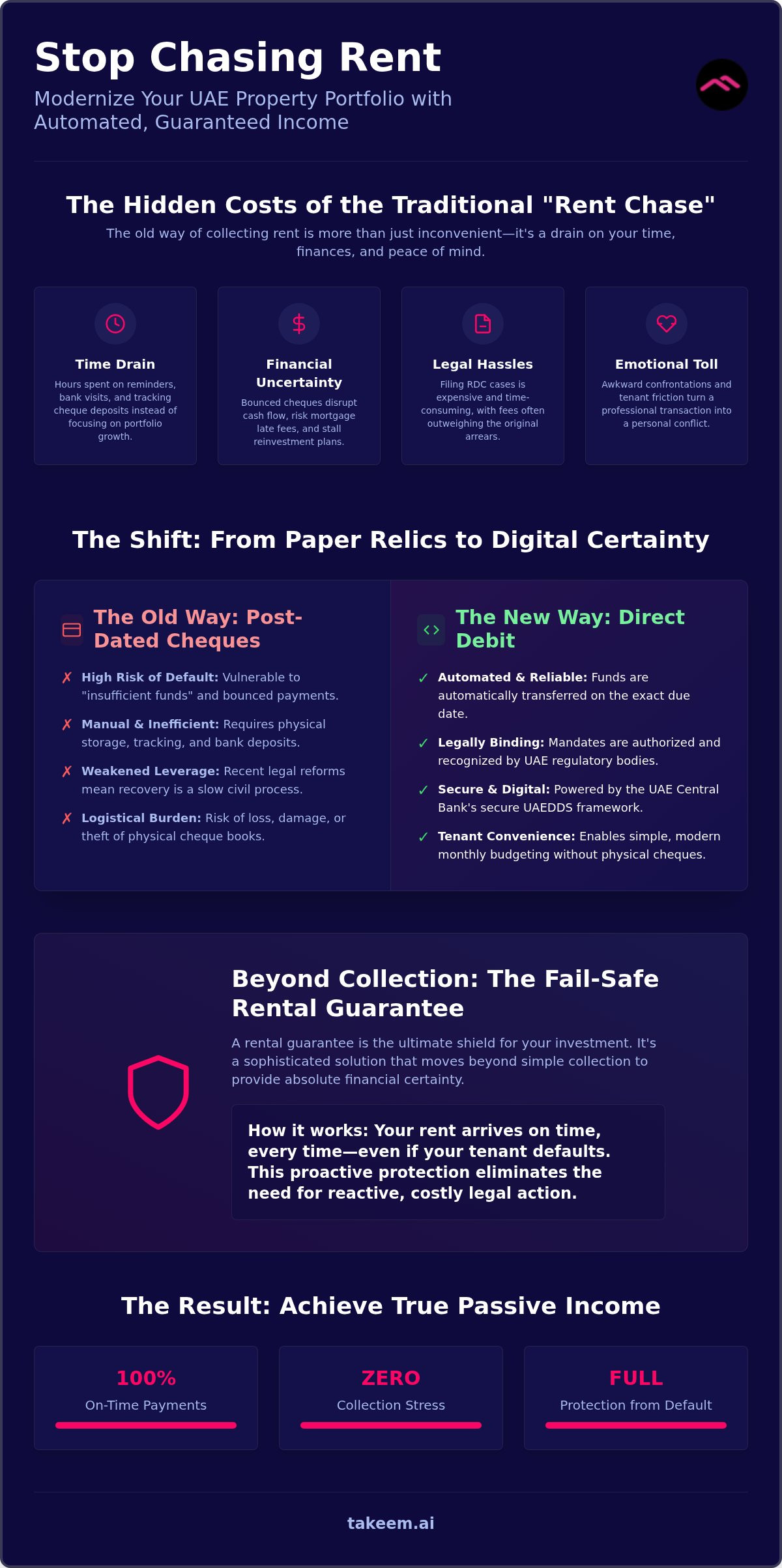
Digital collection and rental income protection can work alongside each other, but they solve different problems. Direct Debit arranges recurring digital payments from a tenant, subject to setup and the tenant’s authorisation. It can make monthly collection easier to organise than manually tracking cheque dates. It doesn’t ensure every payment succeeds or, by itself, protect a landlord if rent isn’t paid.
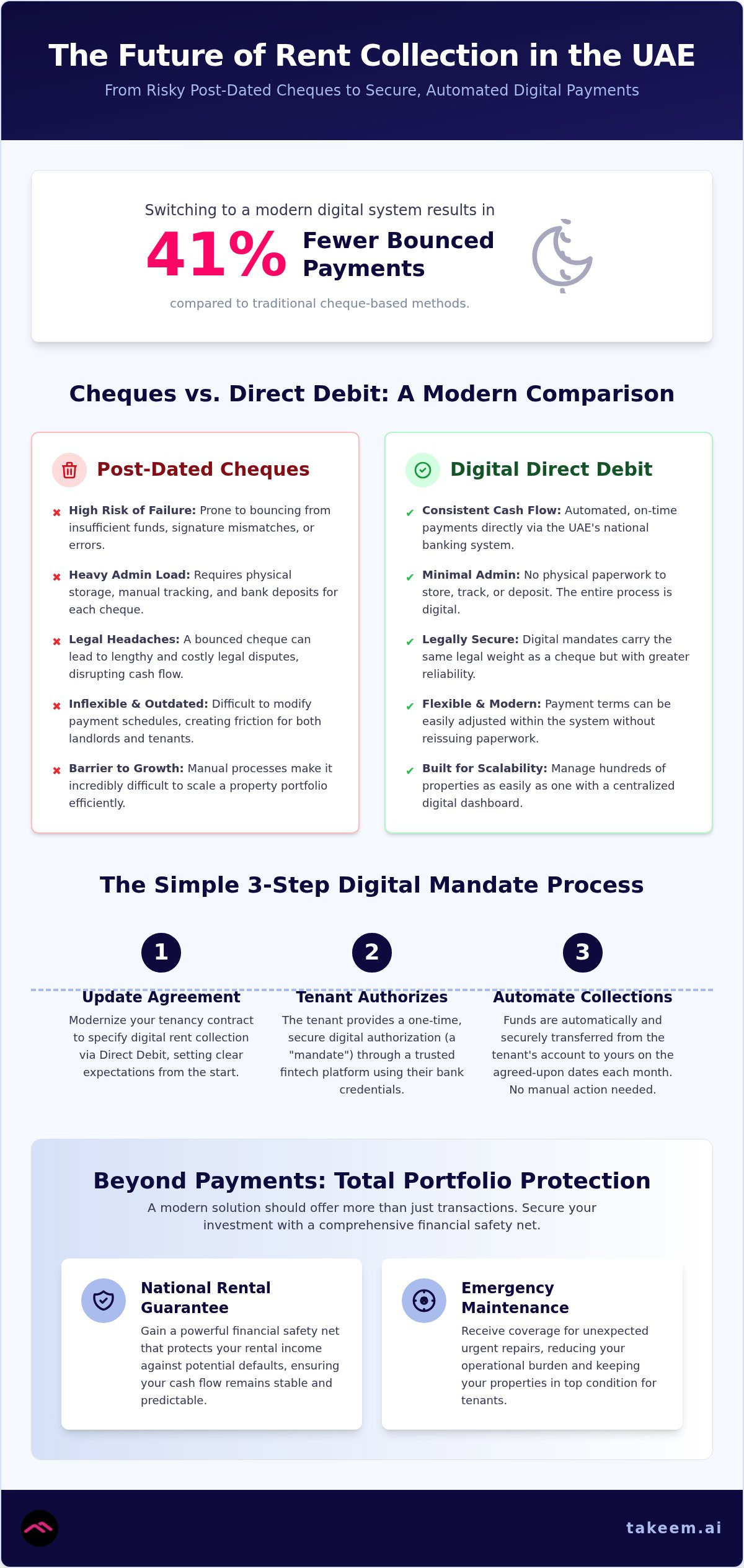
A typical setup involves agreeing on a payment schedule, establishing and authorising payment instructions, monitoring collections, and following up on exceptions such as a failed or missing payment. Before switching methods, confirm how authorisation works, when payments are requested, how failed payments are reported, and what follow-up remains your responsibility. For relevant rental procedures and guidance, consult the government guidance.
What changes when rent moves from cheques to Direct Debit?
Rather than checking each cheque date and manually recording receipt, a recurring digital process can help organise payment instructions and flag exceptions. You still need to monitor rent and follow up with the tenant if a payment fails. Ask who receives failure notifications, what information they provide, and what steps you must take. Make sure setup requirements and tenant authorisation are clear before the arrangement begins.
How does collection differ from income protection?
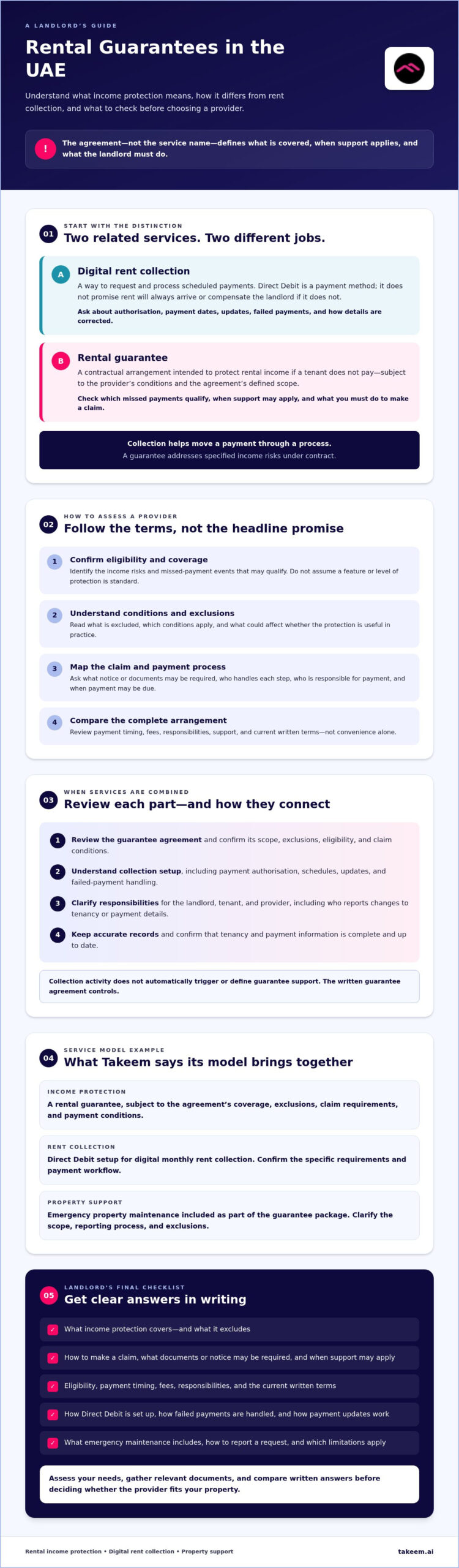
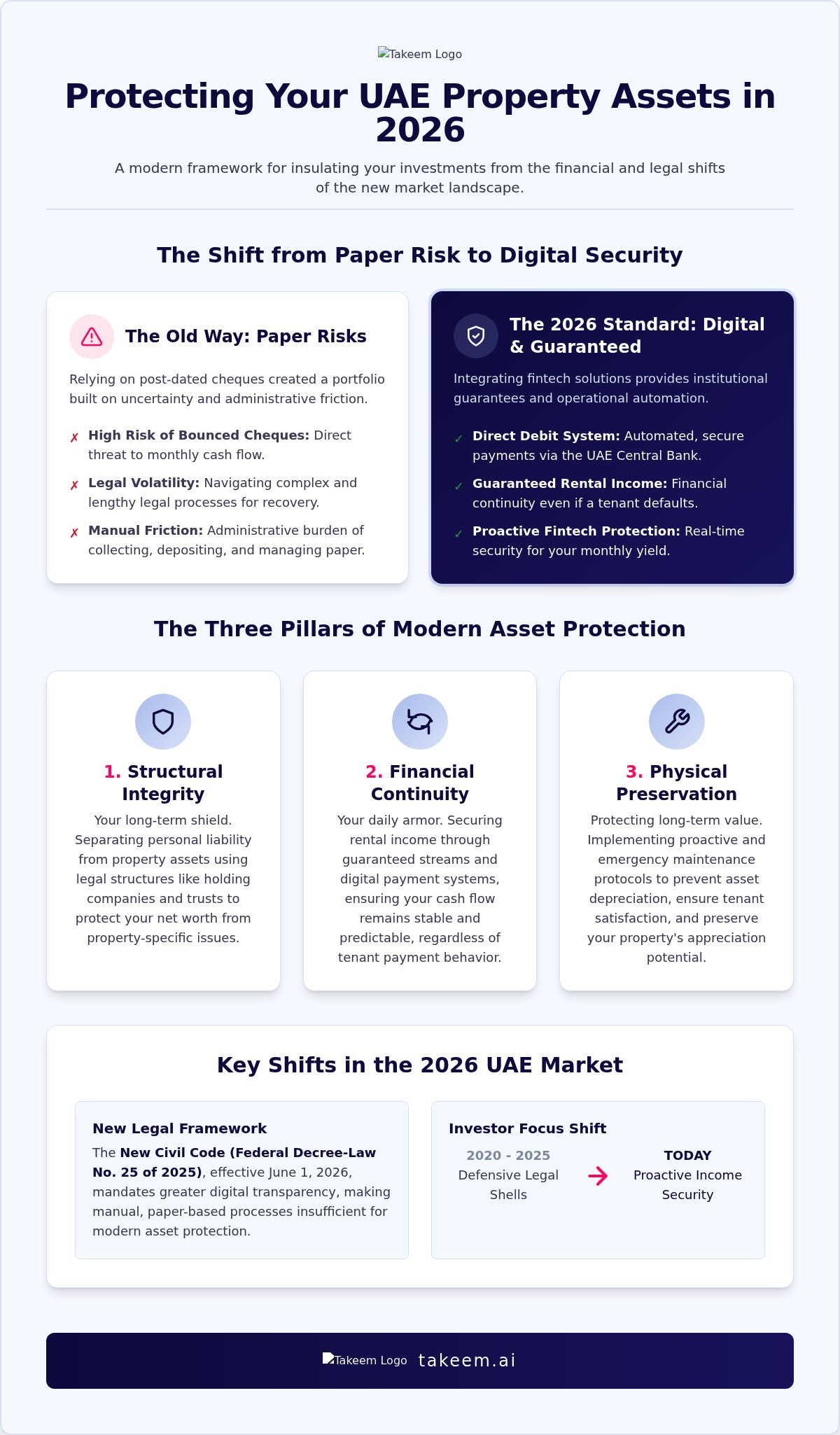
Think of collection as the payment process and protection as a separate contractual arrangement. Support under a rental guarantee depends on its agreement, including applicable conditions and exclusions. Read both service scopes instead of assuming a digital payment method includes protection or that a guarantee automatically includes collection administration.
Payment administration
- Sets how and when rent is requested and received.
- May help organise recurring payments and identify collection exceptions.
- Doesn’t automatically cover missed rent or other interruptions to income.
Protection under a guarantee agreement
- Defines which specified income risks may qualify for support.
- Sets the applicable triggers, process, limits, and exclusions.
- Requires review of the written agreement; the word “guarantee” isn’t enough to establish coverage.
Compare these functions separately before choosing an arrangement. Takeem offers Direct Debit setup for monthly tenant payments and a rental guarantee as a distinct service. If you’re exploring rental guarantee and Direct Debit options, check the current setup requirements and guarantee terms. For a broader overview, see Modernizing UAE Rentals: A Landlord’s Guide to Rental Guarantees and Direct Debit.
Compare Rental Income Protection Options Before You Commit
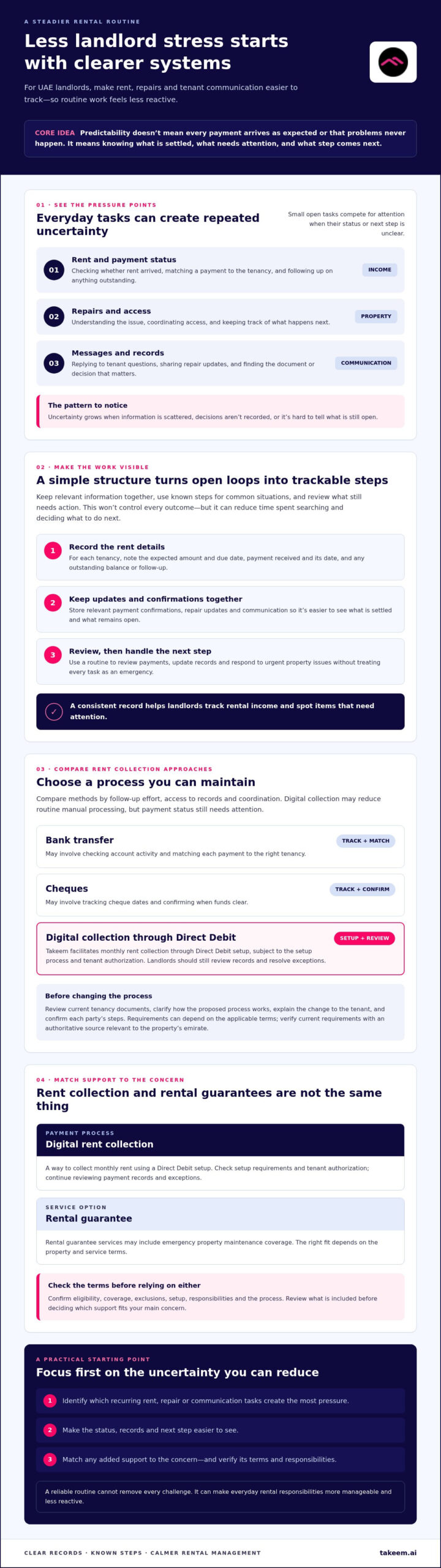
The right approach depends on what you need to solve. Self-managed collection, digital collection, and a rental guarantee serve different purposes, and none is automatically the best fit for every landlord. To decide how to guarantee rental income, compare the practical workload and the specific risks addressed, not just the service label.
| Option | Purpose and income-risk support | Landlord involvement and scope | Questions to verify |
|---|---|---|---|
| Self-managed collection | Landlord requests and tracks rent directly. It doesn’t itself protect against non-payment. | Landlord handles payment records, reminders, and follow-up. | How will you track due dates, missed payments, and communications? |
| Digital collection | Organises recurring payment instructions. It may streamline collection, but isn’t automatically income protection. | Setup, authorisation, monitoring, and failed-payment follow-up still need to be understood. | What are the setup steps, and how are failed payments handled? |
| Rental guarantee | May support income continuity for specified events under a separate agreement. | Scope and landlord responsibilities depend on the written terms. | What qualifies, what’s excluded, and what evidence or action is required? |
Digital collection may suit landlords who want a more structured recurring payment process. If a defined non-payment risk could disrupt your cash flow, compare guarantee agreements as well. First assess your income needs and tolerance for interruptions, then confirm exactly what each agreement covers. A guarantee’s value depends on its conditions, exclusions, and fit with your circumstances, not its name alone.
What should you compare in a guarantee agreement?
Check the agreement for eligibility, covered events, exclusions, claim evidence, payment conditions, and cancellation provisions. Ask who handles tenant communication and what responsibilities remain yours. Confirm any service fees directly with the provider rather than relying on assumed or market-average figures. If maintenance is included, verify which emergencies and repair costs fall within its scope.
Property management is a separate service category. Don’t assume a rental guarantee or digital collection setup includes tenant coordination, property upkeep, or broader management tasks. Check each service scope independently so you know what is and isn’t included.
For more detail, consult The Ultimate Guide to Landlord Rental Guarantees in the UAE (2026). Use it alongside the agreement itself: only the written terms can clarify the provider’s current eligibility requirements, coverage conditions, and exclusions.
How to Set Up a Practical Rental Income Protection Plan
A useful plan turns broad concerns into clear actions: understand your cash-flow needs, review your current process, compare written terms, and record who is responsible for each step. This makes it easier to judge how to guarantee rental income in a way that fits your properties, without assuming one service addresses every risk.
Prepare the right information first
Gather the records a provider may need to assess your situation and explain its terms:
- Tenancy documents: Keep the contract, rent schedule, and relevant tenancy correspondence together.
- Payment records: Note payment dates, delays, missed payments, and any follow-up or resolution.
- Property details: Assemble the information needed to identify each property and understand its circumstances.
- Current agreements: Include existing collection, guarantee, insurance, or maintenance documents that may affect responsibilities.
Write down your current collection routine too: who checks payments, how a late payment is flagged, and who contacts the tenant. If you have multiple properties, decide whether you need consistent processes or consolidated reporting, then ask providers how their service handles those needs.
Ask questions that clarify the limits
Request current written terms and ask providers to answer important questions in writing. For a guarantee, check which events qualify, what evidence is required, what is excluded, and what conditions apply to any payment support. Confirm notification deadlines, service duration, cancellation provisions, and which tenant communications or follow-up actions remain your responsibility.
Be specific about any additional service components. If emergency maintenance is included, ask which events and repair costs qualify, how support is arranged, and what you must do. For Direct Debit, confirm setup steps, tenant authorisation, payment scheduling, and how failed collections are handled. Don’t rely on verbal descriptions when a detail could affect your decision.
Compare, document, and review
Compare the answers with your income requirements and existing process. Record what each option covers, its exclusions, your obligations, and any service fees quoted directly by the provider. Before agreeing, have a qualified UAE legal or financial professional review questions about applicable requirements or your individual circumstances.
Once you choose an arrangement, keep the service agreement, tenancy records, payment instructions, and escalation steps accessible. Set a reminder to review them when a tenancy or service term changes. For further context on reducing conflict around rental income, read Avoiding Rental Disputes in the UAE: A Landlord’s Guide to Income Protection.
To assess a rental guarantee and digital payment setup for your circumstances, review Takeem’s landlord services and confirm the current terms, eligibility, and service scope directly.
How Takeem Can Support a More Predictable Rental Income Process
Once you’ve separated payment collection from income protection and identified what to check, assess services against your rental process. Takeem provides rental guarantee services for landlords and property investors across the UAE, alongside Direct Debit setup for digital monthly rent collection. These services address related but distinct needs, and eligibility, outcomes, and conditions depend on the relevant terms.
How do Takeem’s guarantee and Direct Debit services fit together?
The rental guarantee is the income-protection component: its written agreement defines the circumstances in which support may apply. Direct Debit addresses payment administration by arranging recurring digital payments from tenants, subject to setup and authorisation. Using digital collection doesn’t, by itself, mean missed payments are covered. Review the two service scopes separately, even if you’re considering them together.
Takeem’s rental guarantee also includes emergency property maintenance as a service component. Before relying on it, ask which emergencies and repair costs are included and what conditions apply. If you own several properties or have particular tenancy arrangements, ask how the current agreement applies to each property rather than assuming the same eligibility or terms across your portfolio.
What should you confirm before taking the next step?
Ask Takeem for current written information on the details that could affect your decision. Confirm:
- Guarantee terms: Eligibility, covered conditions, exclusions, applicable service fees, and the claims process.
- Maintenance scope: Which emergencies and repair costs are included, and what steps or responsibilities apply.
- Direct Debit setup: How payment instructions are established, what tenant authorisation is required, and how collection issues are handled.
- Your responsibilities: What you must monitor, report, document, or communicate under each service.
Written answers help you compare the service with your cash-flow needs and existing arrangements. They also make it easier to distinguish the payment process from any protection that may apply under a guarantee agreement. If you’re considering how to guarantee rental income, don’t rely on a general description alone. Check the actual terms for your property and tenancy before deciding.
Explore Takeem’s rental income guarantee and digital collection services and ask for the current written terms, including eligibility, exclusions, claims requirements, Direct Debit setup, and maintenance scope.
Build a Clearer Plan for Rental Income
A more predictable rental income process starts with knowing which risks you want to address. Digital collection can organise recurring payments, while a rental guarantee may provide support for specified situations under its written terms. They serve different purposes, so compare eligibility, exclusions, responsibilities, and claims conditions before choosing an arrangement.
That distinction is central to understanding how to guarantee rental income: no service should be assumed to cover every interruption or investment risk. Review your tenancy and payment records, clarify your cash-flow needs, and confirm the exact scope of any protection and maintenance support.
Takeem serves landlords and property investors across the UAE with rental guarantee support, Direct Debit setup for digital monthly rent collection, and emergency property maintenance as a component of its guarantee service. Confirm current eligibility, written terms, payment setup, and maintenance scope for your circumstances.
Explore Takeem’s rental guarantee and digital rent collection services, then use the written details to decide on your next step. A clear process can make rental income management more organised. Contact Takeem to ask about current terms and whether its services fit your needs.
Frequently Asked Questions
Can rental income be guaranteed in the UAE?
Rental guarantee services are available in the UAE, but they don’t make rental income certain in every circumstance. Each provider sets its own eligibility criteria, coverage conditions, exclusions, and process in a written agreement. To understand how to guarantee rental income for your situation, check which events qualify and what responsibilities remain yours. Takeem provides rental guarantee services for landlords and property investors across the UAE, subject to its current terms.
How can landlords protect rental income from missed payments?
Start by choosing a clear collection process and deciding how you’ll respond to a missed or delayed payment. Keep the tenancy agreement, payment records, and tenant communications organised. Digital collection can help structure recurring payment instructions, while a rental guarantee may provide support for specified situations under its agreement. Compare the terms carefully, including exclusions, notification requirements, and any evidence needed to make a claim.
Does Direct Debit guarantee that rent will be paid?
No. Direct Debit arranges recurring digital payment instructions, subject to setup and tenant authorisation, but it doesn’t ensure every payment will succeed. A payment may still require follow-up. Confirm when collections are scheduled, how failed payments are reported, and what action the landlord must take. Direct Debit concerns how rent is collected; any income protection depends on a separate agreement with its own conditions.
What should I check in a rental guarantee agreement?
Read the current written agreement and verify eligibility, covered events, exclusions, payment conditions, claims evidence, notification deadlines, service duration, and cancellation provisions. Ask who handles tenant communication and which tasks remain your responsibility. If the service includes maintenance, request a clear explanation of qualifying emergencies and repair costs. Confirm any service fees directly with the provider, and don’t rely on a general description in place of the contract.
Can I combine digital rent collection with a rental guarantee?
Yes, landlords can consider digital rent collection alongside a rental guarantee, but the two services perform different functions and may have separate setup steps and terms. Direct Debit supports recurring payment collection, while the guarantee agreement defines whether support applies to specified income risks. Before combining them, confirm tenant authorisation requirements, failed-payment handling, eligibility, coverage conditions, and how the services work together for your property and tenancy.
Does a rental guarantee cover property maintenance and repairs?
Not necessarily. Maintenance and repair coverage depends on the provider and the written service terms, so don’t assume it’s included because an arrangement is called a rental guarantee. Takeem includes an emergency property maintenance service as part of its rental guarantee, but landlords should confirm which emergencies and repair costs qualify, what conditions apply, and what steps they must follow before relying on that service component.
Is a rental guarantee the same as property management?
No. A rental guarantee is a service arrangement that may provide support for defined income risks under written conditions. Property management is a distinct service category and may involve responsibilities beyond collection or income protection. Check the provider’s stated service scope rather than assuming tenant communication, property upkeep, or broader management tasks are included. Takeem offers rental guarantee and Direct Debit services, not property management.