

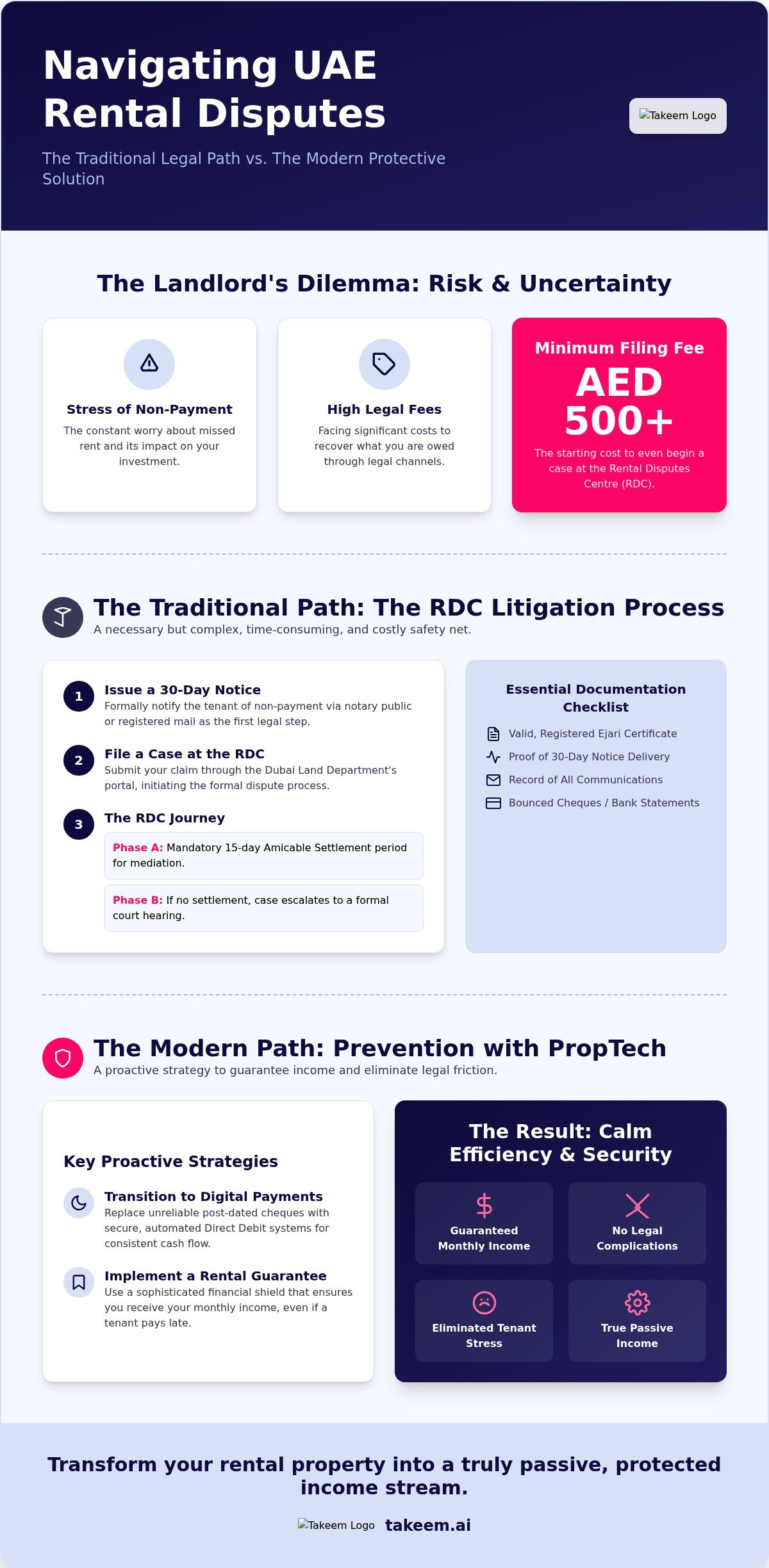
What if the most effective strategy for managing property conflict wasn’t a better lawyer, but a system that makes litigation obsolete? For many landlords in the UAE, the stress of non-payment and the looming threat of high legal fees are constant companions. You’ve likely felt the uncertainty of recovering missed rent while facing a minimum filing fee of AED 500 at the Rental Disputes Centre. It’s a common struggle, but avoiding rental disputes in the UAE doesn’t have to mean constant vigilance or aggressive collection tactics.
In this guide, we’ll help you master the current legal framework while discovering how modern fintech solutions now eliminate the need for traditional court cases entirely. We’ll provide a clear roadmap for navigating the RDC and introduce the digital strategies that guarantee your monthly income. You’ll learn how to transition from the outdated world of paper cheques to a secure, automated environment that protects your investment and your peace of mind. By the end of this article, you’ll have the tools to transform your rental property into a truly passive, protected income stream.
Key Takeaways
- Gain a comprehensive understanding of the Rental Disputes Centre (RDC) framework and the documentation required to navigate the legal process effectively.
- Evaluate the true financial and operational costs of litigation, including filing fees and the “opportunity cost” of lost time during proceedings.
- Discover proactive strategies for avoiding rental disputes Dubai by transitioning from traditional post-dated cheques to secure digital Direct Debit systems.
- Learn how a Landlord Rental Guarantee acts as a sophisticated shield, ensuring consistent monthly income regardless of tenant payment delays.
- Master the shift toward PropTech solutions that provide calm efficiency and eliminate the friction of manual property financial management.
Understanding the Rental Disputes Centre Process in the UAE
The Rental Disputes Centre (RDC) serves as the judicial arm of the Dubai Land Department, specifically designed to settle disagreements between landlords and tenants. Its core objective is maintaining market stability through fair adjudication, ensuring that the property sector remains attractive for investors and reliable for residents. Primary triggers for filing a case often include non-payment of rent, unlawful eviction, or significant maintenance disagreements that neither party can resolve independently. The RDC is the specialised judicial body for resolving rental conflicts in the UAE. By centralising these issues, the government provides a transparent environment where property owners can seek recourse when their income is threatened.
The Legal Framework Governing Your Rental Income
Your property investment is protected by a robust set of national laws designed to balance the rights of owners and occupiers. Central to this system is the Real Estate Regulatory Agency (RERA), which oversees the implementation of rental laws and the rental index. You must have a registered Ejari contract to gain any legal standing; without it, the RDC cannot officially recognise the tenancy or hear your case. The system operates as a “judiciary of the first instance,” which means it’s structured to provide swift, expert decisions through specialised committees. This approach helps prevent the backlog seen in traditional courts, offering a more efficient path to justice for landlords facing financial defaults.
When Should a Landlord Initiate a Formal Dispute?
Knowing when to step into the legal arena is crucial for avoiding rental disputes Dubai from escalating into long-term financial disasters. You shouldn’t wait indefinitely for a tenant to resolve arrears. The legal threshold usually begins with a formal 30-day notice for non-payment, delivered via notary public or registered mail. A common misconception among new investors is that a landlord can immediately evict a tenant for a single bounced cheque or a missed payment. In reality, you must follow the specific legal requirements set by the RDC to ensure an eviction is lawful and enforceable.
Effective documentation is your best defence. Before filing a formal case, ensure you have a clear paper trail that demonstrates your attempts to resolve the issue amicably. This proactive approach not only strengthens your legal position but often encourages tenants to settle debts before the matter reaches a courtroom. Key evidence you’ll need includes:
- A valid, registered Ejari certificate.
- Proof of a 30-day notice delivered through official channels.
- A clear record of all communication regarding the debt.
- Copies of any bounced cheques or bank statements showing non-payment.
Taking these steps early ensures that if you do reach the RDC, your case is handled with the calm efficiency the system is designed to provide. While the judicial process is a necessary safety net, it’s always preferable to have systems in place that prevent these conflicts from arising in the first place.
Step-by-Step Guide to Navigating a Rental Dispute Case
Navigating the legal corridors of the RDC requires precision and patience. While your primary goal remains avoiding rental disputes Dubai, having a clear understanding of the procedural steps ensures you aren’t left vulnerable if a conflict arises. The journey begins with the Dubai Land Department, where you must file your claim through their digital portal or an authorised typing centre. You’ll need your registered Ejari certificate, passport copies for both parties, and proof that a formal notice was served via a notary public. Missing even one document can stall your case for weeks.
Stage 1: The Amicable Settlement Phase
The RDC prioritises mediation through the Amicable Settlement Centre. This mandatory 15-day window allows mediators to facilitate a compromise between you and your tenant to avoid full-scale litigation. If you reach an agreement, the resulting document is legally binding and carries the weight of an executive deed. This means it can be enforced immediately without further judicial review. Should the tenant fail to appear for mediation sessions or refuse to settle, the case automatically escalates to the Department of First Instance for a formal hearing.
Stage 2: Formal Litigation and Metaverse Hearings
Formal litigation has entered a new era with the integration of metaverse technology. Remote hearings allow you to present your case to a judge in a digital environment, making the process significantly more efficient for busy property owners. In the current market, you can typically expect a judicial verdict within 30 to 60 days of the initial filing. This transition to the First Instance Circuit involves a deeper judicial review of the evidence you’ve provided. It’s a high-stakes environment where the quality of your documentation directly determines the success of your claim.
Stage 3: Execution and Fund Recovery
Winning a judgement is only the first step; you must then enforce it through the Execution Department. This final stage involves recovering owed rent and managing eviction orders if the tenant remains in the property. While the system is robust, delays can occur during the execution phase if the tenant files an appeal or if administrative processes take longer than expected. To bypass these lengthy court timelines and the uncertainty of recovering missed rent, many investors are now opting for a Landlord Rental Guarantee to secure their monthly income regardless of tenant behaviour.
By understanding this roadmap, you can better manage your expectations and prepare for the administrative load involved. Litigation is a reactive measure that consumes both time and capital. Proactive management remains the most effective shield for your rental portfolio.
Evaluating the Financial and Operational Costs of Litigation
While the RDC provides a clear path to justice, the financial reality of filing a case often surprises landlords. Beyond the headline filing fee of 3.5% of the annual rent, a series of administrative costs quickly accumulate. For standard eviction cases, the maximum fee is capped at AED 20,000, but this can climb to AED 35,000 if you’re pursuing both financial claims and eviction. You’ll also encounter fixed charges like the AED 100 process service fee, AED 105 for fast-track notifications, and mandatory knowledge and innovation fees. These upfront expenses represent a significant barrier to avoiding rental disputes Dubai, especially when your primary goal is protecting your yield.
The true “Opportunity Cost” of litigation is often found in the time lost. A case can stretch across several months, during which your property remains occupied without generating income. This period of non-payment directly erodes your return on investment (ROI). If a verdict is reached and the tenant chooses to appeal, the legal system requires a 50% deposit of the claimed amount to contest the decision. While this protects against frivolous appeals, it also means your capital remains tied up in court accounts for even longer, further delaying your access to essential cash flow.
The Hidden Costs of a Bounced Cheque
A bounced cheque is more than just a failed transaction; it’s a catalyst for a chain of expenses. All documents submitted to the court must be translated into Arabic by certified professionals, adding another layer of cost. If you hire legal representation, those fees can easily exceed the initial filing costs. When rent is withheld, property maintenance budgets are often the first to suffer. This creates a dangerous cycle where deferred repairs lead to asset devaluation, making it harder to re-rent the unit at market rates once the dispute is finally settled. If you’re currently dealing with a tenant not paying rent in the UAE, understanding these cascading costs is the first step toward choosing a smarter resolution strategy.
The Emotional and Operational Burden on Landlords
Individual property owners often experience significant stress when managing uncertain income and legal proceedings simultaneously. For portfolio investors, the burden is multiplied. Managing multiple disputes requires dedicated resources and constant oversight, pulling focus away from growth and acquisition. This operational friction is exactly what modern fintech aims to solve. By automating the collection process and providing income security, you can maintain the stability of a traditional financial entity with the agility of a tech-forward startup. This ensures your focus remains on your portfolio’s performance rather than court dates.
Proactive Strategies for Avoiding Rental Disputes
Litigation is a reactive failure. The modern landlord focuses on prevention. Avoiding rental disputes Dubai requires a shift from manual oversight to automated systems that protect your bottom line. One of the most powerful tools available today is the RDC’s “Rental Case History” service. This allows you to screen potential tenants by checking their past involvement in rental litigations. It provides a data-driven layer of security before the contract is even signed. By identifying high-risk applicants early, you eliminate the most common cause of future courtroom visits.
Replacing Cheques with Direct Debit
The UAE is rapidly moving toward a cheque-free rental market. Paper cheques are prone to human error, physical loss, and the high-stress risk of “bounced” transactions. By implementing Direct Debit, you ensure automated, consistent monthly cash flow. This digital transformation simplifies rent collection for both parties. It removes the need for physical meetings or manual bank transfers. It creates a seamless financial environment where payments are processed with calm efficiency; this significantly reduces the friction that leads to legal conflict. Automation doesn’t just save time; it builds trust through transparency and reliable scheduling.
Beyond payment methods, the most robust proactive measure is a landlord rental guarantee. This solution acts as a sophisticated shield, ensuring you receive your rent even if the tenant faces financial difficulties. It moves the risk away from your personal balance sheet and onto a tech-forward platform designed to handle financial volatility. This strategy allows you to maintain the stability of a traditional financial entity while enjoying the agility of a modern startup. If you want to understand the practical steps involved, our detailed guide on how to get a rental guarantee in Dubai walks you through the entire process of securing your property with modern digital protection.
Integrated Maintenance as a Dispute Shield
Maintenance disagreements are a primary cause of tenant-led disputes at the RDC. When repairs are delayed, tenants often feel justified in withholding rent. This creates a stalemate that usually ends in litigation. Providing emergency property maintenance as part of your rental agreement acts as a vital dispute shield. It keeps tenants satisfied and ensures the property remains in top condition, preserving its long-term asset value. When a tenant knows their home is well-maintained, they are far more likely to adhere to their payment obligations. Satisfied tenants are rarely the cause of legal headaches.
If you’re ready to secure your portfolio and eliminate the stress of manual rent collection, you can digitally accept monthly payments through a secure system and experience the peace of mind that comes with guaranteed income. Transitioning to these digital tools is the most effective way to protect your investment in the current market.
Takeem’s Digital Guarantee: The Modern Shield for Landlords
Traditional property management is often a game of catch-up. You wait for a cheque to clear, you wait for a tenant to respond to a notice, and you wait for a court date. Takeem flips this script by introducing a proactive, tech-driven alternative. By integrating advanced financial technology, the platform creates a state of calm efficiency for property owners. It isn’t just a payment tool; it’s a comprehensive risk management ecosystem. For both individual landlords and those managing large property portfolios, this system acts as a sophisticated shield against the volatility of the rental market. It effectively shifts the entire risk profile of your investment away from your personal balance sheet.
This innovation is the ultimate tool for avoiding rental disputes Dubai. In a traditional setup, a tenant default triggers a cascade of legal fees and administrative stress. With Takeem, the digital guarantee ensures your income remains uninterrupted even if a tenant faces financial difficulties. You’re no longer forced to choose between absorbing a loss or paying 3.5% of your annual rent to file a case. Partnering with real estate agents further strengthens this protection, as they can now provide their clients with a level of financial security that traditional agencies simply can’t match.
Guaranteed Monthly Income Without the Stress
The primary pain point for any landlord is the uncertainty of monthly cash flow. Takeem solves this by ensuring you receive your rent on time, every time, regardless of tenant issues. This immediate liquidity is vital for optimising property portfolio rental income. When you remove the threat of non-payment, you eliminate the need to ever visit the Rental Disputes Centre. You’re no longer a debt collector; you’re a strategic investor. This scalable solution allows portfolio owners to project their yields with total confidence, knowing their capital isn’t at the mercy of a single bounced cheque.
Modernising Your Rental Strategy
Transitioning to a litigation-free investment journey starts with a simple digital setup. By moving to Direct Debit, you replace the archaic post-dated cheque system with a secure, automated process. This isn’t just about convenience; it’s about stability. Takeem integrates emergency property maintenance into this plan, addressing the root cause of many tenant disagreements before they escalate. When maintenance is handled with professional speed, tenant satisfaction remains high, and the likelihood of conflict vanishes.
This modern approach allows you to focus on portfolio growth rather than legal recovery. You gain the stability of a traditional financial institution with the agility of a cutting-edge startup. Avoiding rental disputes Dubai becomes a natural byproduct of a well-structured, tech-forward management strategy. It’s time to leave the stress of the courtroom behind and embrace a future where your rental income is as reliable as your vision for the future.
The Path to Litigation-Free Property Management
Protecting your property investment in the UAE requires a shift from reactive litigation to proactive prevention. While mastering the RDC framework provides a necessary safety net, the true goal for any sophisticated investor is avoiding rental disputes Dubai through smarter financial management. You’ve seen how the hidden costs of court cases and the stress of non-payment can erode your yields and peace of mind. By transitioning to digital systems, you eliminate the friction that leads to conflict and secure the long-term stability of your portfolio.
It’s time to modernise your approach. You can secure your rental income with Takeem’s digital guarantee today and experience the calm efficiency of a tech-forward solution. This system provides total peace of mind by ensuring your income arrives on time, every time, through a seamless transition to secure monthly Direct Debit payments. With 24/7 emergency property maintenance coverage included, you preserve your asset’s value while keeping tenants satisfied and your cash flow uninterrupted.
Step into a future where your rental income is predictable and your portfolio is protected. You have the tools to build a more stable, professional, and profitable investment journey starting now. Your journey toward a litigation-free portfolio is just one digital step away.
Frequently Asked Questions
How long does the Rental Disputes Centre process usually take from filing to verdict?
The Rental Disputes Centre process typically takes between 30 and 60 days to reach a judicial verdict in the First Instance Circuit. This timeline begins once the mandatory 15-day Amicable Settlement phase concludes without a resolution. While metaverse hearings have significantly improved efficiency, complex cases involving both financial claims and eviction may require additional sessions. Property owners should account for this duration when calculating potential vacancy periods and impact on their annual cash flow.
What are the current fees for filing a rental dispute case in the UAE?
Filing a case requires a fee of 3.5% of the annual rent or the specific claimed amount. The minimum fee is AED 500, while the maximum is capped at AED 20,000 for standard cases. If your claim involves both eviction and financial recovery, the maximum fee increases to AED 35,000. You’ll also encounter fixed administrative charges like the AED 100 process service fee and the AED 105 fast-track notification fee for each filing.
Can I evict a tenant immediately if they stop paying rent?
You cannot evict a tenant immediately, even for persistent non-payment. UAE law requires landlords to serve a formal 30-day notice through a notary public or registered mail before they can initiate a case at the RDC. Attempting an immediate eviction or cutting off essential utilities is illegal and can lead to significant penalties against the property owner. Following the established legal roadmap is the only way to recover your property while protecting your legal standing.
Is the Amicable Settlement stage mandatory for all rental disputes?
Yes, the Amicable Settlement stage is a mandatory first step for resolving most disagreements at the RDC. This 15-day mediation phase allows specialised committees to facilitate a compromise between both parties without the need for a full trial. If an agreement is reached, it’s documented as a legally binding settlement with the weight of an executive deed. If mediation fails, the case is then referred to the Department of First Instance for a formal judicial verdict.
What documents are required to file a case at the RDC?
To file a case, you must provide a valid Ejari registration certificate, passport and Emirates ID copies for both parties, and proof of the 30-day notice delivery. You’ll also need evidence of the dispute, such as original bounced cheques or bank statements showing missed payments. All documents not in Arabic must be translated by a certified professional. Having these records organised is essential for avoiding rental disputes Dubai from becoming prolonged due to administrative errors.
How does using Direct Debit help in avoiding rental disputes?
Direct Debit helps in avoiding rental disputes Dubai by automating the rent collection process and eliminating the risks associated with physical cheques. Unlike post-dated cheques, which can be lost or bounced, digital payments are processed through a secure banking framework. This reduces the friction between landlords and tenants, ensuring that payments are consistent and transparent. It creates a modern, professional relationship that minimises the potential for the financial misunderstandings that typically lead to litigation.
Can a landlord appeal a judgement from the Rental Disputes Centre?
Landlords can appeal a judgement, but strict conditions apply to the process. To contest a verdict from the First Instance Circuit, you must generally deposit 50% of the claimed amount with the court. This requirement ensures that only serious appeals proceed and prevents the system from being clogged with frivolous claims. The appeal must be filed within a specific timeframe, usually 15 days from the date the initial judgement was issued, depending on the case type.
What is the “Rental Case History” service and how should landlords use it?
The “Rental Case History” is a screening service provided by the RDC that allows landlords to check a prospective tenant’s past litigation record. By entering the tenant’s details, you can see if they’ve been involved in previous disputes or court-ordered evictions. This is a vital tool for risk assessment before signing a contract. Using this data-driven approach helps you select reliable tenants and serves as a primary strategy for resolving and preventing tenant non-payment issues in the UAE before they escalate to formal litigation.