

Tag: Tenant Disputes

  • Avoiding Tenant Payment Disputes: A UAE Landlord’s Practical Guide

    Avoiding Tenant Payment Disputes: A UAE Landlord’s Practical Guide

    A tenant says the rent was sent, but your records show no payment. Before a simple misunderstanding turns into a tense exchange, check the agreed payment date, method and transaction details. For UAE landlords, avoiding tenant payment disputes starts with setting clear expectations before the tenancy begins.

    It’s understandable to feel uncertain when a payment appears late or a transfer is hard to trace. Clear rental terms, consistent records and calm, timely communication help both parties understand what’s due and what has been received. A digital collection routine, such as monthly rent collection through Direct Debit, can also make payments easier to track.

    This guide explains how to set out payment expectations, keep records that are easy to review and raise concerns early. You’ll also learn how to respond when rent is overdue, when to seek qualified legal advice, and how rental guarantees can help protect rental income without replacing clear agreements or legal guidance.

    Key Takeaways

    • Avoiding tenant payment disputes starts with agreeing on the rent amount, due date and payment method before the tenancy begins.
    • Use a simple monthly routine to confirm receipts and update a consistent payment record.
    • Compare post-dated cheques and digital monthly collection by how each supports visibility, confirmation and follow-up.
    • When a payment appears late, verify the details and raise the concern calmly, using dates and amounts rather than assumptions.
    • Takeem’s Direct Debit setup can support a more consistent, traceable routine for collecting monthly rent digitally.

    Avoiding tenant payment disputes starts with clear rent expectations

    Prevention begins with shared expectations, not assumptions about how a tenant usually pays. A rent-payment dispute may concern when rent is due, how much is owed, which payment method to use, or whether the landlord received the payment. Clear terms before the first payment give both parties the same reference point.

    A missed confirmation or a transfer recorded under an unfamiliar reference may be a correctable administrative misunderstanding. Verify the details and update the record. If the concern remains unresolved or a payment problem repeats, follow up deliberately and keep the conversation focused on the facts.

    A preventable rent-payment dispute is a disagreement that clearer payment instructions or records could have resolved before it escalated.

    Which rent-payment terms should landlords make explicit?

    A lease agreement establishes the rental relationship, so make sure its payment terms match the instructions you give in practice. Before the tenancy begins, clarify:

    • Due date: State the date rent is expected and how the timing is understood.
    • Payment frequency: Specify whether rent is paid monthly or on another agreed schedule.
    • Accepted method: Explain which payment method to use and provide accurate instructions.
    • Confirmation: Tell the tenant how you’ll acknowledge payment and what evidence they should retain.

    If both parties agree to a change or exception, record what changed and when it applies. Avoid having the agreement say one thing while payment messages direct the tenant to do another. Consistent instructions make it easier to identify an actual missed payment instead of debating which direction applied.

    How can both parties avoid different assumptions?

    Share the payment instructions before the first due date, along with a short explanation of what confirmation to expect. For example, clarify whether the tenant should send a payment receipt and how you’ll confirm that the rent has been recorded. When instructions change, use a written channel that can be reviewed later and keep the update with the tenancy records.

    A simple checklist can prevent uncertainty:

    • Confirm the amount, due date and payment frequency.
    • Provide the agreed method and accurate payment instructions.
    • Explain how receipt of payment will be confirmed.
    • Record exceptions and changes in writing, then update any affected instructions.

    These habits support rental guarantees in the UAE by keeping payment expectations clear. A rental guarantee is an income-protection option, not a replacement for a clear agreement.

    Build a reliable rent-payment record before a disagreement begins

    A consistent record turns each rent cycle into a clear timeline rather than a search through old messages and account entries. It helps you check what was due, what arrived and what still needs follow-up. Records support a calm discussion, but they don’t determine legal liability or replace qualified legal advice.

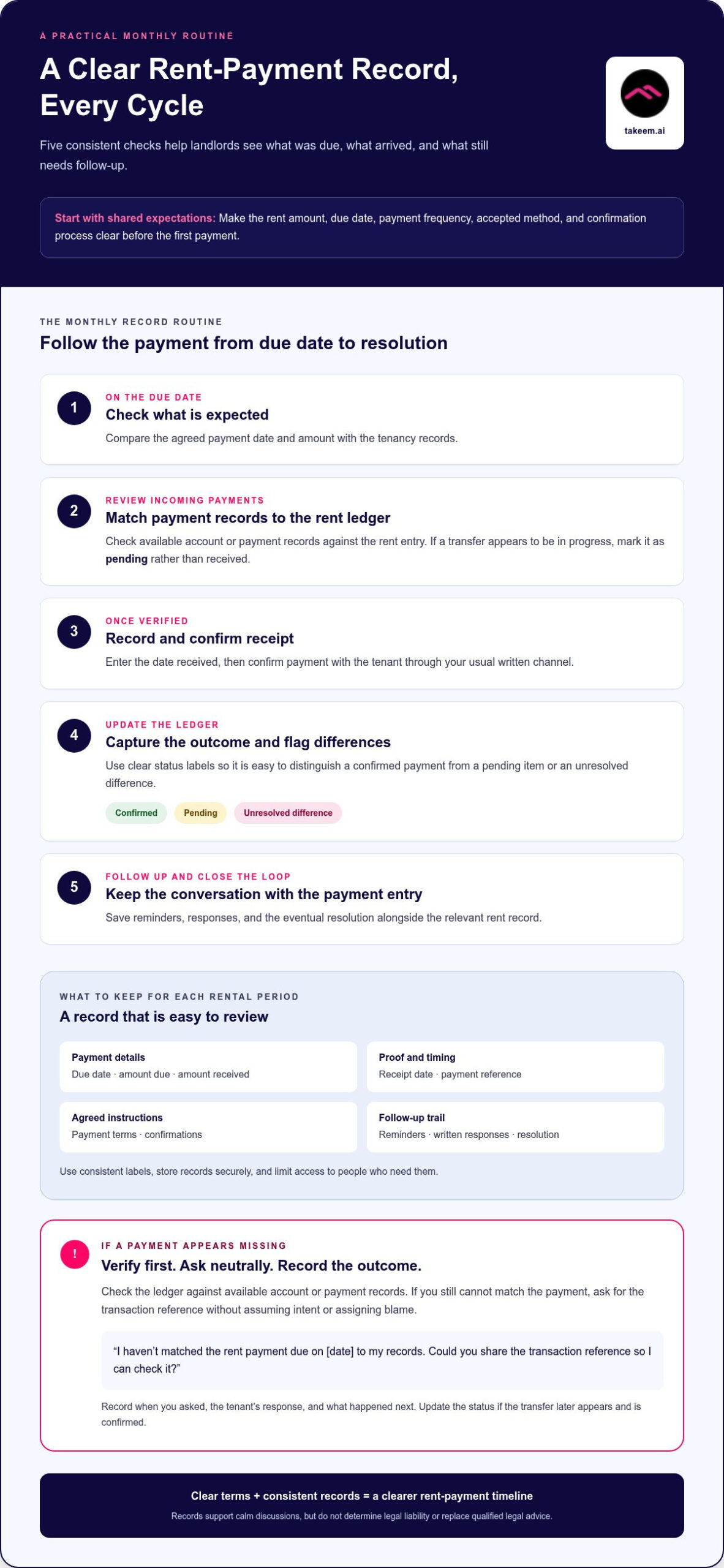
    Payment records improve clarity by capturing what happened, when it happened and how both parties responded. Use the same monthly routine for every property and rental period:

    • 1. On the due date: Check the agreed amount and payment date against the tenancy records.
    • 2. Review incoming payments: Compare available account or payment records with the rent ledger. Mark a transfer as pending if it appears to be in progress, rather than treating it as received.
    • 3. Confirm receipt: Once the payment is verified, record the date received and send the tenant confirmation through your usual written channel.
    • 4. Update the ledger: Record the outcome and flag any difference that still needs clarification.
    • 5. Follow up and close the loop: Save any reminder, response and resolution with the relevant payment entry.

    What should a landlord record for each rent payment?

    For each rental period, note the due date, amount due, amount received, receipt date and payment reference. Keep the agreed payment terms, confirmations, reminders and written responses alongside the matching entry. Consistent labels, such as “confirmed,” “pending” and “unresolved difference,” make the status easy to understand. Store records securely and limit access to people who need them.

    How should landlords reconcile a payment that appears missing?

    Check the ledger against available account or payment records before contacting the tenant. If you still can’t match the payment, ask neutrally for the transaction reference. For example: “I haven’t matched the rent payment due on [date] to my records. Could you share the transaction reference so I can check it?” Avoid assuming the tenant’s intent or assigning blame.

    Record when you made the inquiry, the tenant’s response and the outcome. If a transfer later appears, update its status and note when it was confirmed. For a consistent, traceable monthly collection routine, explore Direct Debit setup for landlords.

    Compare payment methods by clarity, traceability and administration

    Payment methods create different tracking routines. Post-dated cheques set out agreed payment dates, while digital monthly collection can make payment events easier to review electronically. Neither method guarantees punctual payment or prevents every disagreement. To avoid tenant payment disputes, compare how each method fits the documented tenancy terms and the practical work needed to track rent.

    Practical criterion Post-dated cheques Digital monthly collection
    Visibility Agreed cheque dates provide a schedule to track. A landlord still needs to monitor each cheque as its date approaches. Payment events may be visible in digital records, depending on the collection setup and available records.
    Payment confirmation Record when a cheque is received and deposited, then update the ledger when its status is clear. Review the available transaction information and record whether the payment is confirmed, pending or needs follow-up.
    Record retrieval Keep cheque details and related records organised by tenant and rental period. Digital entries can help bring payment information together for review, alongside tenancy and communication records.
    Administrative follow-up Track receipt, deposit and any payment issue for each cheque. Monitor the collection record and follow up on payments that are not confirmed.

    What can landlords learn from cheque-based payment routines?

    Agreed cheque dates provide a clear schedule, but the schedule is only one part of collection. Record when each cheque is received and deposited, and note any issue against the relevant rental period. Keep these entries with the tenancy terms so you can distinguish the planned date from the confirmed payment status. Don’t rely on the cheque schedule alone as proof that rent has been received.

    How does digital rent collection support clearer records?

    Digital monthly collection can make payment events easier to track and retrieve, supporting a consistent review routine. Takeem facilitates Direct Debit setup so landlords can digitally accept monthly rent payments. Setup doesn’t guarantee that funds will always arrive, so continue to reconcile records and follow up on any unconfirmed payment. The key benefit is a digital collection record that can support your regular reconciliation process.

    Whichever method you use, make sure the payment arrangement matches the documented tenancy terms and applicable requirements. If the parties agree to change the method or schedule, record the update clearly so the payment instructions and agreement remain aligned.
    Avoiding Tenant Payment Disputes: A UAE Landlord’s Practical Guide

    Respond to a payment concern early without escalating the disagreement

    A payment that doesn’t appear in your records may be delayed, pending or recorded with an unfamiliar reference. Start with verification, not blame. A measured response helps clarify the facts while keeping communication professional.

    Use this sequence:

    1. Verify your records. Check the agreed due date and amount against your ledger and available account or payment information.
    2. Send a factual reminder. State what your records show, including the due date and amount, without claiming to know why the payment hasn’t appeared.
    3. Invite clarification. Ask whether the tenant has a transfer reference or other payment details that could help reconcile the entry.
    4. Document the response. Save the message, reply and outcome with dates in the tenancy records. Update the payment status when you resolve the difference.

    This process supports avoiding tenant payment disputes by creating space to correct an error before frustration takes over.

    What should a first rent reminder say?

    Keep the message brief, professional and specific. For example: “Hello, my records show that rent of [amount] due on [date] hasn’t appeared yet. If you’ve made the payment, could you share the transaction reference so I can check it? Please let me know if there’s anything you’d like to clarify.” Include an existing payment reference if relevant, and save the reminder with the corresponding rental-period records.

    When does a payment concern need professional guidance?

    A one-off mismatch that both parties can reconcile is different from repeated discrepancies or a tenant contesting the amount or payment status. If the issue persists, gather the agreement, ledger and written communications, then seek advice from a qualified UAE legal professional before taking formal action or relying on an assumed procedure.

    Formal notices, deadlines and dispute procedures can depend on current UAE requirements and the relevant jurisdiction. Verify the applicable rules with a qualified legal adviser before sending a formal notice or acting on a deadline. A rental guarantee may support income protection, but it doesn’t replace legal advice or resolve the underlying payment record.

    For a more structured digital rent collection approach, explore Direct Debit setup for monthly rent collection.

    Use a consistent collection system to reduce future payment friction

    Clear terms work best when supported by the same collection and recordkeeping routine each rental period. Set the payment schedule out in the tenancy terms, use the agreed collection method, reconcile incoming payments against the ledger, and document reminders or adjustments. A repeatable process makes it easier to spot a mismatch early and explain what happened without relying on memory.

    How can Direct Debit fit into a landlord’s monthly process?

    Takeem facilitates Direct Debit setup for landlords who want to move from post-dated cheques to digital monthly rent collection. Once the payment arrangement is documented, follow the same monthly rhythm: review the collection record, confirm received payments, flag anything pending and follow up on unresolved entries. Digital collection can make payment events easier to trace, but setup doesn’t guarantee funds will arrive every time. This routine supports clearer records and more consistent follow-up.

    What role can a rental guarantee play in income planning?

    Collection and dispute prevention are separate from income protection. Takeem’s rental guarantee service is available to individual landlords and property investors, including those with large portfolios. It’s an option to consider as part of income planning, not a promise that every disagreement will be prevented or resolved, and not a substitute for clear tenancy terms or qualified legal advice. Emergency property maintenance is included as part of Takeem’s rental guarantee service.

    Keep the process straightforward: align payment instructions with the tenancy terms, follow the scheduled collection method, reconcile each rental period, and save any follow-up with the payment record. This creates a clearer account of what was expected and what happened, whether you manage one property or a larger portfolio.

    To support a more structured digital collection routine, explore Takeem’s landlord rental solutions.

    Make rent collection clearer, month after month

    A steady process can make payment concerns easier to resolve. Set clear expectations in the tenancy terms, reconcile each payment against a consistent record, and raise discrepancies early with calm, factual communication. These practical habits are the foundation of avoiding tenant payment disputes, whether you collect by cheque or digitally.

    For landlords seeking a more structured routine, Takeem facilitates digital monthly rent collection through Direct Debit setup. Takeem also offers rental guarantee services for individual landlords and property investors, with emergency property maintenance included as part of the service. A rental guarantee can support income protection, while clear agreements and qualified legal advice remain important when a disagreement arises.

    Build a collection approach that supports your records and fits your tenancy terms. Explore Takeem’s digital rent collection and rental guarantee solutions to take the next step toward clearer, more manageable rent-payment routines.

    Frequently Asked Questions

    Is a written rent-payment agreement enough to prevent every dispute?

    No. Clear written terms reduce ambiguity, but they can’t prevent every disagreement or guarantee that rent will be paid. Specify the amount, due date, payment frequency and accepted method, then document any changes in writing. Keep consistent records of what was due and received. These are practical steps, not legal advice. Check current UAE requirements with a qualified legal professional before relying on particular contract wording or assuming it is enforceable.

    Can digital rent collection help landlords avoid payment disputes?

    Digital collection can make payment events easier to track and support a consistent monthly routine, which can help with avoiding tenant payment disputes. It can’t guarantee that every payment will succeed or settle a disagreement. Collection records show transaction activity, but they don’t by themselves establish legal liability. If a payment appears missing, compare the transaction details with your records first, then ask the tenant calmly for a reference if you still can’t reconcile it.

    What should a landlord do if a tenant says rent has already been paid?

    Check the rent ledger and available account or payment records before deciding how to update the entry. If you can’t match the payment, ask neutrally for the transaction reference. Compare the dates and amounts with the tenant’s information, and confirm the payment status before changing the record. Save the exchange with the relevant rental-period entry. Avoid assuming the tenant is mistaken, and verify current UAE procedures before considering formal action.

    How should landlords document rent payments and reminders?

    For each rental period, record the amount due, due date, amount received, receipt date and payment reference. Keep confirmations and relevant reminders or replies with the matching entry, using consistent labels across properties and periods. If you correct a record, note what changed and when. Organised documentation helps establish a clear timeline of payment activity and communication, but it doesn’t by itself settle a legal dispute or determine who is liable.

    Are post-dated cheques the only way to collect rent in the UAE?

    No. Landlords can consider different payment arrangements, including digital monthly rent collection. The method should match the documented tenancy terms and applicable requirements, so record any agreed change and keep the instructions consistent. Takeem facilitates Direct Debit setup for landlords to digitally accept monthly tenant payments. Avoid relying on general claims about which methods are legally permitted or the consequences of a cheque issue. Verify current UAE rules for your circumstances.

    When should a landlord seek legal advice about a rent-payment dispute?

    Consider qualified legal advice if payments are repeatedly missing, the parties contest the amount or payment records, or you’re considering formal action. Before seeking guidance, organise the tenancy agreement, payment history, transaction details and related communications. These records can help explain the timeline. Don’t rely on assumed deadlines, notices or dispute procedures. Formal requirements can depend on current UAE rules and the circumstances, so have the applicable process verified by a qualified legal professional.

    Does a rental guarantee prevent tenant payment disputes?

    No. A rental guarantee is an income-protection service, not a promise that disagreements will never happen. Clear payment terms, accurate records and prompt communication remain important, and a guarantee doesn’t replace legal advice. Takeem offers rental guarantee services for individual landlords and property investors, with emergency property maintenance included as part of the service. Review Takeem’s landlord rental guarantee information to learn about the service without assuming specific coverage conditions or outcomes.

  • Rental Default Protection in the UAE: A Landlord’s Guide to Secure Income

    Rental Default Protection in the UAE: A Landlord’s Guide to Secure Income

    What if the stressful era of chasing bounced cheques and filing expensive cases at rental dispute tribunals was finally over? With the UAE’s dynamic rental market representing significant value and countless contracts annually, the stakes for property investors have never been higher. You likely entered the market for stable, passive income, yet you often find yourself managing cash flow gaps or navigating complex legal evictions instead. It’s a frustrating reality that can stall your financial growth and drain your time.

    This guide reveals how to insulate your property investment using comprehensive rental default protection UAE strategies that combine digital collection with income guarantees. We’ll show you how to replace outdated paper promises with Central Bank-approved direct debits and automated maintenance coverage. You’ll discover how these modern fintech tools ensure your monthly cash flow remains consistent, allowing you to protect your asset’s value and enjoy true peace of mind without the friction of traditional tenant disputes.

    Key Takeaways

    • Learn how modern rental default protection UAE has evolved from simple security deposits into a comprehensive financial safety net for your property portfolio.
    • Discover why switching from traditional post-dated cheques to automated Direct Debit mandates eliminates common "technical defaults" and administrative errors.
    • Understand the vital role of Ejari registration in validating your income protection and ensuring your legal standing during a dispute.
    • Explore how integrated emergency maintenance services act as a silent protector of your asset’s value and tenant payment compliance.
    • Get a clear roadmap for using Takeem’s digital platform to automate monthly rent collection and guarantee consistent cash flow regardless of tenant delays.

    What is Rental Default Protection in the UAE?

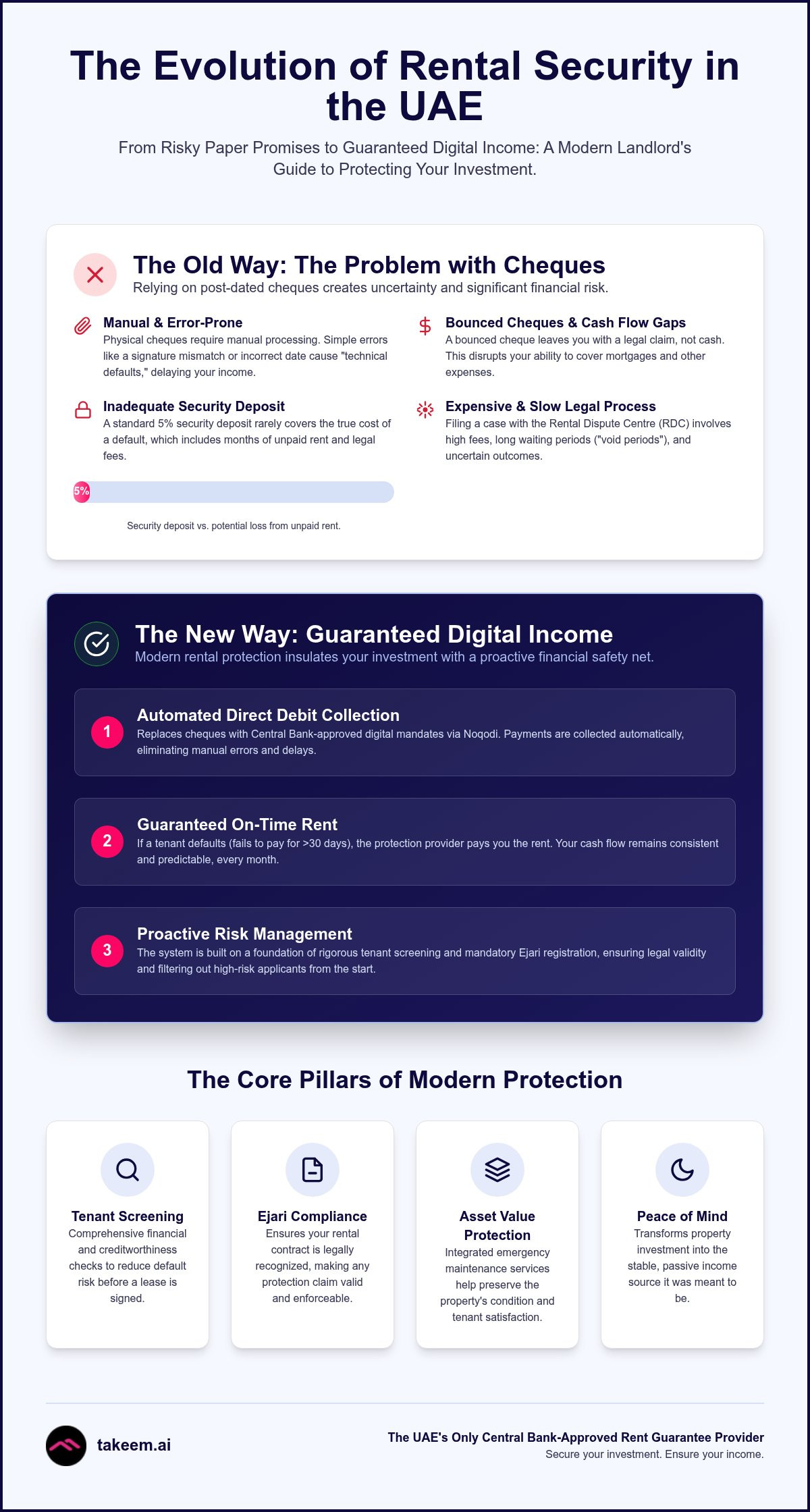
    In the UAE’s fast-moving property market, a landlord’s primary goal is predictable cash flow. Rental default protection UAE serves as a sophisticated financial safety net designed to ensure you receive your rental income even if a tenant stops paying. While traditional security deposits, usually 5% of the annual rent, provide a small buffer for damages, they rarely cover the massive financial gap left by months of unpaid rent. We’re seeing a fundamental shift toward comprehensive income guarantees that offer a much more robust shield for your investment.

    By August 2026, the "cheque-only" era has effectively ended as landlords demand more than just a piece of paper that might bounce. This transition is supported by the integration of the Ejari system with the Noqodi Direct Debit platform, making automated payments the new standard for modern investors. It’s no longer enough to rely on manual collection when digital systems can automate the entire process while providing an extra layer of security.

    It’s vital to distinguish between a managed rental guarantee service and standard Rent insurance. While basic insurance might pay out after a lengthy claim process, a managed service like Takeem’s, which is the only Central Bank-approved rent guarantee provider in the UAE, integrates digital collection and proactive protection. This modern approach transforms rental default protection UAE from a reactive insurance policy into a proactive management tool that streamlines your entire portfolio.

    The Cost of Tenant Default for Landlords

    Rental default is defined as the failure to meet lease obligations for over 30 days. When a tenant stops paying, the financial damage extends far beyond the missing monthly deposit.

    • Void periods: The time spent in legal disputes can leave your property empty and non-earning for months while the case proceeds.
    • Mortgage pressure: If you rely on rent to cover your AED mortgage repayments, a default can trigger personal financial instability and bank penalties.
    • Hidden fees: Filing a case with the Rental Dispute Centre (RDC) involves significant administrative costs, processing fees, and potential legal representation expenses.

    Why Traditional Cheques are a Modern Risk

    Managing physical cheques is a cumbersome, manual process prone to human error. A signature mismatch or an incorrect date can lead to a technical default that delays your payment and forces you to restart the collection process. You’re essentially holding a promise that requires physical logistics to fulfill, which feels increasingly outdated in a tech-forward market like Dubai or Abu Dhabi.

    Even though a bounced cheque remains a serious matter in the UAE, the legal process doesn’t put money back in your bank account instantly. You’re left with a legal claim rather than liquid cash. Digital systems provide the speed and reliability that physical paper simply cannot match, ensuring your income is protected from the moment the rent is due.

    The Mechanics of Income Protection: How It Works

    Modern rental default protection UAE operates as a sophisticated financial buffer between your bank account and your tenant’s payment behavior. Instead of the landlord bears the full weight of a missed payment, the guarantee provider steps into the middle of the transaction. This structure ensures that your liquidity remains untouched even if the tenant’s bank account is empty. It’s a shift from a reactive legal approach to a proactive financial model that prioritizes your monthly cash flow over the slow process of litigation.

    The underwriting process for these guarantees is rigorous. It begins with comprehensive tenant screening, which evaluates the tenant’s financial history and creditworthiness before the lease is even signed. This layer of protection is essential because it filters out high-risk applicants, reducing the likelihood of a default before it occurs. According to recent UAE residential property market analysis, the surge in rental demand has made robust screening even more critical to maintain portfolio stability. Standard coverage typically protects the full monthly rent amount and can include legal costs, though it’s important to verify specific limits regarding property damage or utility arrears.

    Ejari Compliance and Legal Validity

    In the UAE, a registered Ejari contract is the non-negotiable foundation of any protection scheme. Without this official registration, your lease isn’t legally recognized by the Dubai Land Department or the Rental Dispute Centre, which would render any protection claim invalid. Digital contracts are now streamlining this setup, allowing the protection to activate the moment the Ejari is issued. This alignment ensures that your lease terms comply with national property laws, providing a solid legal standing if you ever need to enforce the "Possession" clause of your agreement.

    The Claims Process vs. Automated Payouts

    Traditional rent insurance often involves a cumbersome claims process. You’d typically have to submit piles of documentation, wait for a claims adjuster to review the case, and endure a waiting period that could last weeks or months. This lag creates the very cash flow gap you were trying to avoid. Modern fintech-driven guarantees change this dynamic by focusing on income continuity. If a payment is missed via the digital collection system, the guarantee can trigger an automated payout to keep your finances steady while the provider handles the recovery process.

    This protection remains in effect until the property is either vacated or re-let, covering the critical "void period" that usually drains an investor’s reserves. If you’re looking to insulate your portfolio from these risks, exploring a modern rental guarantee can provide the security you need without the administrative headache. By automating the payout mechanism, these platforms ensure that your mortgage obligations and maintenance costs are always met on time, regardless of tenant delays.

    Cheques vs. Direct Debit: The First Line of Defence

    While traditional post-dated cheques have long been the standard in the local market, they’re often the weakest link in your income security. A physical cheque is a manual promise, subject to human error, logistical delays, and technical failures. By contrast, automated Direct Debit mandates create a direct, digital link between the tenant’s bank account and your own. This shift is a critical component of rental default protection UAE because it addresses the root cause of many payment delays before they escalate into expensive legal disputes.

    Technical defaults often happen for trivial reasons. A signature that doesn’t quite match the bank’s records, a slightly smudged date, or a landlord simply forgetting to deposit the paper on time can stall your cash flow for weeks. Digital systems eliminate these friction points entirely. The UAE Central Bank’s Direct Debit System (UAEDDS) provides a highly secure framework for these transactions. It ensures that mandates are verified and processed with the same level of authority as a cheque but with the efficiency of modern fintech. For landlords, this means moving from a system of "hope and chase" to one of "confirm and collect."

    Why Landlords are Switching to Digital Collection

    The days of the "cheque run"-driving to various properties or bank branches to collect and deposit physical paper-are becoming a thing of the past. Digital collection offers real-time tracking, giving you instant notifications if a payment is successful or if a mandate fails. This transparency allows you to address issues immediately rather than discovering a problem days later at the bank counter. It also professionalises the relationship. Tenants often prefer the convenience of monthly digital payments over issuing large, intimidating cheques once or twice a year, which can significantly improve long-term retention and tenant satisfaction.

    Setting Up Direct Debit for Your Properties

    Transitioning to digital payments is most effective when done during the contract renewal period. You’ll need to set up a mandate through a certified provider, which the tenant then authorises using their bank credentials or UAE Pass. If a tenant is hesitant, it’s helpful to explain the benefits from their perspective. It’s more secure than a cheque, allows for easier monthly budgeting, and eliminates the risk of accidental late fees caused by bank processing delays. Direct Debit is now the preferred rental payment method for institutional investors in the UAE. By adopting these systems early, individual landlords can enjoy the same level of security and efficiency as the market’s largest players, ensuring their rental default protection UAE strategy is built on a solid digital foundation.

    Rental Default Protection in the UAE: A Landlord's Guide to Secure Income

    Emergency Maintenance: Protecting Asset Value

    While most investors focus on the financial side of rental default protection UAE, the physical integrity of your property is a silent but equally critical risk to your income. A property in disrepair is a liability that invites disputes and often justifies payment delays in the eyes of a tenant. If a major system fails, such as the AC during a peak Dubai summer, the tenant’s legal and moral obligation to pay rent on time becomes a point of contention. By integrating emergency maintenance into your protection strategy, you remove the most common excuses for non-payment before they ever arise.

    Modern property protection packages now treat 24/7 emergency support as a standard feature rather than an optional extra. This proactive approach ensures that minor issues don’t escalate into major structural liabilities that could drain your reserves. When maintenance is handled through a managed guarantee system, the landlord is no longer the first point of contact for a midnight plumbing crisis. Instead, a professional response team takes over, ensuring the tenant’s safety and the property’s value remain intact without your direct intervention.

    The Impact of Repairs on Rental Yield

    Rapid response times do more than just fix a leak; they preserve your long-term asset value and protect your annual yield. High tenant turnover is one of the most significant expenses for UAE landlords, often costing thousands in re-listing fees and void periods. Providing high-quality, reliable maintenance support is the most effective way to improve tenant retention. By integrating these repair costs into your overall protection service fee, you create a predictable expense model. This shields your cash flow from the sudden financial shocks of major system failures that would otherwise require immediate, out-of-pocket AED payments. For a deeper look at how to safeguard your returns from these risks, explore this comprehensive guide on rental yield protection UAE and the fintech tools reshaping income security in 2026.

    Common Emergency Coverage Areas

    In the UAE’s specific climate, certain failures are classified as immediate emergencies because they affect the habitability of the home. Modern coverage typically focuses on these high-impact areas:

    • Climate Control: Rapid AC repair or replacement during high-temperature months.
    • Plumbing and Electrical: Addressing burst pipes, major leaks, or total power failures that pose safety risks.
    • Security Services: Emergency locksmith services for lockouts or broken glazing that compromises property security.

    It’s important to distinguish these from cosmetic maintenance, which focuses on aesthetics like painting or minor cabinetry adjustments. Emergency coverage is about functional integrity. To secure both your monthly income and your property’s physical condition, you can sign up for a rental guarantee that includes emergency maintenance. This combined approach ensures that your investment remains a high-performing asset that attracts and keeps quality tenants.

    Securing Your Future with Takeem’s Rental Guarantee

    Takeem represents the next evolution of property investment in the Emirates. By merging advanced fintech with robust financial underwriting, Takeem provides a comprehensive rental default protection UAE solution that addresses every major pain point a landlord faces. It isn’t just a reactive insurance product; it’s a proactive ecosystem that manages the entire lifecycle of your rental income. From the moment a tenant signs their digital mandate to the day they vacate, your cash flow is shielded by the UAE’s only Central Bank-approved rent guarantee provider.

    The core of this service is "Monthly Certainty." In a market where rental trends can shift, having a guaranteed date for your income allows you to plan your own financial obligations with total confidence. Whether you’re paying off a mortgage or reinvesting in new units, the stress of "will they pay this month?" is replaced by a predictable, automated deposit. This reliability is why major platforms like Bayut and dubizzle have partnered with Takeem, recognizing it as the gold standard for secure property transactions in 2026.

    Real estate agents are also rapidly adopting this technology to differentiate their listings. By offering a property with a pre-integrated Landlord Rental Guarantee , agents provide immediate peace of mind to their clients. This added value makes properties more attractive to serious investors and streamlines the closing process, as the most significant risk factor-tenant non-payment-is already mitigated.

    Takeem for Portfolio Investors

    For those managing multiple units or entire residential buildings, Takeem offers a sophisticated way to scale rental default protection UAE across a diverse portfolio. Instead of tracking dozens of individual cheques and bank transfers, institutional property owners can utilize a centralized digital dashboard. This platform provides real-time reporting on all active mandates, successful collections, and maintenance status. Bulk guarantee solutions ensure that even the largest portfolios remain liquid and profitable, with streamlined underwriting that respects the complexity of large-scale property management.

    Getting Started with Digital Rent Collection

    Registering your property is a straightforward, digital-first process. Once your unit is onboarded, the system integrates your rental collection with emergency maintenance coverage, creating a total safety net for your investment. You can transition existing tenants during their next renewal or set up new leases from day one. This modern approach ensures your asset remains in peak condition while your bank account stays protected from the friction of traditional defaults. Don’t leave your investment’s success to chance. Secure your rental income today with Takeem and experience the calm efficiency of a truly protected property portfolio.

    Future-Proof Your Property Portfolio

    The transition from traditional, paper-based rent collection to a tech-driven ecosystem is no longer a luxury for UAE landlords; it’s a strategic necessity. By embracing rental default protection UAE, you’ve learned how to eliminate the risks of bounced cheques and costly legal delays. You now understand that securing your income involves more than just a signed contract. It requires end-to-end digital rent collection via Direct Debit, Ejari-compliant income guarantees, and integrated emergency property maintenance to preserve your asset’s long-term value.

    Takeem provides the sophisticated shield your investment deserves, replacing uncertainty with monthly financial clarity. This modern approach ensures your mortgage payments and maintenance costs are always covered, regardless of tenant behavior. It’s time to step away from the administrative burden of manual property management and enjoy the calm efficiency of a truly protected investment. Switch to secure digital rent collection and guarantee your income with Takeem. Your path to a stress-free, high-performing portfolio starts with a single digital mandate.

    Frequently Asked Questions

    What happens if a tenant stops paying rent and I have a guarantee?

    The guarantee provider steps in to cover the missing payments while managing the recovery process directly with the tenant. This ensures your cash flow remains uninterrupted, allowing you to meet mortgage or maintenance obligations without waiting for a legal resolution through the Rental Dispute Centre. It’s a proactive way to maintain liquidity while the provider handles the administrative and legal burden of the default.

    Is rental default protection the same as home insurance in the UAE?

    No, they serve different purposes. Home insurance typically covers structural damage, theft, or fire, while rental default protection UAE specifically secures your rental income against tenant non-payment. Takeem’s solution goes further by integrating digital collection and emergency maintenance into a single protective package, whereas standard insurance is often a reactive policy with lengthy claims processes.

    Can I set up Direct Debit for rent collection if my tenant is already halfway through their lease?

    Yes, you can transition to Direct Debit mid-lease, provided both you and the tenant agree to the change. The tenant will need to authorize the digital mandate via the UAE Direct Debit System (UAEDDS), which then replaces any remaining physical cheques. This is a common way for landlords to professionalize their collection process before the next formal contract renewal.

    Does the rental guarantee cover property damage caused by the tenant?

    Standard rental guarantees focus on income protection rather than malicious damage or cosmetic issues. However, Takeem’s package includes emergency maintenance for functional failures like AC or plumbing crises that affect the home’s habitability. For significant structural damage or intentional destruction, you should ensure you have a separate comprehensive home insurance policy alongside your income guarantee.

    How much does rental default protection typically cost for a landlord?

    The cost for rental default protection UAE is typically structured as a percentage of the total annual rent. While specific rates vary based on the property type and portfolio size, the investment is designed to be a fraction of the potential losses from a single month of vacancy or a protracted legal eviction process. It’s a predictable business expense that replaces the unpredictable cost of tenant defaults.

    Is Ejari registration mandatory to qualify for Takeem’s rental guarantee?

    Yes, a valid Ejari is a non-negotiable requirement for any legitimate protection scheme in the UAE. Ejari registration provides the legal framework for the tenancy, and without it, the guarantee cannot be validated or enforced in the event of a dispute. Ensuring your contract is registered is the first step in securing your legal standing and your rental income.

    What qualifies as an ’emergency’ under the property maintenance coverage?

    An emergency is defined as a sudden failure that makes the property uninhabitable or poses an immediate safety risk. This includes total AC failure during the summer months, major plumbing leaks, electrical blackouts, or security breaches like broken external locks. Cosmetic repairs, such as painting or minor cabinetry adjustments, aren’t covered under the emergency maintenance protocols.

    How does the UAE Direct Debit system protect landlords better than cheques?

    Direct Debit eliminates common "technical defaults" associated with physical paper, such as signature mismatches, smudged dates, or forgotten deposits. It’s a secure, Central Bank-approved system that automates the collection process directly from the tenant’s bank account. This provides a clear digital trail and real-time notifications, making it far more reliable than the traditional "hope and chase" method of managing cheques.