
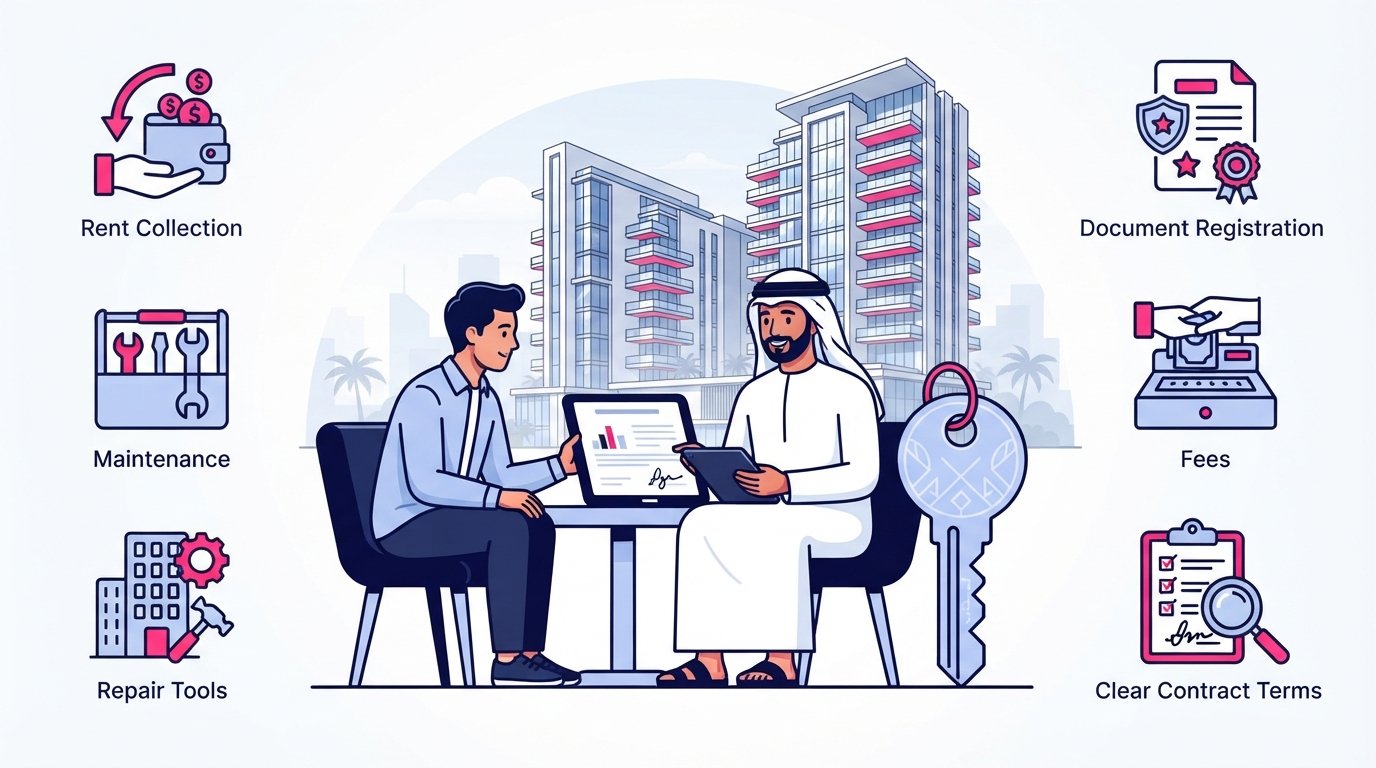
If you’re considering how to become a landlord in the UAE, start by checking the rental rules in the emirate where the property is located. Tenancy contracts must be registered with the relevant authority: Dubai uses Ejari, while Abu Dhabi uses Tawtheeq. Fees, maintenance duties and rent collection arrangements can also vary by emirate and by the terms of the tenancy agreement.
It’s easy to assume the landlord pays every fee or that the tenant handles every repair, but the actual split needs to be understood before the lease begins. This guide explains who may pay rental and broker fees, how landlords and tenants typically share maintenance responsibilities, and what to consider when collecting rent. You’ll also see how rent payment arrangements work and why clear contract terms matter, so you can plan the practical side of renting with more confidence.
Key Takeaways
- Register the tenancy through the relevant emirate’s system: Ejari in Dubai and Tawtheeq in Abu Dhabi.
- Set out maintenance responsibilities in the tenancy agreement, distinguishing essential repairs from minor upkeep.
- Agree on rent payment timing and instalments in advance, and clarify who pays each rental-related fee and broker commission.
- For Abu Dhabi leases, the municipality fee is 5% of the rental value or rental index, whichever is higher, and is added to the tenant’s utility bill across 12 months.
- Prepare property and identity documents, and understand the local rules that apply before renting out a property.
Is a landlord responsible for property maintenance?
Generally, yes. In Dubai, landlords are responsible for essential maintenance that affects a tenant’s proper use of the property. The tenancy agreement should set out how repairs, service issues and rent collection are handled, and distinguish essential work from minor upkeep. Depending on the agreement and the work involved, minor or non-essential maintenance may be assigned to the tenant. Clear terms help both parties understand their responsibilities before a repair becomes urgent.
Registration is part of setting up a tenancy. Across the UAE, lease agreements must be registered with the relevant authority in each emirate. In Dubai, submit the tenancy contract for Ejari registration through the Dubai REST app or Dubai Land Department website; the listed registration fee is AED 100, plus a AED 10 knowledge fee and a AED 10 innovation fee. In Abu Dhabi, register the tenancy contract through Tawtheeq. In Sharjah, lease contracts are registered with Sharjah Municipality; elsewhere, registration follows the relevant local authority’s process.
Dubai also applies a housing fee calculated at 5% of yearly rental charges. This is separate from the Ejari registration charges, so account for both when planning rental costs. Once registered, the agreement provides a formal record of the tenancy. Keep the signed contract and registration details with the property documents, so key terms and notices can be referred to if a maintenance or payment issue arises.
Tenant identification and payment documents help complete the lease. To conclude a UAE lease with a landlord or real estate agent, the tenant must provide a passport copy, a valid residence visa, an Emirates ID and post-dated cheques covering the agreed lease period. Set out the rent schedule and payment dates in the agreement, then keep a record of the cheques received. These documents help both sides track their contractual obligations.
To find and screen applicants, advertise the property, review applications and assess proof of identity and income, credit checks and references. Checks may include a UAE residence visa. Compare each application with the tenancy terms, payment schedule and property requirements, then document the agreed conditions before signing.
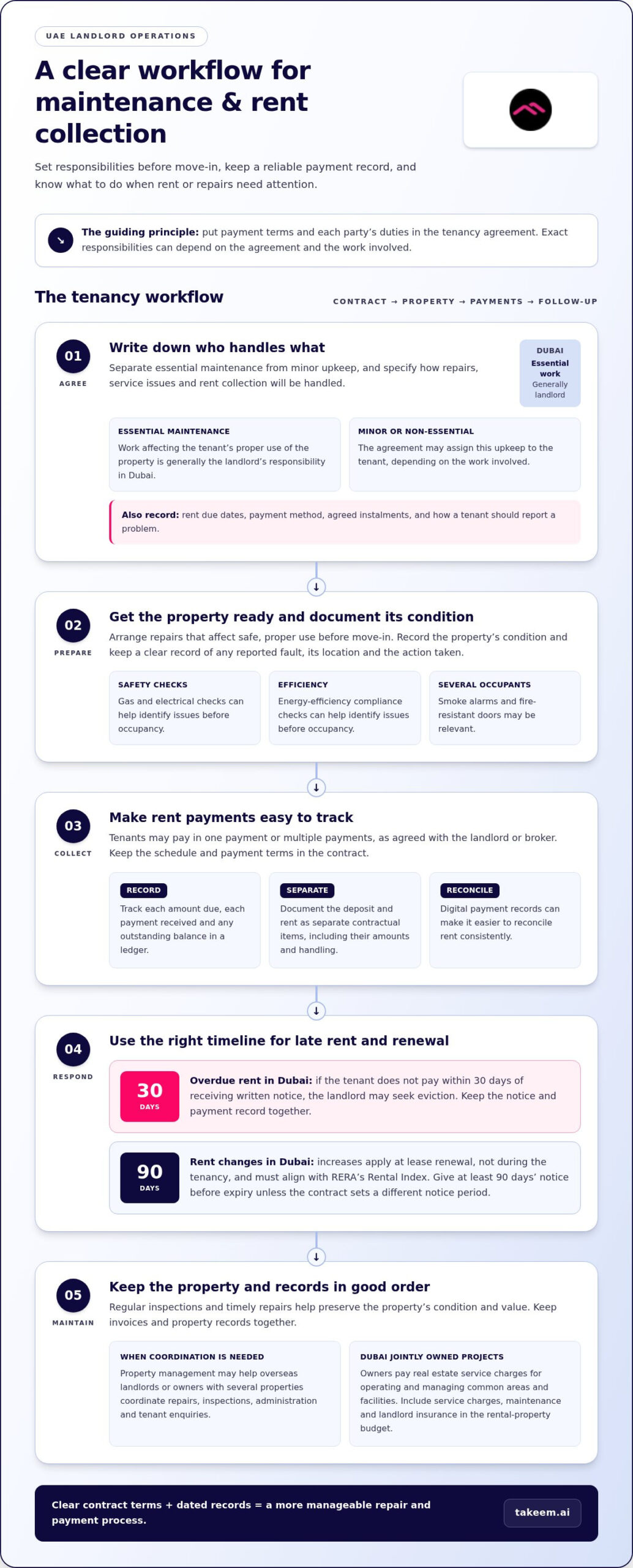
Before move-in, arrange repairs that affect safe, proper use and record the property’s condition. Gas and electrical safety checks, as well as checks for energy-efficiency compliance, can help identify issues before occupancy. For a tenancy involving several occupants, fire-safety measures such as smoke alarms and fire-resistant doors may also be relevant. The written agreement should specify who handles essential repairs, minor upkeep, service repairs and rent collection, and explain how the tenant should report a problem. Clear instructions make maintenance easier to coordinate and reduce confusion about who must act.
Maintenance, repairs and rent collection
Plan repairs by distinguishing essential maintenance from minor upkeep. In Dubai, landlords generally handle essential work that affects a tenant’s proper use of the property. Depending on the work involved, the tenancy agreement can assign minor or non-essential maintenance to the tenant. Record each reported fault, its location and the action taken. For example, a leak that affects the use of a room needs prompt attention, while routine upkeep can follow the agreement’s allocation of responsibilities.
Make rent collection predictable by recording the due dates, payment method, and agreed instalments in the contract. UAE tenants may pay rent in one payment or multiple payments, as agreed with the landlord or broker. Keep a ledger showing each amount due, payment received, and outstanding balance. A deposit and rent are separate contractual items, so document their amounts and handling separately. Digital payment records can make reconciliation easier; digital rent collection can support a consistent payment process.
In Dubai, overdue rent has a defined legal consequence. A landlord may seek eviction if the tenant fails to pay within 30 days of receiving written notice. Keep the notice and payment record together, because both help establish the timeline. Rent changes also require planning: increases apply at lease renewal, not during the tenancy, and must align with RERA’s Rental Index. Give at least 90 days’ notice before expiry unless the contract sets a different notice period.
Regular inspections and timely repairs help preserve a property’s condition and value. Landlords who live overseas or own several properties may find property management useful for coordinating repairs, inspections, administration and tenant enquiries. Owners in jointly owned Dubai projects also pay real estate service charges for operating and managing common areas and facilities. Include these charges, maintenance and landlord insurance in the rental-property budget, and keep invoices with the property records.
Landlord licence and permit requirements depend on the emirate and rental model. Long-term tenancy contracts must be registered with the relevant authority, while Dubai short-term rentals require separate licensing. Short-term lets also involve more frequent maintenance and guest management, so account for these demands in the operating plan.
Rental yield compares rental income with purchase and ownership costs. Rents depend on location, property type, condition and demand. Property management fees vary with the agreed service scope and responsibilities, so assess the cost against the tasks included.
Who should pay the fees, tenant or landlord?
There is no single payer for every rental cost: responsibility depends on the type of fee and the applicable emirate rules. Separate government charges, owner expenses and broker commission, then record the agreed payment responsibilities clearly.
Tawtheeq and Municipality Fees
Tawtheeq is Abu Dhabi’s system for registering tenancy contracts, while the municipality fee is charged through the tenant’s utility bill. The distinction matters because the landlord registers the lease, but the fee is collected from the tenant over time.
In Abu Dhabi, the municipality fee is 5% of the rental value or rental index, whichever is higher. It is added to the tenant’s monthly water and electricity bill across 12 months. Landlords should account for that collection method when explaining payments and preparing the rental agreement. Keep the registered contract and billing details together, so both parties can trace the fee and its basis.
Dubai Transaction and Ejari Registration
Dubai requires real estate transactions involving ownership, transfer or change to be registered with the Dubai Land Department; unregistered transactions are considered invalid. Ejari registers the tenancy agreement and creates a formal record of the landlord-tenant relationship. These are separate processes, so registering ownership does not replace tenancy registration.
Use the Dubai REST app or Dubai Land Department website to register the tenancy, and make the contract’s fee arrangements clear. Creating an Ejari account is free, but registration has separate fees. Dubai rules also prevent a lease from being registered while earlier lease contracts remain unregistered. Any proposed changes to a registered tenancy agreement should be handled carefully and in line with the agreed terms. A landlord may enter the leased home only with the tenant’s permission, unless the agreement contains an access clause allowing otherwise. That clause helps define access for inspections or repairs.
Landlord Taxes and Service Charges
Landlord costs include housing fees, property service charges and any broker commission agreed for letting. In Dubai, the housing fee is calculated at 5% of yearly rental charges. Owners of units in jointly owned projects also pay service charges for operating and managing shared areas and facilities. Include these recurring obligations when assessing the property’s rental income.
Some UAE real estate brokers may charge commission of up to 5% of total rent. The agreement with the broker should make the commission arrangement and payer explicit, rather than leaving the payment unclear after a tenant is found. Keep that charge separate from government registration fees and owner service charges. This makes rental payments easier to reconcile and helps prevent avoidable disputes about who owes each amount.
What are the legal requirements to become a landlord in the UAE?
The UAE is a federation of seven emirates, and rental rules can differ between them. Start by identifying the emirate where the property sits, then follow its tenancy and registration requirements. In Dubai, Law No. (26) of 2007 regulates landlord-tenant relationships. Law No. (33) of 2008 amends articles of Law No. (26) of 2007 and governs those relationships. These laws make the written tenancy agreement central to recording each party’s obligations.
Prepare ownership and identity documents before marketing a Dubai property. Landlords typically need the title deed, a passport or Emirates ID, and property details. If an agent will market the unit, prepare a signed agreement authorising the agent to do so. These records establish the owner’s authority to rent the property and give the agent a clear basis for advertising and arranging viewings.
Register the tenancy with the authority responsible for the property’s emirate. Dubai uses Ejari, Abu Dhabi requires Tawtheeq, and Sharjah registers lease contracts through Sharjah Municipality. In other emirates, follow local registration rules. Registration formalises the rental agreement and supports related tenancy arrangements. Keep the signed contract and registration record with the title deed and property details, so you can refer to the agreed terms during the tenancy.
Set out practical responsibilities in the contract before signing. Specify rent collection arrangements, maintenance duties, repair reporting and any notice requirements. In Dubai, the landlord is generally responsible for essential maintenance that affects the tenant’s proper use of the home. Depending on the agreement and the work involved, minor or non-essential maintenance may be assigned to the tenant. Clear terms help both parties know what to do when a repair arises.
Handle the security deposit and property condition transparently. Record the deposit terms in the agreement and document the property’s condition at move-in. This gives both sides a practical reference when assessing damage or reasonable wear at the end of the tenancy.
Additional requirements may apply when renting to multiple tenants or using a short-term rental model. Renting to multiple tenants can involve stricter licensing requirements and safety regulations, including fire-safety measures. Dubai short-term rentals require separate licensing and involve more frequent guest management and maintenance. Before advertising, identify the intended rental arrangement and align the property’s permissions, safety preparations, contract and registration with that use. For a complex ownership or tenancy arrangement, legal advice can help clarify the rules in the relevant emirate.
Can a foreigner buy and rent out property in the UAE
Foreign nationals can buy and rent out property where the relevant emirate’s ownership rules allow it. The UAE has seven emirates, and property rules can differ between them. Confirm that the property’s location and ownership arrangement permit your intended use. Then ensure the ownership documents match the person or entity signing the tenancy agreement.
For a Dubai property, keep the title deed, passport or Emirates ID, and property details together. These are typical documents landlords need when preparing to rent out a property. If an agent will market it, a signed agreement authorising that work is also typically needed. This paperwork establishes the owner’s authority and helps align the property advertisement, tenancy contract and registration details.
Before committing to a purchase, assess the rental model. Dubai long-term rental contracts are usually annual, while short-term stays can range from a few days to months. Short-term rentals require separate licensing and more frequent guest management and maintenance. Account for expected demand, property location, rental income goals, repair coordination and licensing before choosing between the models.
After acquiring the property, register each tenancy through the relevant emirate’s system. Dubai uses Ejari, Abu Dhabi uses Tawtheeq, and Sharjah registers lease contracts with Sharjah Municipality. Registration formalises the rental agreement. Keep the title deed, signed contract and registration record together, especially if you live outside the UAE or use an authorised agent to market the property.
Plan for ongoing ownership obligations, not just the purchase. Dubai landlords are generally responsible for essential maintenance that affects the tenant’s proper use of the property. The agreement can allocate minor or non-essential maintenance according to the work involved. Owners in jointly owned Dubai projects also pay service charges for common areas and facilities. Include these recurring responsibilities when estimating rental-property income and costs.
For overseas owners, a practical operating plan should cover rent collection, tenant communication, repair reporting and inspection coordination. The tenancy agreement should state payment arrangements and maintenance responsibilities clearly. In Dubai, landlords must give at least 90 days’ notice before a rent increase at renewal, unless the contract agrees a different notice period. This timeline matters when managing renewals from abroad.
Once ownership eligibility and local registration are clear, organise the rental operation around the property’s location and intended use. Owners with investment portfolios can explore rental-income support as part of planning for rental continuity.
Takeem: Landlord Rental Guarantee
Takeem offers a Landlord Rental Guarantee for landlords planning their rental income. It can suit individual owners as well as property investors with large portfolios. Emergency property maintenance is included in the Rental Guarantee, connecting rental support with a practical property need.
Landlords can consider how rental income and urgent maintenance fit into their ownership plans. Agents can also sell Takeem’s Landlord Rental Guarantee and earn commissions. This offering addresses a different need from property management, so consider it when rental guarantees and emergency maintenance are relevant to your requirements.
Visit takeem.ai to learn more about Takeem’s Landlord Rental Guarantee.
Build a rental plan you can sustain
Turn your ownership goals into a practical operating plan. Decide how involved you want to be in tenant communication, income tracking and property upkeep, then make sure your approach fits the time and resources you can commit. A clear plan for how to become a landlord in UAE helps you move from purchase decisions to consistent ownership.
Consider how predictable rental income fits your wider investment plans. Takeem offers a Landlord Rental Guarantee, including an option for property investors with large portfolios. Agents can also sell the guarantee and earn commissions. These offerings may be relevant if rental income planning is part of your next move.
Explore whether this support suits your ownership goals and rental approach. Contact Takeem about your rental to discuss the Landlord Rental Guarantee. With a plan that reflects your priorities, you can take the next step as a UAE landlord with greater clarity.
Frequently Asked Questions
Can an owner increase rent every year or only at renewal?
In Dubai, rent increases can apply only at lease renewal, not during the tenancy. The amount must align with RERA’s Rental Index, and the landlord must give at least 90 days’ notice before expiry unless the contract specifies another notice period. For example, review the applicable index and send notice within the contract’s stated timeframe. Rules elsewhere in the UAE may differ by emirate.
How do I register my property in the Ejari system?
In Dubai, submit the tenancy contract through the Dubai REST app or Dubai Land Department website. Prepare the signed agreement and property details, and check the registration requirements before proceeding. After registration, keep the Ejari record with the contract. Since the contract cannot be altered after registration, settle the terms before submitting it.
What are the UAE landlord and tenant rights and obligations?
Rights and duties depend on the emirate and the signed tenancy agreement. In Dubai, the landlord generally handles essential maintenance, while the tenant follows the payment and property-use terms. For example, specify how the tenant reports a fault and how the parties arrange access for repairs. A Dubai landlord needs the tenant’s permission to enter, unless the contract includes an access clause allowing otherwise.
What are the rules for security deposits, rent increases, and eviction in the UAE?
In Dubai, a landlord may request a security deposit commonly set at one or two months’ rent; the agreement should state its terms. Rent increases apply at renewal under RERA’s Rental Index. For unpaid rent, a landlord may seek eviction if the tenant fails to pay within 30 days after written notice. Eviction for specified reasons such as sale or personal use requires 12 months’ written notice.
What risks and insurance should UAE landlords consider?
Budget for interrupted rent, repairs, insurance, agency charges, legal obligations and, in jointly owned Dubai projects, service charges for common areas. These costs affect the income left after rent is collected. Review what landlord insurance covers and excludes in relation to the property’s risks, then keep maintenance records and tenancy documents organised. Insurance can support risk planning, but it does not remove contractual maintenance duties.