

Managing several rentals is less about collecting more payments and more about keeping every payment visible. Managing rent collection for multiple properties means tracking each unit’s rent status, tenant details and lease records in one system, with clear due dates and payment expectations. This gives you a consistent view of the portfolio instead of scattered records.
It’s understandable that separate properties can create separate reminders, payment methods and renewal dates. A centralized platform can help organize those details, while an online payment portal makes it easier to track incoming rent. This guide explains how to set up reliable payment tracking, communicate rent policies clearly and manage lease information, including identifying agreements due to expire within the next 90 days. You’ll also learn what to look for in a rent collection platform for UAE properties, and how digital direct debit can fit into a smoother monthly process.
Key Takeaways
- Bring property, tenant, lease and payment records into a searchable system to see what needs attention across your portfolio.
- Use recurring payments and timely reminders to make rent dates easier for tenants to manage and payment status easier to track.
- Set out deadlines, accepted payment methods and late-fee terms clearly so tenants know what to expect.
- Centralized dashboards can make portfolio oversight simpler, while Takeem’s Landlord Rental Guarantee may suit landlords seeking added rental protection.
1. How Does Software Help Landlords Manage Multiple Properties Across the UAE?
For a UAE landlord, software turns scattered rental records into a portfolio view. Create a separate digital record for each property, then connect its tenant, lease agreements, payment history and documents. A search can then bring up a tenant’s signed lease or payment status without sorting through separate folders. Use renewal workflows to flag agreements expiring within the next 90 days and start coordination before a lease ends.
Set expectations in writing before the first rent payment. Record the due date, any grace period and late-fee terms in the lease or payment instructions, then use the same wording in reminders. A consistent due date makes income easier to review across rental properties. If units have different schedules, record each date against the right tenant rather than relying on memory.
Software can also make tenant screening more consistent. Follow the same steps for each application: review the completed form, assess the income information provided and contact rental references. Record the outcome and relevant documents in the applicant’s file. This gives you a clear basis for comparing applications and helps avoid relying on informal impressions alone. Screening supports decision-making, but cannot ensure future payments will arrive on time.
Once a tenancy begins, keep the signed lease, tenant documents, agreed payment schedule and renewal notes together. A useful system should answer practical questions, such as which tenant has an upcoming renewal or which property has an outstanding document, in under two minutes. Set a goal to respond to tenant emails within 24 hours and log each follow-up against the relevant property. That keeps communication visible when several tenants need attention.
Self-management gives landlords direct control, but they must handle records, reminders and tenant coordination. A property manager can take on routine portfolio tasks, while self-management with software keeps those tasks with the landlord. Compare the responsibilities you want to retain with the coordination you want someone else to handle.
2. How Do I Keep Track of Rent Payments Across Multiple Tenants?
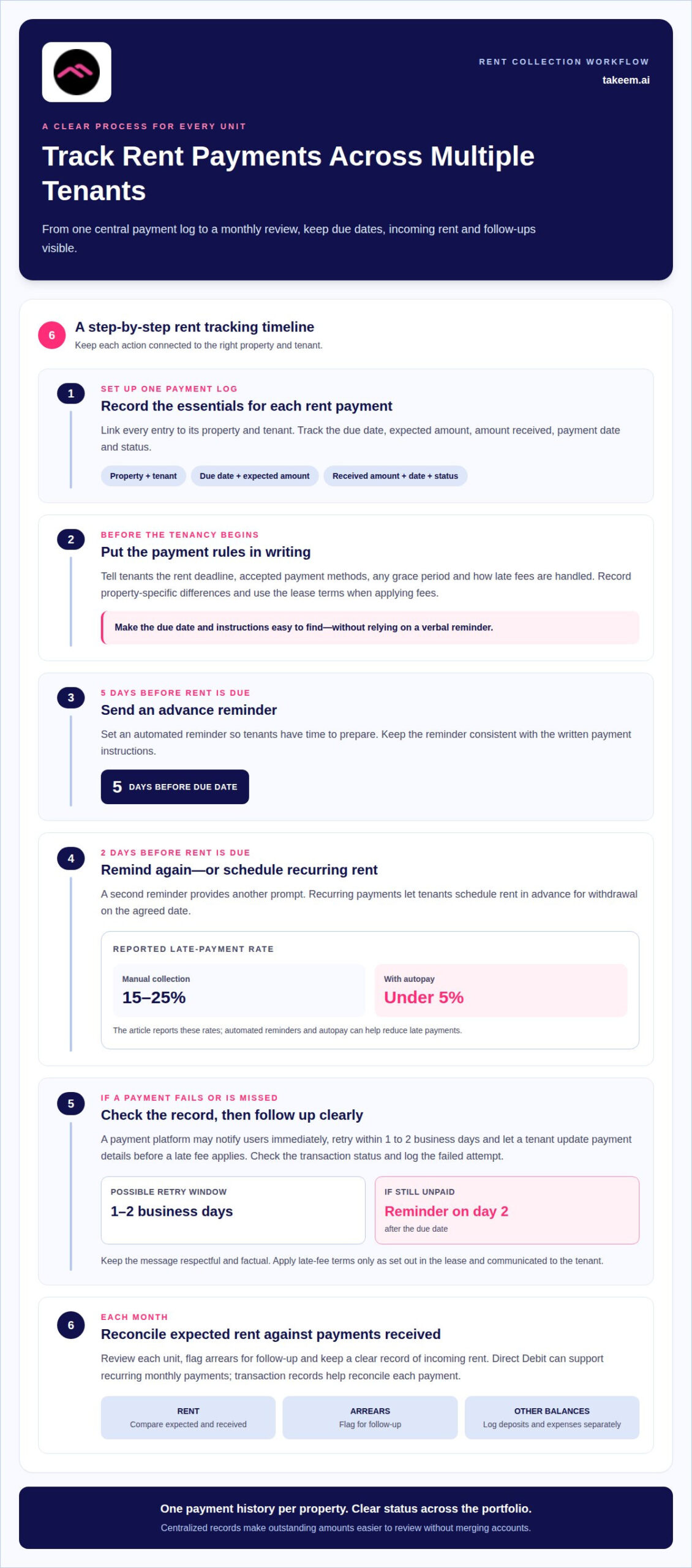
Use a centralized payment log to record each rent payment against the right property and tenant. Track the due date, expected amount, amount received, payment date and status. Keep arrears, deposits and property expenses in separate entries to distinguish rental income from other balances. You can then review payment history and outstanding amounts across multiple rental properties without merging accounts.
Automation can reduce repetitive follow-up. Set reminders for 5 and 2 days before each rent due date, so tenants have time to prepare. Recurring payments let tenants schedule rent in advance for withdrawal on the agreed date. Automated reminders and autopay can help reduce late payments; the reported late-payment rate is 15 to 25 percent for manual collection, compared with under 5 percent with autopay.
Keep tenant communication clear when a payment fails. Payment platforms may notify users immediately, retry within 1 to 2 business days, and allow a tenant to update payment details before a late fee applies. Check the transaction status, record the failed attempt and follow up through the agreed channel. If rent remains unpaid, send a short, respectful reminder on day 2 after the due date. Apply late-fee terms only as set out in the lease and communicated to the tenant.
A monthly review helps catch mismatches early. Compare expected rent with payments received, then flag arrears for follow-up. Record deposits separately from rental income and log expenses against the relevant property. This gives you a clearer view of each unit’s cash flow and keeps payment history consistent. Direct Debit can support recurring monthly payments, while transaction records remain useful for reconciling each payment.
For a more streamlined payment routine, consider a digital rent payment approach that supports scheduled collection and clearer tracking.
3. Establishing clear rent deadlines, payment methods, and late-fee policies
Give every tenant a written payment policy before the tenancy begins. State the rent deadline, accepted payment methods, any grace period and how late fees are handled. Keep terms consistent across the rental business where agreements allow, and record property-specific differences. Tenants should be able to find the due date and know what to do if payment is delayed without relying on a verbal reminder.
Offer practical payment routes, such as an online payment platform, bank transfer, debit payment or credit card. Explain the instructions for each method, including reference details needed to match a transfer to the tenant and unit. Digital billing can make payments easier to initiate, while a transfer may suit tenants who prefer their bank’s process. The right mix depends on tenant needs and the options available to you.
Use property-management software to log each transaction against the correct unit. Record the amount due, amount received, date, method and any outstanding balance. Separate rental income from deposits and property expenses so each property’s accounts give a clearer picture of cash flow. Consistent records also help identify repeated delays or discrepancies before they become harder to resolve.
For late rent or a missed payment, check the account record first, then contact the tenant with the amount and date in question. Keep messages factual and save replies, receipts and agreed follow-up details in the tenant’s file. If the tenant disputes a charge, compare the record with the lease terms and payment evidence, then respond in writing. This creates a clear timeline without making the issue personal.
Digital payment methods may involve transaction fees. Before choosing one, review how any fee is applied, who pays it and how it affects net rental income. Include the agreed payment process in tenant communications, and keep the policy aligned with the lease and applicable UAE requirements. Clear records help you compare methods and maintain accurate rental accounts.
4. Centralized rent collection platforms
A centralized platform gives landlords one place to review rent status across a portfolio. For landlords managing rent collection for multiple properties, a shared view can reduce the need to switch between spreadsheets, bank records and tenant messages. It shows which units are paid, pending or overdue, making late payments easier to spot before the next accounting review.
A useful platform for managing rent collection for multiple properties should suit your payment methods, portfolio size and recordkeeping needs. Look for property-level reporting, tenant payment histories, recurring payment support and a way to log failed transactions. A dashboard should quickly answer practical questions, such as which units remain unpaid or which receipts still need matching.
Set up the system in a consistent sequence. Create a record for each property, assign each tenant and lease to the correct unit, enter the rent schedule, then configure reminders and payment methods. Test the workflow with one tenancy first. Confirm that a payment appears against the right account and that an overdue status is visible. Once the process works, add the remaining properties.
As a portfolio grows, a centralized view can reveal patterns that separate records hide. Compare payment histories by property, review rent collected against expected income, and link expenses to the relevant unit. For a 10-unit rental portfolio, manual rent collection can take 6 to 10 hours per month, compared with under 30 minutes using an automated platform. These figures illustrate a potential time difference, not a guaranteed result for every portfolio.
A platform should support your existing lease terms, not replace them. Keep tenant records and payment evidence organized, and document follow-up when rent is late. The right setup makes payment status easier to review while keeping each property’s accounts distinct.
For landlords ready to streamline rent handling, explore a digital rent collection approach for a growing portfolio.
Takeem
Takeem supports landlords who want digital monthly rent payments and rental protection across their properties. Its Direct Debit setup lets landlords accept monthly tenant payments digitally, complementing the payment tracking process described above. For landlords and property investors with large portfolios, the Rental Guarantee provides rental income protection, rather than replacing rent collection software or property management.
The Landlord Rental Guarantee also includes emergency property maintenance service. It may suit landlords who want rental protection and maintenance support together. Agents can also sell the guarantee to landlords for commissions. Consider whether your priority is accepting recurring payments, protecting rental income or adding the included maintenance service.
If you’d like to discuss these options for your properties, contact Takeem.
Make your next rent cycle easier to manage
A useful next step is to decide which parts of your rental process need more consistency as your portfolio changes. You might prioritize scheduled payments, clearer visibility across properties or protection against rental income disruption. That decision can help you shape an approach to managing rent collection for multiple properties around the way you operate, rather than adding another disconnected process.
Takeem offers a Landlord Rental Guarantee, including an option for property investors with large portfolios. Agents can also sell the guarantee to landlords for healthy commissions. These options can complement the systems and payment routines you’ve established, while addressing rental protection needs.
If you’d like to explore whether Takeem’s offerings fit your priorities, contact Takeem about rent collection. A more organized rental process starts with choosing the next step that makes sense for your properties.
Frequently Asked Questions
What Is Multi-Unit Rent Management?
Multi-unit rent management is the coordinated handling of rent collection and related records across several rental units. For example, an owner with apartments in different buildings can review each unit’s payment status while keeping tenant and lease information distinct. The aim is consistent oversight across the portfolio, not combining separate rent balances or treating different tenancy agreements as one account.
Can landlords monitor the financial performance of multiple properties from one dashboard?
Yes. A dashboard can bring property-level income, collected rent, expenses and budgets into one view. Landlords can compare results between units, then open an individual property’s account to understand the reason for a difference. For example, lower net income at one unit may reflect higher recorded expenses rather than missing rent. Property-level detail makes portfolio comparisons more useful.
How Can Landlords Start Moving From Spreadsheets to One Connected System?
Start by reviewing spreadsheet columns and removing duplicate or outdated entries. Match each property and tenant to a consistent identifier, then import current lease and payment details into the new system. Reconcile a sample of past transactions against bank records before relying on migrated totals. Keep the original spreadsheet unchanged during the transition so you can trace and resolve discrepancies.
How Do I Collect Rent From Multiple Units at the Same Time?
Set up a recurring payment schedule for each tenant based on the agreed rent date for that tenancy. Tenants can schedule payments in advance for withdrawal on the due date, while a centralized portal can display each transaction separately. This supports simultaneous collection without merging tenants’ payments. Match every received amount to its unit and tenant so individual delays remain visible.
How Do I Keep Track of Rent Payments Across Multiple Tenants?
Reconcile payment records against the relevant bank or platform transactions, then mark each rent item as received, pending or overdue. If a tenant says a transfer was sent but the payment is unmatched, check the transaction date and reference before recording it against their account. Keep the evidence and follow-up together. This helps distinguish an unallocated payment from unpaid rent.
How Does Software Help Landlords Manage Multiple Properties Across the UAE?
Software gives landlords a shared workspace for records across UAE rental properties while keeping each unit’s tenancy details distinct. It can connect lease documents, tenant files, payment records and renewal tasks, helping owners find information without searching separate folders. For example, a landlord can review one unit’s file while maintaining a separate record for another property in the portfolio.