
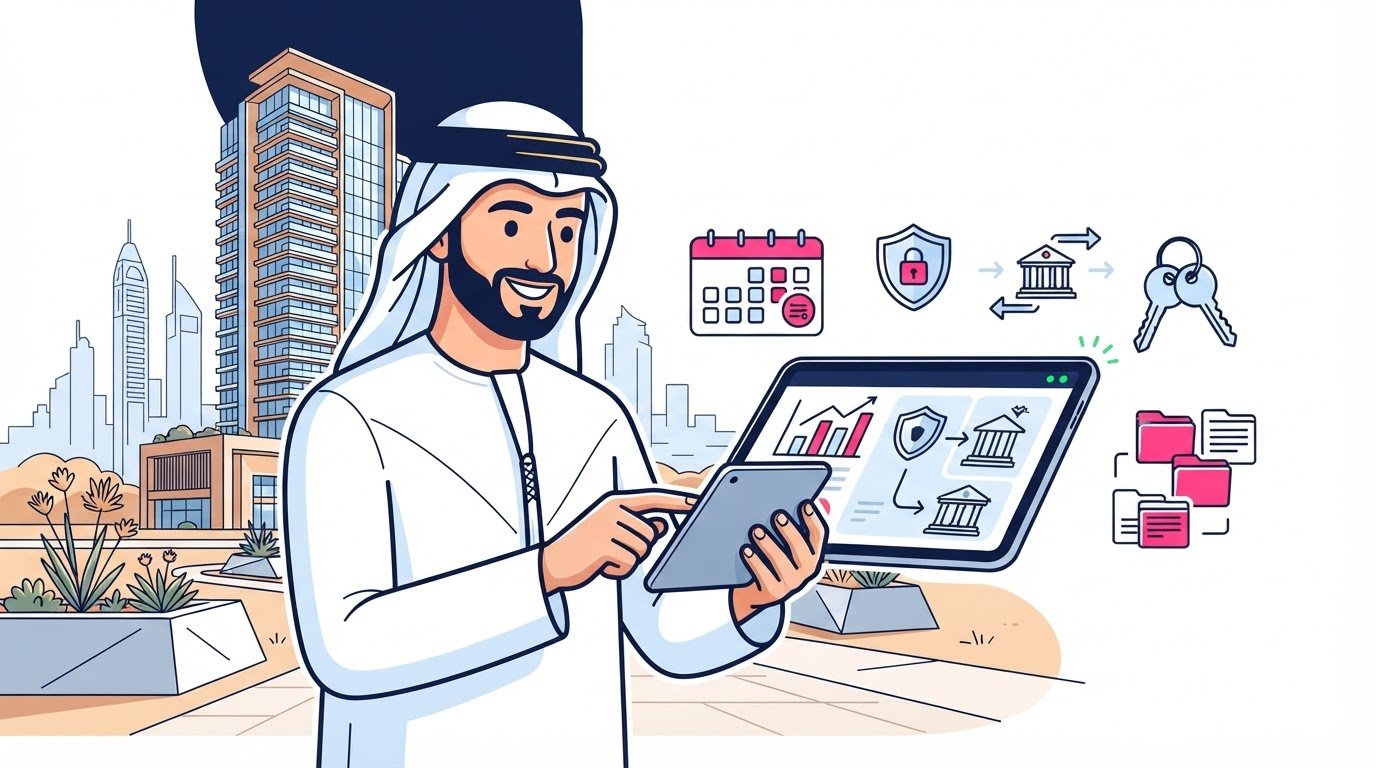
Looking into digital rent collection UAE options can help landlords move away from tracking post-dated cheques and following up on delayed payments. Across the Emirates, scheduled monthly payments through Direct Debit offer an alternative that can reduce manual processing and support a more consistent rent collection routine.
Cheques may feel familiar, but a payment method alone can’t remove the uncertainty of a returned cheque or delayed resolution. Digital collection offers a more streamlined way to receive rent. A rental guarantee is separate and may provide another layer of protection for rental income, subject to its terms.
This guide explains how to transition from cheque-based rent collection to Direct Debit through Takeem, what to review when setting up digital payments, and how automated collection differs from income protection. It also covers how a digital payment process and a rental guarantee can support a more structured approach to rental operations.
Key Takeaways
- Learn how digital rent collection can replace cheque handling with scheduled monthly Direct Debit payments.
- Compare digital collection with post-dated cheques by considering payment processing and administrative work.
- Prepare for a transition by reviewing tenancy agreements, payment schedules and cheque expiry dates before choosing a Direct Debit provider.
- Understand the difference between automated collection and a rental guarantee: one supports rent collection, while the other may protect income if a tenant defaults.
- Consider how a rental guarantee package that includes emergency property maintenance can offer landlords additional support.
Modernising UAE Real Estate: The Evolution of Digital Rent Collection
Digital rent collection replaces paper-based payment handling with electronic methods, such as Direct Debit, to collect rent on an agreed schedule. Instead of storing post-dated cheques and arranging deposits, landlords can use a digital process for recurring payments and keep clearer records. Across the UAE, this shift reflects a broader move towards connected, paperless financial processes in the property sector.
Digital workflows can make rental transactions easier to track by bringing payment schedules and records together. Landlords and tenants can check whether a payment was scheduled, processed or needs attention. Digital collection doesn’t remove every payment risk, and it doesn’t make cheques unlawful. Post-dated cheques remain a legal and widely used method in the UAE. The practical difference is that landlords and investors can choose a more automated approach for their rental operations.
The Limitations of the Traditional Cheque System
Physical cheques require ongoing administration. Landlords or their representatives must store them securely, monitor due dates and deposit each cheque. If a cheque is returned for insufficient funds, expected rent may not arrive on time. Under UAE rules in effect in 2026, insufficient-funds cases are generally handled through civil enforcement, including a possible court execution case. Fraud-related conduct can still carry criminal consequences, so recovering funds may involve legal steps and delays.
Why UAE Landlords Are Embracing Digital Transformation
With Direct Debit, a tenant authorises a payment that is collected from their bank account on a scheduled basis. It is a pull-payment method, distinct from a tenant manually initiating each transfer. The underlying Direct Debit system supports recurring payments, but landlords should confirm the provider’s process and applicable UAE requirements before switching.
Monthly collection can help landlords plan cash flow more consistently than relying on a small number of quarterly or bi-annual payments. It may also give tenants a payment rhythm aligned with regular income. Payment frequency can support convenience, but it can’t guarantee tenant retention.
For investors, digital processes can reduce cheque handling and make payment activity easier to review across a portfolio. Direct Debit setup offers one route to scheduled monthly rent collection, while a rental guarantee addresses a separate concern: protection against tenant default. Together, they can support a more considered approach to rental operations.
How Direct Debit Facilitates Seamless Rental Payments
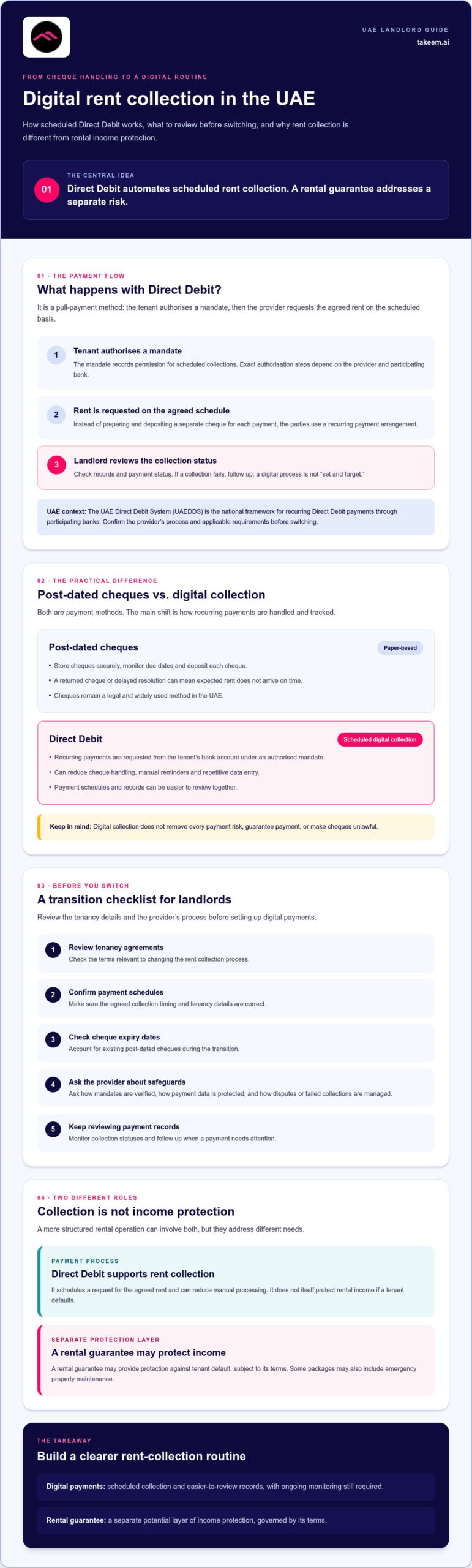
Direct Debit is an automated pull-payment method. After a tenant authorises a mandate, the payment provider requests the agreed rent from the tenant’s bank account according to the schedule. Instead of preparing and depositing a separate cheque for each payment, both parties use a recurring payment arrangement. Scheduled collection can reduce manual reminders and data entry, but landlords should still monitor payment status and follow up if a collection fails.
For tenants, a predictable monthly schedule can make payment timing easier to manage. For landlords, it can support a steadier collection routine and reduce repetitive administration. It is not a true “set and forget” system: landlords should continue reviewing records and checking that the payment mandate and tenancy details are correct.
Security and Authorisation in Digital Payments
The UAE Direct Debit System (UAEDDS) is the national framework for processing recurring Direct Debit payments through participating banks. A digital mandate records the tenant’s authorisation for scheduled collections, reducing reliance on issuing a new physical cheque for each payment. The exact authorisation steps and available protections depend on the provider and participating bank. Before setup, ask how mandates are verified, how payment data is protected, and how to manage a dispute or failed collection. For wider regulatory context, consult this overview of UAE fintech regulations.
Don’t assume every fintech uses the same encryption or data-protection controls. Review the provider’s documentation and confirm how it handles access, records, consent changes and payment notifications. Clear answers help you decide whether the process suits your tenants and portfolio.
Clearer Oversight for Property Investors
For landlords with multiple properties, coordinating cheque dates and manually updating records can become difficult to scale. A digital process can bring payment schedules and records together. If a provider offers a dashboard, landlords may be able to review collection statuses in one place. Confirm what information is available and how often it updates rather than assuming every platform provides real-time reporting.
Automation can reduce human error, such as recording the wrong due date or overlooking a cheque. It won’t eliminate every mistake, so check tenancy details and payment instructions before activating a mandate. Takeem provides Direct Debit setup for landlords and connects digital collection with rental income protection. Learn more about rental guarantee with direct debit UAE, or explore Takeem’s landlord solutions to see how these services may fit your collection process.
Digital Collection vs. Post-Dated Cheques: A Risk Analysis
Digital rent collection and post-dated cheques organise rent payments differently, but neither method removes every risk. Cheques require landlords to store each payment and deposit it on the due date, after which the bank must process it. Direct Debit follows an authorised schedule, so collection can take place without handling a physical cheque. Processing times depend on the banks and payment arrangements involved. Confirm when funds are expected to reach your account rather than assuming every digital payment clears instantly.
For tenants, writing several cheques at the start of a tenancy can mean planning around large, less frequent payments. An agreed monthly digital mandate can make payment timing more predictable. For landlords, the operational difference is the amount of recurring manual work: tracking cheque dates, arranging deposits and recording outcomes, compared with reviewing scheduled collections and their status. The time saved varies by portfolio and process, so track your current administrative workload and compare it after a transition rather than relying on a generic estimate.
Legal and Financial Security
Post-dated cheques remain legal and widely used in the UAE, but the legal position on bounced cheques has changed. Under Federal Decree-Law No. 14 of 2020, effective January 2, 2022, insufficient-funds cases are generally handled through civil enforcement rather than criminal prosecution. A holder may pursue an execution case, and banks must make partial payment when funds are available. Fraud-related conduct can still carry criminal consequences. Digital collection avoids cheque handling, but a failed collection may still require follow-up. Neither method should be mistaken for guaranteed income.
Digital payment histories can make it easier to review scheduled collections, payment outcomes and communications if a disagreement arises. Keep the tenancy agreement and relevant records together. Digital records can help clarify what happened, but they don’t replace the agreement or resolve a dispute by themselves. To reduce the risk of rental disputes, use clear terms and consistent documentation. Bank fees vary by institution and payment method, so compare applicable charges before assuming digital collection will cost less than cheque processing.
Operational Efficiency for Modern Landlords
Automation reduces repeated tasks, but it won’t eliminate administration. Landlords still need to review collection status, maintain accurate tenant and payment details, and agree on any change to a payment date with the tenant. Check whether the provider allows mandate updates and how those changes take effect. An organised digital process can create a more professional experience for tenants, while transparent communication remains important to satisfaction and retention.
When assessing digital rent collection Dubai options, weigh the convenience of scheduled payments against processing timelines, provider terms and the separate protection you may need if rent is not received.
Steps to Transition a Property Portfolio to Digital Payments
A smooth move from cheques to Direct Debit starts with an inventory, not a rushed portfolio-wide switch. Review each tenancy agreement, payment schedule and cheque expiry date. Note renewal dates, tenant contact details, rent amounts and any payment exceptions. This gives you a clear view of which tenancies to consider first and where you may need to clarify contract terms or coordinate a change with the tenant.
- Audit your records: Match each property and tenant to the correct rent amount, due date, agreement and remaining cheques.
- Assess providers: Ask how their Direct Debit setup works in the UAE, what authorisation tenants must provide, how failed collections are reported and what records you can access.
- Plan the changeover: Agree on the timing with tenants and avoid overlapping a digital collection with a cheque for the same rent period.
- Test and review: Confirm mandate details before activation, then check the first collection and reconcile it against your tenancy records.
Onboard Tenants with Clear Communication
Explain the change in practical terms: the tenant authorises scheduled rent collection, receives clear payment information and no longer needs to prepare a separate cheque for each due date. Set out the collection date, how the mandate is authorised, where questions should go and what happens if a payment doesn’t complete. Avoid promising that a collection can never fail. Reassurance comes from transparent steps and a clear record of consent. Real estate agents can also support conversations with landlords and explore a rental guarantee for real estate agents.
Scale Consistently Across Multiple Properties
For a larger portfolio, use a consistent record format across every unit. Standardise property identifiers, tenant names, payment dates and reference details so collections can be reconciled and reviewed without guesswork. If your provider offers a central dashboard, check whether it can show collection status across units and export records for financial reporting. Don’t assume every platform has the same tracking or reporting functions.
Roll out in manageable groups, review the first payment cycle for each group, then resolve data or communication gaps before moving on. This creates a repeatable process for managing property portfolio rental income UAE without losing sight of individual tenancy details. Takeem provides Direct Debit setup for landlords. Explore Takeem’s landlord Direct Debit setup as you plan your transition.
Beyond Collection: Integrating Rental Guarantees and Maintenance
Automating rent collection makes payments easier to schedule and track, but it can’t prevent a tenant from defaulting. Landlords need to distinguish between collecting rent and protecting rental income. Direct Debit streamlines the payment process. A rental guarantee provides a separate layer of protection if a tenant fails to pay, subject to the guarantee’s terms.
This distinction matters for investors planning around rental income. A scheduled payment that doesn’t complete still needs attention. A guarantee may help address the income risk, while clear records and an agreed process help landlords respond to a missed payment. Review the provider’s terms so you understand what’s covered and what steps apply if a tenant defaults.
The Value of Combining Income Protection and Maintenance
Takeem offers a Landlord Rental Guarantee that includes emergency property maintenance. These services address different concerns: tenant default can affect expected income, while an urgent property issue may need attention to protect the home and support a positive tenancy experience. Combining both in a guarantee package can simplify how landlords consider income protection and property upkeep, but it doesn’t mean rent collection prevents maintenance problems.
Maintenance matters to tenants, too. Addressing property issues appropriately can support a more dependable rental experience and help protect the asset over time. Check the service’s scope and process with the provider so you know what is included and how maintenance requests are handled.
Planning for a More Hands-Off Investment
Digital payments, a rental guarantee and emergency maintenance can reduce some recurring tasks and uncertainty, helping landlords take a more investment-focused role. They don’t make ownership entirely passive or replace property management. Landlords still need to understand their agreements, review payment records and stay informed about the property and tenant relationship.
For longer-term financial planning, it is useful to separate expected rent from protection against default. Scheduled digital collection can make payment activity easier to monitor, while a rental guarantee may offer additional peace of mind if a tenant fails to pay. Together, these measures can support a more structured approach to income planning, but confirm the guarantee’s terms rather than assuming every situation is covered.
To explore how Direct Debit setup and rental income protection could fit your portfolio, review Takeem’s landlord solutions.
Digital Rent Collection Dubai: Build a More Secure, Modern Rental Strategy
Moving from post-dated cheques to Direct Debit can simplify monthly rent collection and reduce repetitive manual handling. Automation is only one part of a resilient rental strategy: payment records help you monitor collections, while a rental guarantee can provide a separate layer of protection if a tenant defaults.
For landlords exploring digital rent collection Dubai, the opportunity is to combine a smoother payment process with more structured income planning. Takeem supports the transition to monthly Direct Debit and offers a Landlord Rental Guarantee that includes emergency property maintenance. Review the terms carefully to understand the protection provided and what the maintenance service covers.
You don’t need to modernise every tenancy at once. Start by reviewing agreements and payment dates, communicate clearly with tenants, then check the first digital collection cycle. A deliberate transition can help you build a more efficient rental process while keeping individual tenancy details in view.
Explore Takeem’s digital rent collection and rental guarantee to take the next step towards a more structured approach to managing rental income.
Frequently Asked Questions
Is digital rent collection legally valid in the UAE?
Digital rent collection can be used for rental payments in the UAE, provided the payment method is agreed and set up appropriately. Post-dated cheques also remain a legal payment method. Check your tenancy agreement, confirm any required amendment with the tenant, and ask the payment provider about its Direct Debit process and applicable requirements. For current regulatory guidance, consult a qualified UAE legal professional or the relevant authority.
Can I replace existing post-dated cheques with Direct Debit mid-tenancy?
A mid-tenancy change usually requires coordination with the tenant and agreement on the revised payment arrangement. Review the tenancy contract first, then document the new method, collection dates and any changes to payment terms in writing. Coordinate the transition with your provider so a Direct Debit collection doesn’t overlap with a cheque for the same rent period. Don’t cancel or disregard existing cheques until the replacement arrangement is confirmed.
What happens if a tenant’s Direct Debit payment fails?
A failed collection means the rent hasn’t been received through that payment attempt. Check the provider’s notification for the reason, then contact the tenant promptly to agree on the next step. Follow the provider’s process for correcting account or mandate details and arranging another payment. Don’t assume a rental guarantee automatically covers every failed collection. If you have one, review its terms, eligibility conditions and notification requirements.
How does digital rent collection benefit property investors with large portfolios?
Digital collection can reduce the work of tracking cheque dates, arranging deposits and manually recording payments across multiple properties. A consistent schedule and organised payment records can make it easier to review rental income and identify collections that need follow-up. If a provider offers a portfolio dashboard or reporting tools, check what information it shows and how often it updates. Automation helps with oversight, but accurate property and tenant data still matters.
Does digital collection require a specific type of UAE bank account?
Account requirements depend on the Direct Debit provider and the banks involved, so confirm them before onboarding tenants. Ask whether rent is collected from the tenant’s account, where landlord payments are deposited, and whether any account eligibility or verification steps apply. Also check what account details are needed, who can access them and how payment records are provided. Don’t assume every provider supports the same banks or account types.
Are there additional fees for landlords using digital rent collection services?
Fees can vary by provider, bank and service arrangement, so review the current terms before choosing a setup. Ask for an itemised explanation of any setup, collection, transaction or account-related charges, and clarify whether a failed payment or mandate change could incur a fee. Compare the full cost with your existing process rather than assuming digital collection is free or always less expensive. Confirm charges directly with the provider.
How do I set up a rental guarantee alongside digital collection?
Contact a provider that offers both landlord rental guarantees and Direct Debit setup, then review each service’s terms separately. Ask what the guarantee covers, what exclusions or conditions apply, and what steps you must take if a tenant defaults. Takeem provides rental guarantees and helps landlords set up monthly Direct Debit collection. Its guarantee package also includes emergency property maintenance. Confirm the specific coverage and process before proceeding.
Is my tenant’s financial data secure when using digital payment platforms?
Security depends on the provider’s systems and processes, so ask how it protects payment details and limits access to tenant information. Before setup, check how the tenant authorises the mandate, how data is stored and shared, and what procedures apply if information is exposed or a payment is disputed. Review the provider’s privacy and security documentation, and use its official channels for submitting account details. Avoid assuming all platforms use identical protections.