
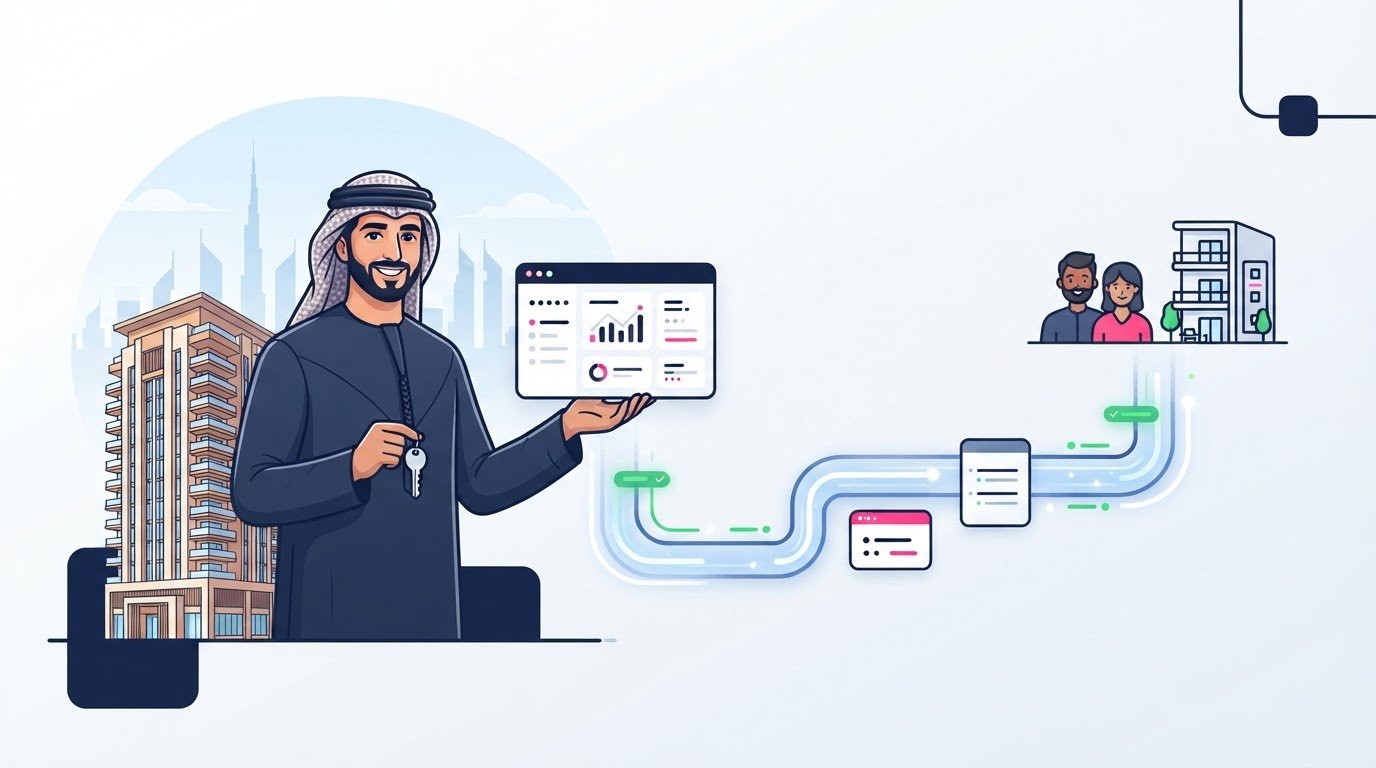
What if making rental income more predictable didn’t require handing over control of your property? For landlords searching for automated rental income, the practical starting point is a simpler way to collect rent each month. Post-dated cheques can mean tracking due dates, following up on payments and planning cash flow around uncertain timing. Digital collection can reduce that administration, but it doesn’t automatically protect against missed rent.
It helps to separate the moving parts. Direct Debit setup supports monthly digital rent collection, while a rental guarantee addresses income uncertainty as a separate service. Takeem provides both for landlords and property investors across the UAE, with emergency property maintenance included in its Rental Guarantee service. Neither service is property management.
This guide explains what can be automated, how digital collection compares with cheque-based administration, and where income protection fits. It also shows how to organise payment records and choose a practical next step without confusing a smoother collection process with protection against every disruption.
Key Takeaways
- See which rental-income tasks can be digitised, from payment records to a consistent monthly collection routine.
- Understand how automated rental income Dubai can streamline administration without removing landlord oversight or responsibilities.
- Compare Direct Debit, rental guarantees and property management by the different needs each addresses.
- Use a staged checklist to organise property records and track payment status across one or more properties.
- See how Takeem’s Direct Debit setup and Rental Guarantee serve distinct roles, with emergency property maintenance included in the guarantee service.
What Does Automated Rental Income Mean for UAE Landlords?
Automated rental income means using digital processes to collect rent, record payment activity and track what is due. Instead of relying only on cheque dates, paper records and manual reminders, a landlord can use digital collection and organised records to follow monthly payments. For landlords exploring automated rental income Dubai, the goal is not to remove oversight. It is to make that oversight easier to maintain.
Moving from post-dated cheques to digital monthly collection changes how rent is administered, not the landlord’s role. A digital process can make payment activity easier to review, but it doesn’t decide how to respond to a late payment or replace attention to tenancy responsibilities.
Payment automation organises how rent is collected; rental-income protection addresses the risk of income being interrupted. These services are related, but they do different jobs.
Which parts of rent administration can be automated?
Digital collection involves setting up a payment method for rent and using it for recurring monthly payments. Direct Debit is one approach: it allows payments to be collected from a tenant’s bank account with their authorisation. For a plain-language overview of the method, see Direct Debit Explained. Takeem provides Direct Debit setup for landlords moving to digital monthly rent collection.
Digital records can also make routine oversight more consistent. Record the expected rent date, whether payment has been received and any follow-up needed. Keeping this information together makes upcoming and completed payments easier to review and can support cash-flow planning. It won’t ensure a payment arrives, but it can reduce reliance on scattered notes or memory.
Collection is only one part of owning a rental property. A payment process doesn’t coordinate maintenance, manage tenant relationships or make broader property-management decisions. Keeping these responsibilities distinct shows what digital collection can simplify and what still needs separate attention.
What automation cannot promise on its own
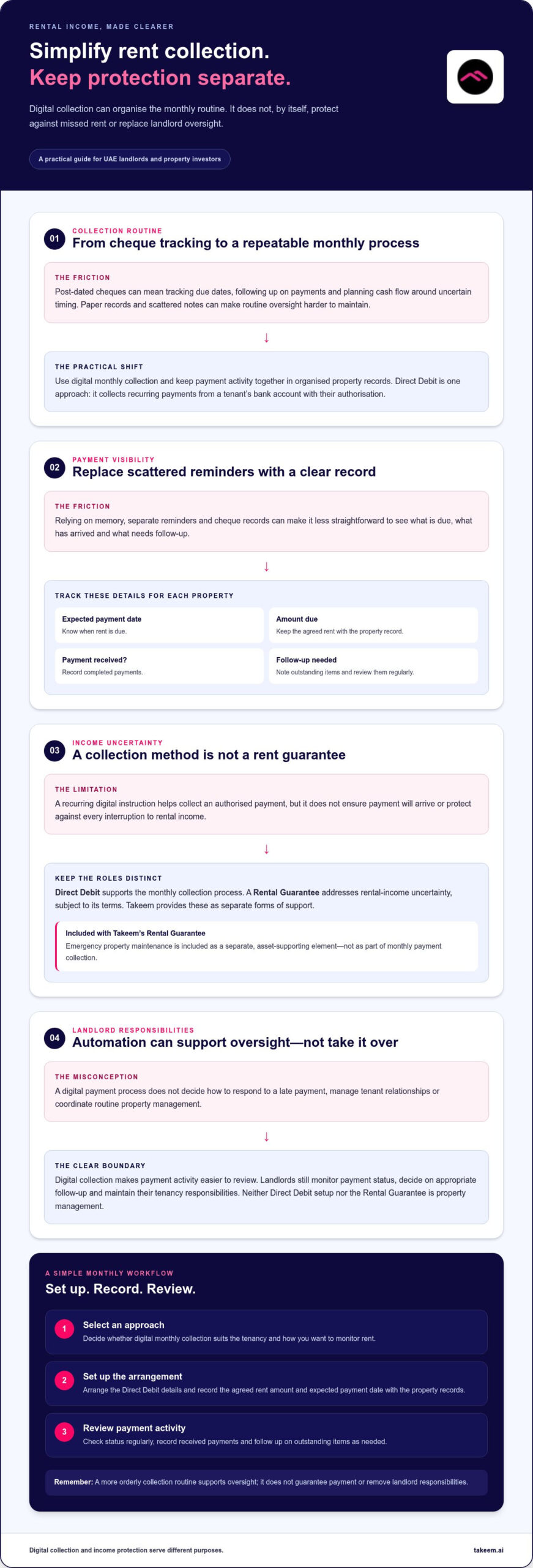
A recurring digital instruction doesn’t guarantee that rent will always be paid. Payment processing is a way to collect an authorised payment, not protection against every interruption to rental income. If a payment is missed, the landlord still needs to understand the situation and decide what action is appropriate under the tenancy arrangement.
Income protection is a separate consideration. A rental guarantee addresses rental-income uncertainty subject to its terms, while Direct Debit supports the collection process. Takeem provides both as distinct forms of rental-income support. Its Rental Guarantee also includes emergency property maintenance, an asset-supporting element separate from monthly payment collection.
Automation also doesn’t replace landlord decisions, tenancy obligations or professional advice. Treat it as administrative support: establish a clear collection routine, keep records organised and review payment status regularly. Digital tools can make rent oversight more orderly without taking responsibility away from the landlord.
How Digital Rent Collection Works from Setup to Monthly Payment
A practical digital collection routine has three parts: choose an approach, establish the payment arrangement, then review each month’s activity. This creates a repeatable process instead of relying on separate reminders and cheque records. For landlords considering automated rental income Dubai, the aim is to make payment administration easier to follow while keeping a clear view of what is due and received.
Direct Debit is a method for collecting recurring payments from a bank account with the payer’s authorisation. In a rental arrangement, the landlord sets up digital monthly collection with the tenant. Takeem provides Direct Debit setup to support the move from post-dated cheques to digital payments. Keep the agreed payment details and expected date in the property records, and use the applicable setup details to guide the process.
A useful workflow is to:
- Select an approach: Decide whether digital monthly collection suits the tenancy and how you want to monitor rent.
- Set it up: Arrange the Direct Debit details and record the agreed rent amount and expected payment date with the property records.
- Review activity: Check payment status regularly, record received payments and follow up on outstanding items as needed.
Moving from cheque handling to digital collection
With post-dated cheques, landlords may need to organise cheque dates and track which payments are due. Digital monthly collection changes the routine: payment details and records can be reviewed as part of a recurring monthly process. Cheques remain part of some rental arrangements, so consider the transition property by property rather than assuming the same approach suits every tenancy.
Consistency is the benefit. A regular review routine helps landlords spot an outstanding payment and see what income is expected, without confusing collection with income protection. Takeem’s guide to rental guarantees and Direct Debit explains how these two parts of rental-income support serve different purposes.
What landlords should track after setup
Keep a simple record for each property, whether in a spreadsheet or a system you already use. Include the expected payment date, amount due, whether payment has been received and any outstanding item that needs follow-up. Add notes when you take action, so the record shows the payment’s current status, not just its due date.
For a portfolio, consistent records make it easier to review properties together and identify payments that need attention. A clear monthly routine could involve checking each property’s status on a chosen day, updating the records and noting anything unresolved. This supports planning without suggesting that digital collection prevents missed payments.
Landlords looking to streamline monthly collection can explore Takeem’s landlord solutions, including Direct Debit setup and rental-income support.
Direct Debit, Rental Guarantees, and Property Management: What Is Different?
These services can all relate to rental income, but they address different needs. Direct Debit provides a way to collect payments. A rental guarantee offers income-protection support under its applicable terms. Property management covers a broader range of property-related responsibilities. Separating these roles helps landlords identify what they need without assuming a digital payment method includes protection or day-to-day management.
Use this comparison to identify the task each option supports:
| Option | Purpose | Landlord task supported | Important limitation |
|---|---|---|---|
| Direct Debit | Collect rent digitally from a tenant’s bank account with authorisation. | Organising recurring rent collection and reviewing payment activity. | It’s a payment method, not a guarantee that rent will always arrive. |
| Rental guarantee | Provide rental-income protection support under the service terms. | Addressing income uncertainty through a separate support arrangement. | Conditions and coverage depend on the applicable terms; it isn’t a payment collection method. |
| Property management | Handle broader responsibilities associated with managing a property. | Coordinating property-related tasks beyond rent collection. | Neither Direct Debit nor a rental guarantee should be treated as full property management. |
Digital collection versus rental-income protection
Think of collection as the route rent takes to reach the landlord, and protection as a separate response to income uncertainty. Takeem provides both Direct Debit setup and rental guarantee services, but each has a distinct purpose. A landlord rental guarantee guide can help clarify what to consider when reviewing the protection side. For automated rental income Dubai, assess collection and protection separately.
For example, a landlord may use digital collection to organise monthly payments and make payment activity easier to review. That setup alone doesn’t protect against missed rent. A rental guarantee is a separate service, and its scope depends on its applicable terms. Neither option removes the landlord’s own decisions and responsibilities.
Where emergency maintenance fits
Takeem’s Rental Guarantee includes emergency property maintenance coverage. This is an included element of the service, not a claim to coordinate every routine repair or provide broad property management. Understanding that boundary helps landlords distinguish asset-supporting coverage from ongoing maintenance administration. The rental guarantee and maintenance guide explores how maintenance fits alongside income protection.
Consider each need on its own: payment collection, income protection and broader property responsibilities. This makes it easier to choose support that matches the task without assuming one service covers every part of rental ownership.
How to Introduce Automated Rent Collection Across Your Properties
A smooth transition starts with your current process, not with a new tool. Before introducing digital collection, map how each property handles rent today. Note the payment approach, expected dates, where you record receipt and how you follow up on outstanding amounts. This gives you a practical baseline and shows which repetitive steps may be simpler to manage through a consistent digital process.
Start with a clear picture of your rental workflow
Review each property individually. One tenancy may use post-dated cheques, while another may already follow a monthly digital routine. Record the differences rather than assuming every tenant or agreement can move in the same way. Then identify manual tasks, such as updating payment notes or checking separate records, that a consistent digital process could make easier to oversee.
Keep communication clear throughout the change. Tenants should understand the collection arrangement and the payment details relevant to their tenancy. Landlords need to retain a clear view of expected and received rent. Digital collection can streamline administration, but it doesn’t remove the need to monitor activity or address questions and outstanding payments.
Use this staged checklist to plan the transition:
- Map the process: Record how each property currently collects rent and how payment status is tracked.
- Organise the records: Keep property and tenancy details, expected payment dates and receipt status together.
- Set the routine: Choose a regular time to review collection activity and update records.
- Account for the arrangement: Use the relevant service terms and setup details to guide the plan for each property.
Consistent digital records make rental-income oversight clearer by showing what is due, what has arrived and what still needs attention. That visibility can support cash-flow planning, but it doesn’t guarantee payment or replace landlord judgment.
Adapt the process for a larger portfolio
With multiple properties, inconsistent record-keeping can make a monthly review harder than it needs to be. Use the same basic fields for each property, such as expected payment date, amount due, payment status and follow-up required. A consistent process helps you compare like with like and spot unresolved items without relying on memory or searching through unrelated notes.
Keep the system practical. You don’t need a particular dashboard, integration or reporting format to establish good oversight. Start with reliable records and a routine you can maintain, then adapt it to the size and needs of your portfolio. The property portfolio income guide offers further context for investors organising rental income across multiple properties.
For a practical next step, explore Takeem’s landlord solutions, including Direct Debit setup for digital monthly rent collection.
How Takeem Connects Digital Rent Collection with Income Protection
Takeem provides landlords and property investors with two distinct forms of rental-income support: Direct Debit setup for monthly digital rent collection, and a Rental Guarantee that provides income-protection support under its service terms. They address separate priorities within a rental-income plan. Digital collection helps organise administration; the guarantee offers a separate layer of support. Neither is full property management or a promise that every payment will arrive.
For landlords exploring automated rental income Dubai, the value lies in matching support to the task. A consistent collection routine can make payment oversight easier to maintain, while a rental guarantee addresses income uncertainty under its applicable terms. Takeem’s Rental Guarantee also includes emergency property maintenance coverage. This is an included element of the guarantee service, not a promise to handle every repair or routine maintenance task.
A practical fit for individual landlords and investors
For an individual landlord, monthly digital collection can reduce the effort of organising recurring payments and reviewing their status. Investors with multiple properties can use a consistent record-keeping routine across their portfolio to see which payments are due and which have been received. The Rental Guarantee is a separate option for income protection, with its scope governed by the relevant service terms.
The distinction matters. Direct Debit supports the collection process; it doesn’t itself protect rental income. A guarantee doesn’t replace collection setup or the landlord’s own oversight. Considering each need separately helps keep the arrangement clear, whether the priority is reducing cheque administration, addressing income uncertainty or both.
Choose a next step that matches your priority
Start with the friction you want to reduce. If handling post-dated cheques and tracking monthly payments takes too much administration, Direct Debit setup offers a route to digital monthly collection. If your main concern is rental-income uncertainty, review Takeem’s Rental Guarantee as a separate form of support. The applicable terms determine the guarantee’s scope, so don’t assume it covers every circumstance.
Before deciding, note how rent is currently collected, what you want to make easier and which properties the change should apply to. This review can help you focus on the right next step without adding unnecessary complexity or treating a collection method as income protection.
Takeem connects digital collection and rental-income support while keeping their roles distinct. Explore rental-income solutions with Takeem to find support that fits your priority.
Make Your Next Rent Cycle Easier to Oversee
A useful next step doesn’t have to involve changing every property at once. Choose one part of your rental-income process that creates avoidable friction, such as tracking payment status or organising collection dates. Set a clear routine around it, then use what you learn to decide whether to extend the approach across your portfolio. Small, deliberate changes can make automated rental income Dubai easier to manage without adding layers of administration.
As you plan, keep your priorities distinct. If you want a more organised collection process, focus on digital monthly payment setup. If you’re considering income protection, review the relevant rental guarantee terms and how they fit your circumstances. Takeem supports landlords and property investors across the UAE with these separate forms of rental-income support, and emergency property maintenance is included as part of its Rental Guarantee service.
Choose the step that addresses your immediate priority, then build from there. Explore Takeem’s rental-income solutions and move toward a clearer approach to overseeing your rental income.
Frequently Asked Questions
Can rental income be automated?
Yes, landlords can automate parts of rent administration, including recurring collection and payment record-keeping. For example, a landlord with monthly rent due on a set date can use digital collection and record each payment’s status. Exceptions still need attention, and landlords remain responsible for decisions about their properties. Automation can make a routine more consistent, but it can’t remove every manual task or guarantee income.
How does Direct Debit rent collection work for landlords in the UAE?
Direct Debit lets a landlord collect recurring rent from a tenant’s bank account after the tenant authorises the arrangement. The landlord sets up the collection details, monitors payment activity and records the outcome. Takeem provides Direct Debit setup for landlords seeking digital monthly rent collection. Keep the agreed payment details and any changes organised with the relevant tenancy records.
Does automated rent collection guarantee that tenants will pay?
No. Automated collection provides a way to request or collect a payment, but it doesn’t ensure the tenant’s payment will be completed. If income protection is also a priority, consider a rental guarantee as a separate form of support and review its applicable service terms. Landlords looking at automated rental income Dubai should treat collection and protection as distinct parts of their plan, not interchangeable services.
What happens if a tenant’s Direct Debit payment fails?
A failed payment means the landlord should check the recorded status rather than assume why the transaction didn’t complete. Note the due date, the status shown and any follow-up. Then communicate with the tenant through the agreed channel to understand the next step under the tenancy arrangement. Direct Debit setup doesn’t resolve a missed payment automatically, so maintain a clear record of any outstanding rent and action taken.
Can landlords use digital rent collection for multiple properties?
Yes. Landlords can organise digital collection across multiple properties while keeping each tenancy’s payment details and status distinct. Use a consistent record format with property reference, tenant, amount due, expected date and payment status. This makes it easier to review the portfolio without mixing up transactions. Takeem provides rental-income services for landlords and property investors, including those with large property portfolios.
Does rental-income automation replace property management?
No. Automating rent collection supports payment administration, not the full range of property-management responsibilities. Landlords still make decisions about their properties, maintain tenancy records and handle matters outside the collection process. Keep a separate process for maintenance, tenant communication and other property tasks. This distinction sets realistic expectations about what digital collection can simplify and what still requires landlord attention.
Can a rental guarantee include emergency property maintenance?
Yes. Takeem’s Rental Guarantee includes emergency property maintenance coverage as part of the service. This is a specific included element, not a promise to cover every repair or replace routine property management. Landlords considering a guarantee should review the applicable service terms to understand its scope and how it relates to their property. Keeping maintenance records and reporting issues through the relevant process can also help with oversight.